
Faculty Spotlight: María Rosa Brea
María Rosa Brea on expanding the definition of communication
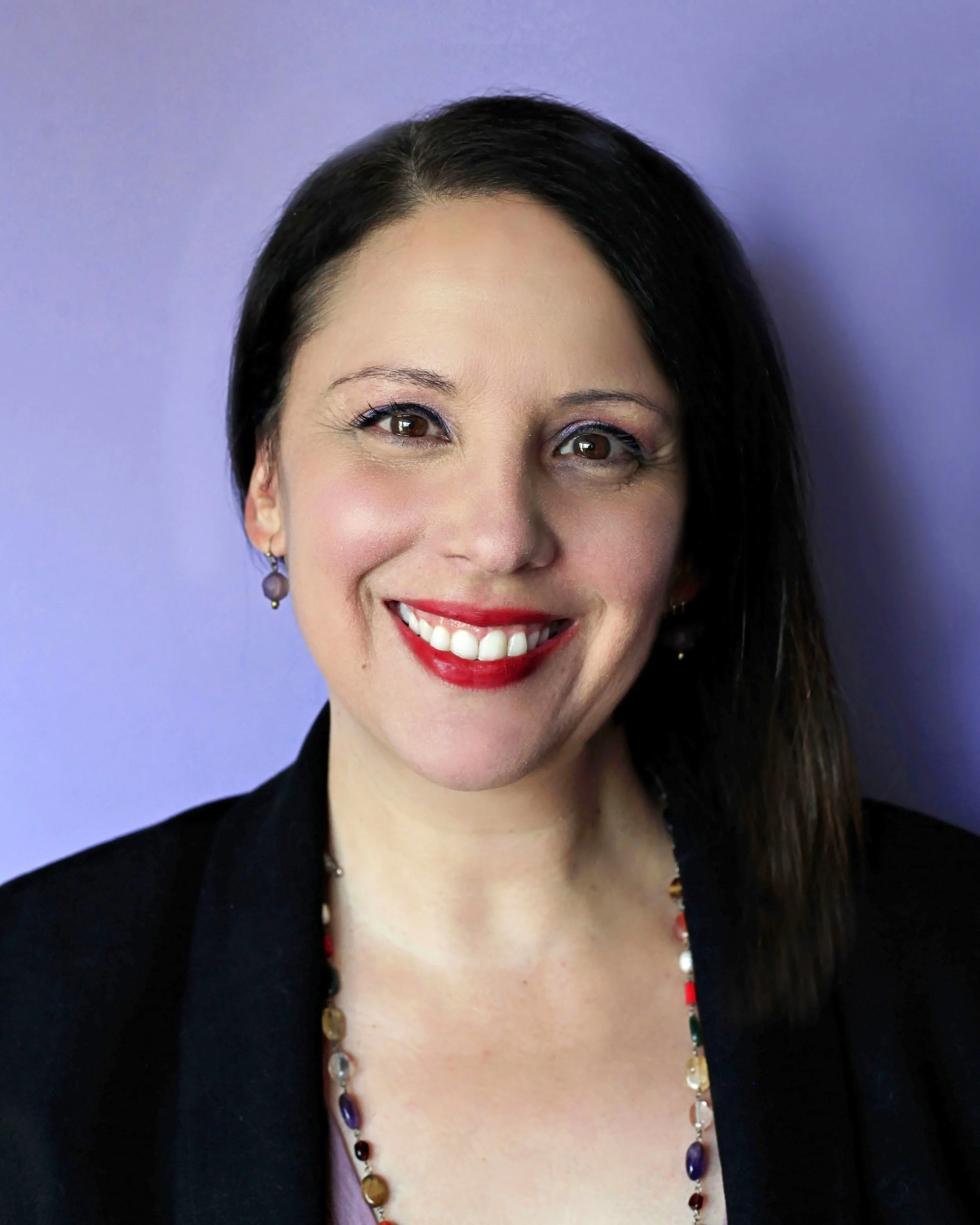
What counts as communication—and who gets to decide? That question sits at the center of María Rosa Brea’s work.
Born and raised in Santo Domingo, Dominican Republic, she grew up in a home where Spanish and Italian flowed side by side. That early experience—and her immigration to the United States at age 17—continues to shape how she understands language, identity, and belonging. For over two decades, she has been pushing back against narrow ideas of “correct” communication by centering the strengths of youth who are often labeled as linguistically minoritized and disabled in U.S. classrooms. In her classrooms, future speech-language therapists are challenged to question their assumptions and rethink what it really means to support how people express themselves.
She is a Clinical Professor in the Department of Communicative Sciences and Disorders at NYU Steinhardt, where she teaches courses on bi/multilingualism, learning disabilities, and culturally responsive and sustaining pedagogies. From 2017 to 2025, she also led the Bilingual Extension Certificate Track, preparing clinicians to work with bilingual youth through specialized coursework and hands-on clinical training.
Could you walk us through what bilingual research is?
In my corner of the field, bilingual research has traditionally focused on describing how people communicate across languages and how that differs from monolingual English speakers—who are often treated as the norm in U.S. institutions. One of the main challenges speech-language therapists are said to face is distinguishing between a language difference and disorder, so bi-multilingual children aren’t disproportionally over- or under-identified as being in need of communicative intervention.
But that work is built on a lot of assumptions: what counts as “good” language, who gets to be seen as a proficient speaker, whether being multilingual is framed as an asset or a deficit depending on when and how languages are learned. My work begins by questioning those assumptions. I’m interested in expanding how we define communication so we can move beyond binaries like “typical” versus “disordered,” and instead understand language as dynamic, relational, and shaped by context.
What courses do you teach?
I’ve taught a range of courses over the years, but the ones I’m most excited about are the two-course sequence on culturally responsive and sustaining pedagogies that I developed in our department. In those classes, students examine how systems of power shape language, disability, and education. They reflect on their own positionalities and unpack beliefs they have been socialized into about language competence and ability, and analyze how those beliefs show up in real clinical and educational practices.
We also work with liberatory pedagogies—drawing from critical disability studies and decolonial thought—to imagine more just ways of engaging with the humans who seek our services and communities. I also teach a course on language and disability in educational settings, where we focus on what this culturally and linguistically sustaining intervention can look like in practice in schools.
Tell us about the people and movements that inspire your teaching.
I often describe myself as a “promiscuous epistemologist”—someone who draws from multiple ways of knowing rather than staying within one framework. A major influence for me was Dr. Ofelia García, whom I met by chance my first semester at NYU, and whose work has helped me to rethink language as dynamic, embodied, and relational rather than fixed. Indirectly, she became the mentora I never had in my doctoral training. Her work, along with scholars like Nelson Flores, Jonathan Rosa, María Cioe-Peña, and Jon Henner provoked me to redefine multilingualism and disability as fluid, expansive, and entangled in meaning with our communicative partners and the materials and spaces where language is happening.
My personal experiences also shaped this shift—especially my family’s immigration story. When we moved to the United States, I witnessed how language reshaped roles and identities in our home. My father, who was an intellectual and political scientist, primarily communicated in Spanish, and I saw how that impacted how others perceived him here. At the time, I had internalized the idea that those assumptions about his abilities were justified because he did not speak English. Later, I came to understand his continued centering of Spanish as an act of resistance—of holding on to who he was. That reframe deeply transformed how I think about language, power, and identity.
Pedagogically, I’m grounded in Paulo Freire’s critical pedagogy—particularly the idea of praxis, where reflection and action come together to name and transform the world. I also draw from child centered pedagogies, like the Reggio Emilia approach, that invite us to “unhurry” learning, to value process over product, and to see learners as meaning-makers with multiple ways of expressing and knowing. Together, these influences shape how I approach teaching as a relational, dialogic, and co-constructed process. I’m also deeply influenced by Black feminist thinkers like Audre Lorde, bell hooks, and Bettina Love. Their work grounds my commitment to critical literacy and evaluation, naming oppression, community co-creation, and imagining new possibilities—not just in theory, but in how we live, teach, and language together.
My work’s north star is what I describe as liberated languaging—a collective effort to reimagine communication beyond rules, hierarchies, and narrow definitions of competence. It’s about co-building possibilities with teachers, artists, students, families, and communities—and reimagining communication as rooted in linguistic carework, creativity, and multiplicity.
How do you navigate the standardization of language ideologies present in the institution while pushing for your vision for language liberation?
There’s a real tension there. In higher education, we’re often positioned as gatekeepers of what “counts” as appropriate language—what is considered clear, professional, or even intelligible. Those standards aren’t neutral; they are shaped by histories of power that define what “good” or “competent” communication is and who gets to embody it.
In my classroom, I make that visible and open to critique. Drawing from Freirean pedagogy, we engage in praxis—reflection and action—to name and disrupt the assumptions we hold about language, learning, and knowing. I’m explicit with students: their languaging—how they communicate across languages, modalities, and forms—will not be policed. This shows up in how we learn together. With students, we co-design spaces where we can use our full communicative repertoires—across languages, modalities, and forms of expression. That might look like submitting assignments as audio files, writing our journals on notebooks, exhibiting our photographic documentation, or using art-based means such as collaging and zines, as a way of creating new meaning from challenging subjects. I lean on principles from Universal Design for Learning (UDL) to open up multiple pathways for engagement and representation, and I move away from practices that equate learning correctness or perfection. Instead, I center learning as “messy,” relational, in-progress, iterative, and deeply human.
At the same time, I don’t ignore the realities of institutions. Students will move through spaces where standardization has real consequences. But I don’t believe preparation has to mean conformity. Instead, together we evolve our critical consciousness—our ways of recognizing when we are being asked to assimilate, to make intentional choices about how we show up, and to imagine how we might expand those expectations in our future practice.
Ultimately, our classrooms become spaces where we are not just learning about communication—we are actively re-defining it together; where languaging is dynamic, embodied, multilingual, and creative; and where variability is not a problem to fix, but a fundamental feature of how we connect, learn, and exist.
You have already stated the importance of art as another modality of languaging that you foster in your classrooms. How do you see art playing a part in the urgent actions that the present moment requires?
Art-making is also about collective meaning-making, and it is always political. It creates space for people to come together across different experiences, disciplines, and ways of knowing; it invites dreaming what Galeano termed “un mundo donde quepan muchos mundos.” That feels especially important right now.
In my work, art is also a way of expanding what counts as communication. For example, in a recent paper, I wrote about work I did with pre-service speech-language therapists, where we use collage-making to explore communication beyond correctness—inviting meaning-making across images, textures, languages, and forms, and positioning learners, including children, as knowers. I’ve collaborated on projects like immersive, bilingual performances for young people that incorporate Spanish, English, and Spanglish—really embodying translanguaging. I’ve also worked with students to create multimodal, multisensory spaces, like a pop-up museum where community members were invited to express “languaging” beyond rules, boundaries, or hierarchies.
What role do you see art playing in your future projects?
I have always languaged through art—most often through photography. It’s part of how I move through and make sense of the world. Photography as visual languaging has taught me a kind of meditative noticing and deepened my connection to the more-than-human world. We could say that I am drawn to photography as documentation— very much inspired by Reggio Emilia approach that values perception, observation, and making learning visible from lived experiences over time. [Editor’s Note: Maria Rosa’s photographic work and writing can be accessed on her website: “The Promiscuous Epistemologist”.]
Centering art as languaging in learning extends beyond the classroom. I’m co-facilitating an interdisciplinary Faculty Learning Community, funded by the NYU Center for Teaching and Learning, with colleagues across educational theatre, art education, music education, and special education, to explore embodied, creative, and liberatory approaches to teaching and learning, using multimodal practices, and in an effort to expand how we understand language, ability, and learning.
And personally, this exploration of art as languaging has meant allowing myself to exist in evolution—much like the images I capture—and to embrace the imperfection of my own thinking, which, for my Capricorn Moon, can definitely be a challenge. But it aligns with what I believe about communication: it’s not about precision, but about meaning-making, connection, and possibility across forms.
—
Interview by Pamela Santana Oliveros (PhD student, Performance Studies). Edited by Isabel Saavedra-Weis (PhD student, English).
About The Latinx Project
The Latinx Project: Interdisciplinary Center for Arts and Culture advances Latinx Studies through creative and interdisciplinary programs. Founded in 2018 at New York University, the center’s distinguishing programs include the Artist-in-Residence, Curatorial Open Call, the Intervenxions digital platform and publication, and fellowships for junior scholars and graduate students.