
Diaspora, Analogs, and New Bounds with Keysha Rivera
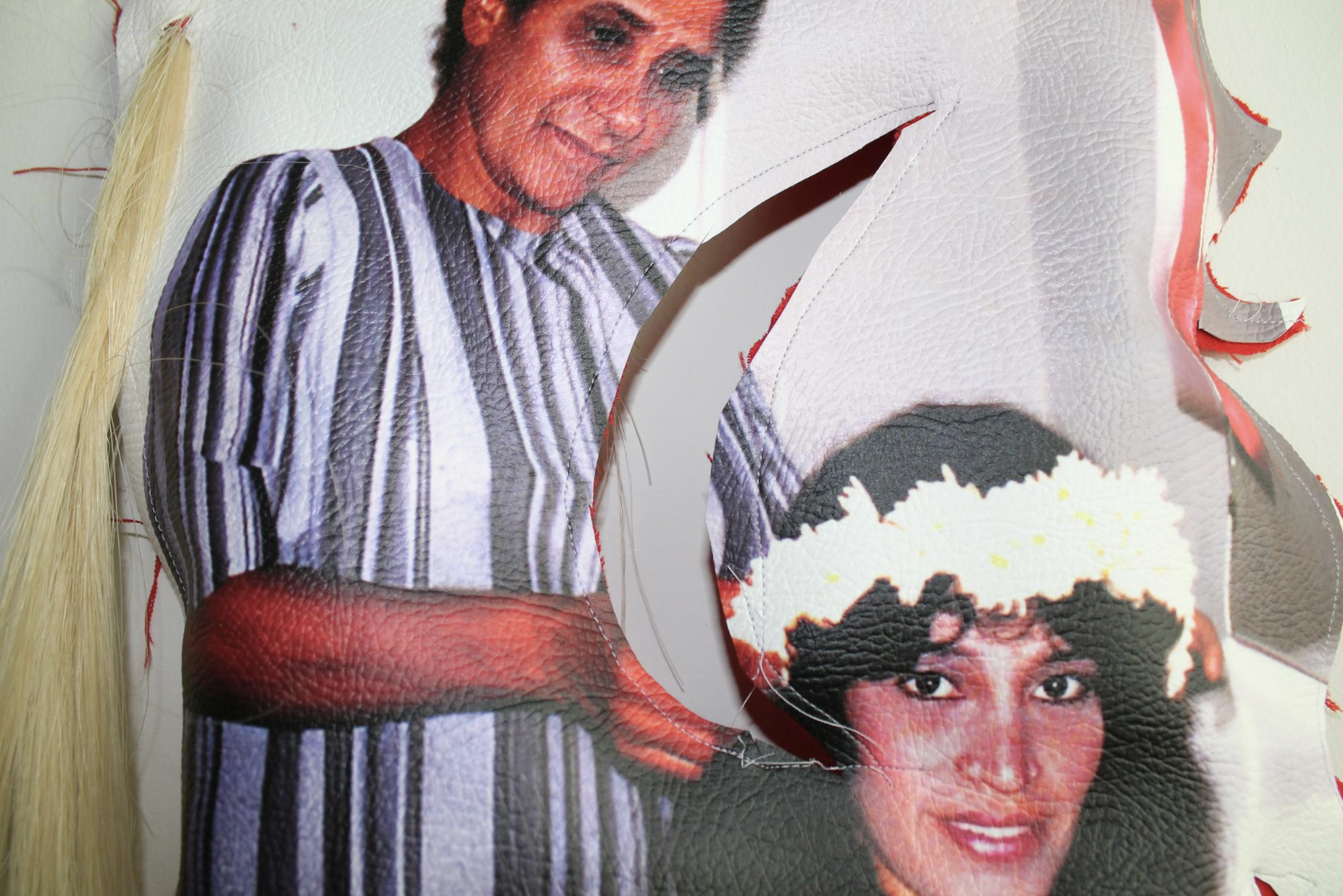
Keysha Rivera, grandma moon (2025), detail. Courtesy of Keysha Rivera.
How are people tied to geography? How does origin manifest itself in our lives?
Keysha Rivera is an interdisciplinary artist whose work may not answer these questions in a universal sense, but may do so through her artistic practice as a sculptor, graphic designer, archivist, and fiber artist. Afro-Caribeña and Taína by blood, but mostly raised in the south in the United States, Rivera uses both analog and technological methodologies to reclaim true indigeneity through the lens of her diaspora experience.
According to Rivera, much of what it means to be Indigenous comes from a connection to the land itself. “I'm really influenced by nature,” she says. “If you ever go to an island, the fauna, the ecology of the island is very much at the forefront. I think people are embedded into the environment, there's a kinship where things are fused and there's collaboration. Everything points to the body. It points to how we connect to nature that's around us. The closer we are to our roots, our family archives, it really just means that we're more connected to nature and people around us.”
In the way moss grows (2024), a family image is printed onto fabric and stuffed like an amorphous pillow. Several sections of the image are cut out in uneven segments.
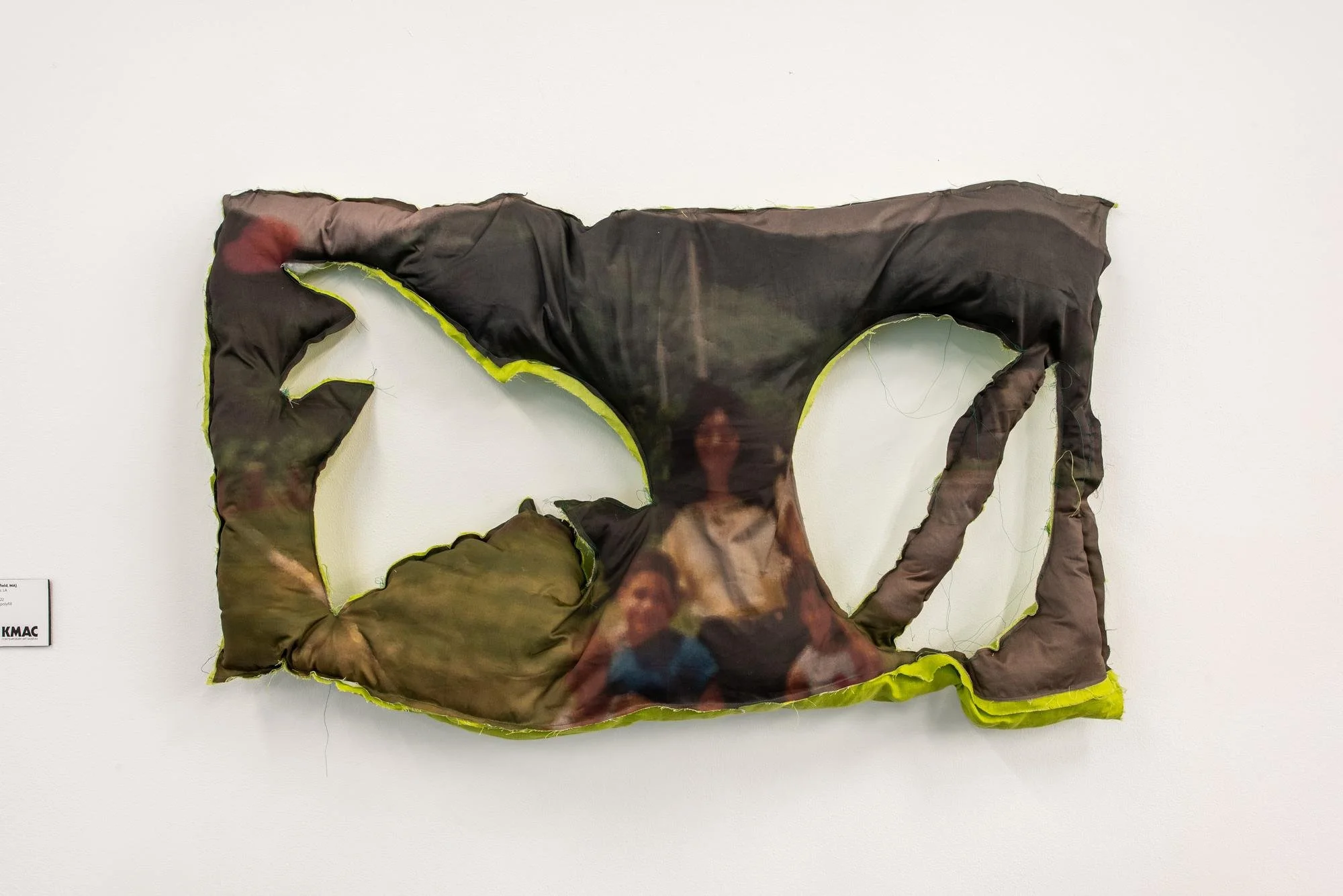
Keysha Rivera, the way moss grows, (2023), soft sculpture. Photo courtesy of Keysha Rivera.
In Rivera’s more recent soft sculptures, she references how moss breaks off into new shoots and travels by wind or sea for more resources. The way moss grows is a poetic, naturalistic framing of how diaspora cultures proliferate throughout the global powers of the world, venturing out in search of new hopes.
Rivera often references the flora and fauna from Borikén. She relates these beings' groundedness in the island with that of her ancestors, spanning generations that predate centuries of colonialism. She often integrates these natural references with family photos as a way of reclaiming her legacy as one from the island, even among those who eventually relocated to the mainland.
“The diaspora does inform my practice,” Keysha explains. “And even if I were ever to move to Puerto Rico, I don't think that would change. I would still be a diaspora Rican living in PR. I think there is a sense of longing in my pieces. I think a lot about what it would look like if I were living in PR. Would moving there fix this desire to return to what I feel in my work?”
Rivera’s work belongs to the particularities of living in diaspora, and the tension that comes with living in a dominant culture that is not one’s culture of origin.
After the passing of her grandmother, Rivera began expanding her practice to explore themes of spirituality and life after death. In Metamorphosis (2026), a faded image of Rivera’s grandmother is printed in muted, warm tones over fabric, which is then cut in the pattern of a butterfly and stuffed with polyfill. Inside the soft sculpture, Rivera installed a light that emanates from the butterfly’s side. The result is a meditative, seemingly ephemeral work that alludes to the reembodiment of a spirit after death.
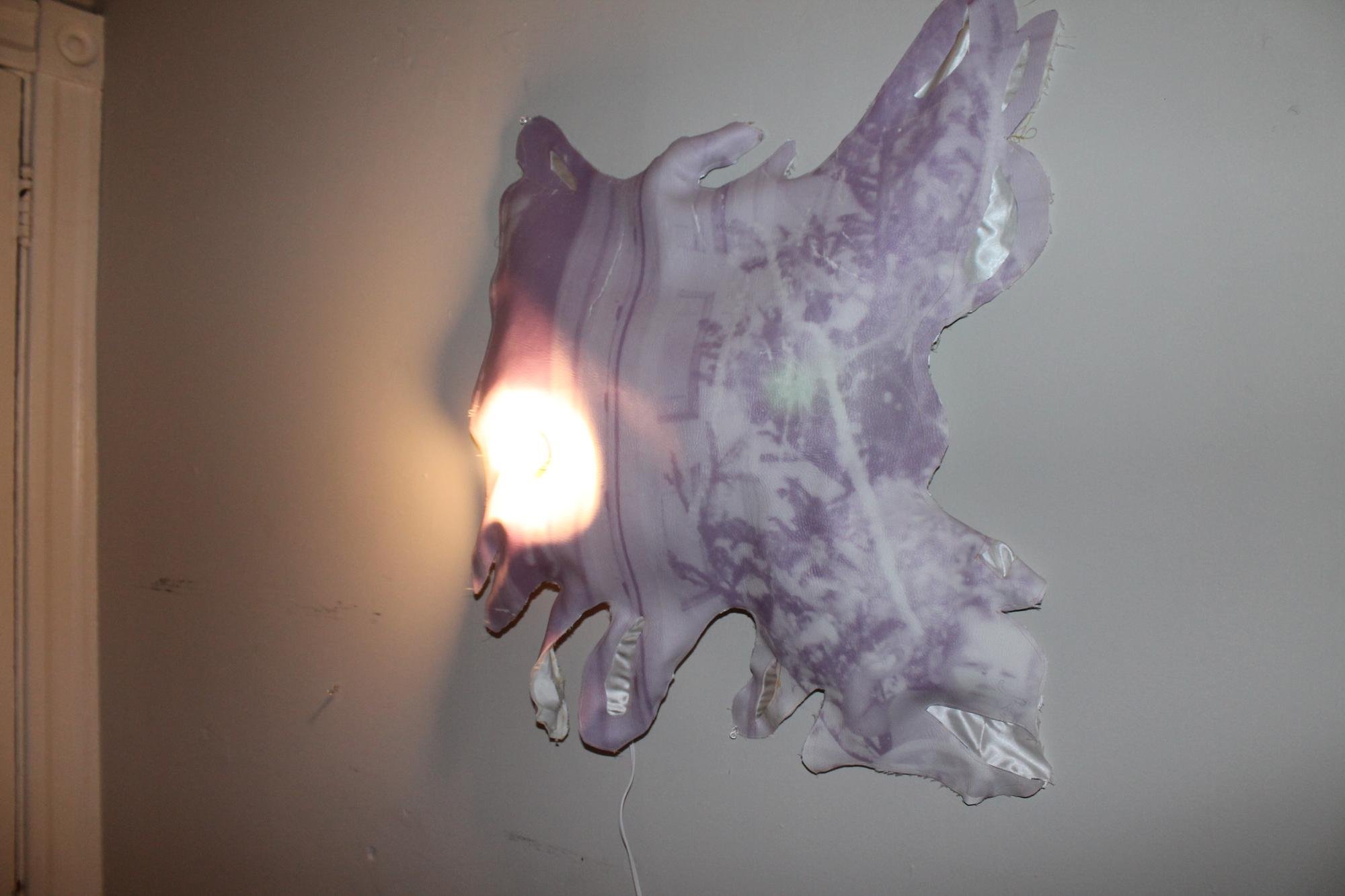
Keysha Rivera, Metamorphosis (2026), soft sculpture, agave fiber. Courtesy of Keysha Rivera.
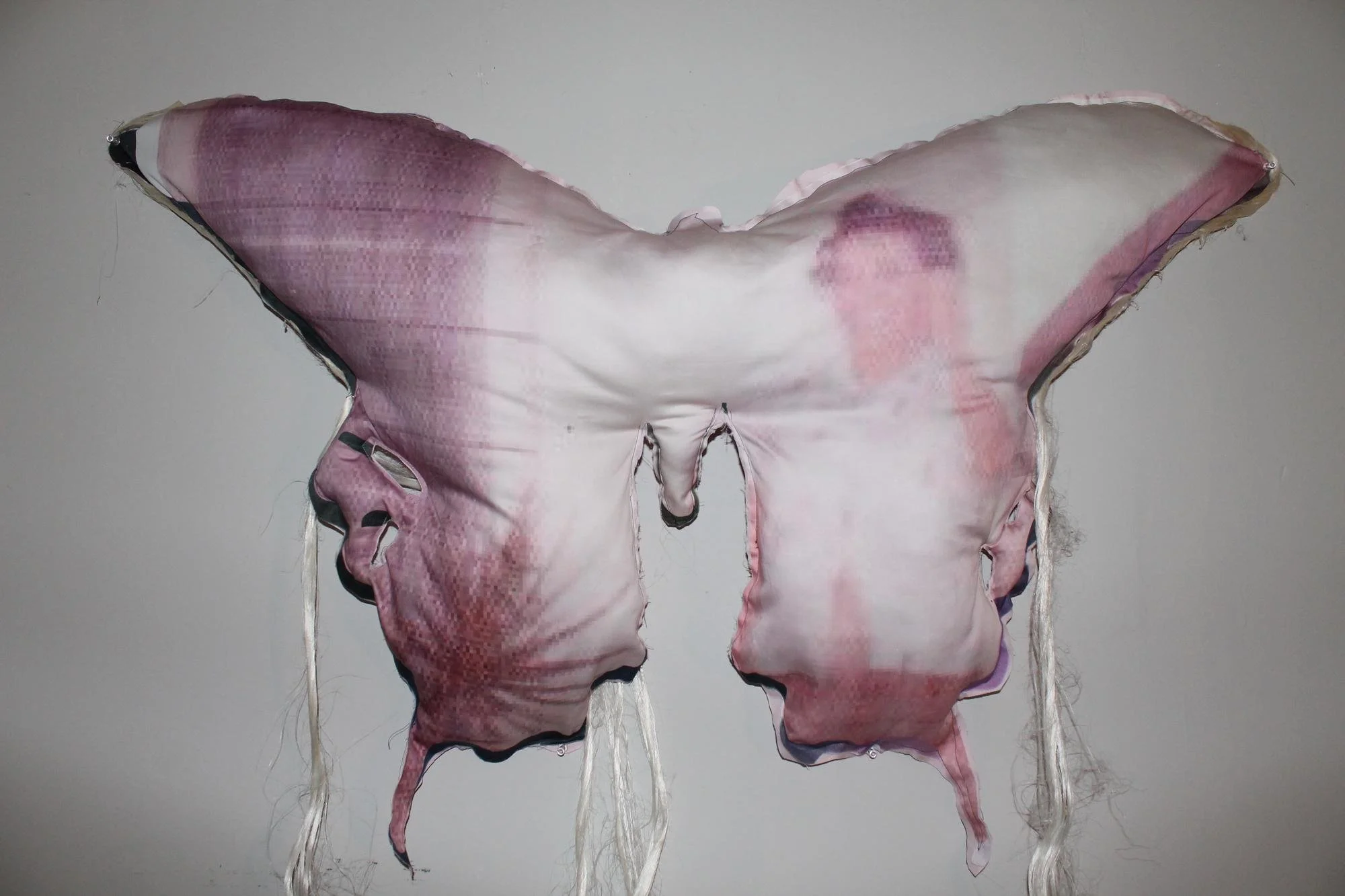
Keysha Rivera, Metamorphosis (2026), soft sculpture, agave fiber. Courtesy of Keysha Rivera.
In grandma moon (2025), Rivera prints an image of her grandmother doing the artist’s mother's hair for her wedding. Printed on vegan leather, the middle features a cut-out in the shape of a crescent moon. In much of Latin America and the Caribbean, colonial norms have taught people to believe that any spirituality outside of Christianity is brujería, and thus somehow evil. Although Rivera’s work expands into new themes of mourning and life beyond the physical realm, they also recenter decoloniality by highlighting non-European beliefs in an afterlife.
if taino indians were (are) hackers (2025) is a computational work that draws inspiration from writer and curator Legacy Russell’s Glitch Feminism: A Manifesto. Rivera creates an online platform that viewers can only access if they guess the right word on a list of predetermined passwords. If the viewer correctly guesses one of the passwords, then they are able to see a video art piece with several scenes of nature layered over one another. By encouraging viewers to try to “hack” into the work through a guessed password, Rivera asks them to consider all the ways in which Indigenous ingenuity hacked the system, from colonial societal networks to farming techniques that maximized output. Despite its specificity, Rivera’s work and her outspokenness demonstrates a core belief en la universalidad de la libertad, aligning her with a growing generation of artists and activists who see the plight of Indigenous populations to be a global cause for joint resistance.

Keysha Rivera, if taino indians were (are) hackers (2025), computational art. Photo courtesy of Keysha Rivera.
If all art is political, then Rivera’s is ostensibly so. Both within and outside of her practice, Rivera is outspoken on her belief in decoloniality, anticapitalism, and independización. Immigration and Customs Enforcement agents are picking up Latinx people off the street, irrespective of their legal status. Meanwhile, art institutions are stumbling to censor and minimize controversy. In an age where silence feels safe, speaking out is a bold and risky thing to do. From selling T-shirts that say ”islands free from settlers is paradise” and donating the proceeds to organizations advocating for Hawaii, Palestine, and Puerto Rico, Rivera makes plain her position en contra los colonial powers on a global scale, despite the possible long-term repercussions for her career.
It would be easier to eschew tough conversations, make work that is more sellable to the general public, and be “safe” enough to exhibit in commercial galleries. Despite this, Rivera makes the brave choice to align her activism with her artwork, and should be commended regardless of politics for staying true to her beliefs.