
Reflections on 1960s Latinx Activism and Present-day Struggles

Junto © Luis C. Garza. A man films protesters during the Marcha por la Justicia at Belvedere Park on January 31, 1971.
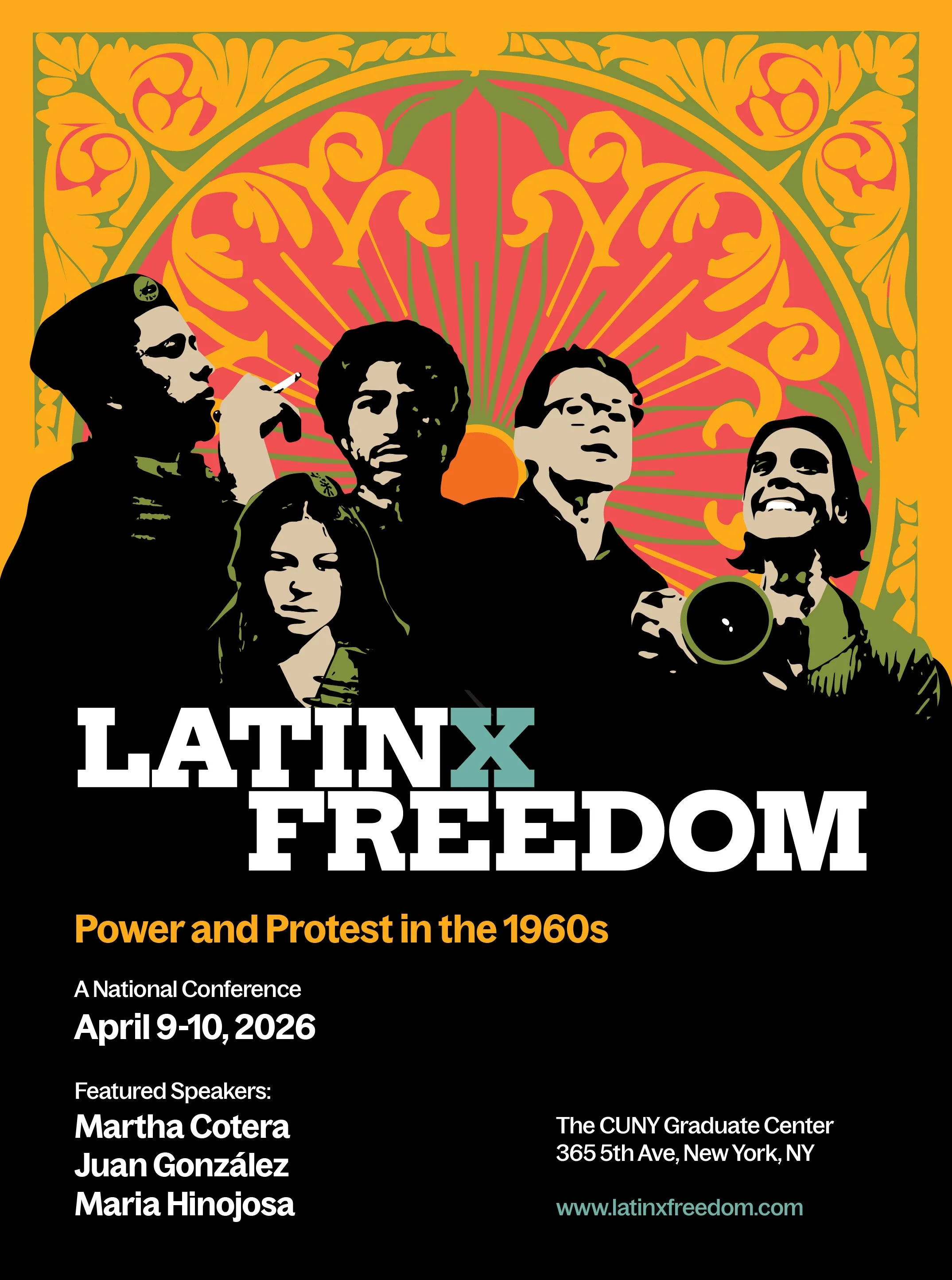
On April 9 and 10, NYC will host a historic gathering that reunites veterans of the 1960s Latinx freedom movements alongside scholars, students, and community members. The initiative led by historians Johanna Fernández and Felipe Hinojosa will include a conference and exhibition at the City University of New York and will be open to the public.
Intervenxions spoke with the organizers who share their hopes for the event, why this gathering is necessary in the moment, and the importance of documentation.
Courtesy of Latinx Freedom.
What does it mean to bring these generations together in dialogue for the first time since the National Chicano Youth Liberation Conference, and what kinds of conversations or reflections are you hoping will emerge?
The 1960s marked a turning point in the demographic makeup of the Latinx community. Latinos in the United States went from being predominantly Mexican and Puerto Rican to including migrants from across Latin America—Dominicans, Cubans, Guatemalans, Chileans, and others. Their arrival reflected the expanding reach of U.S. power in the hemisphere, as U.S. economic and military interventions during the Cold War helped reshape migration patterns across Latin America. At the same time, Mexicans and Puerto Ricans began to assert themselves socially and culturally as colonized subjects of the U.S. empire, increasingly understanding their presence and political standing in the United States as the consequence of 19th-century U.S. imperial expansion in Latin America.
While the ethnic composition of the Latinx community has changed dramatically, many of the forces that shaped the struggles of the 1960s remain. Poverty and unequal health outcomes persist, as do the consequences of U.S. economic and military intervention in Latin America—forces that continue to shape migration and the lives of Latino communities in the United States.
We invite movement veterans and younger generations to reflect together: What, exactly, was at stake in the battles of the sixties? What did those struggles win—both materially and culturally? What has been lost in the decades since? And where do the battle lines lie in the 21st century? Just as important, what lessons from that earlier era remain unfinished, and what must the next generation carry forward?
How do you see the experiences and lessons of 1960s Latinx freedom movements resonating with today’s social justice organizing and scholarship?
Those who are lucky enough to encounter the history of Latinx organizing in the 1960s are often deeply inspired by its colorful irreverence and creative avant-garde spirit—to the point, some argue, of romanticization. Yet, even a quick survey of the period’s groundbreaking cultural and artistic developments inspires awe. The interventions took many forms: spoken word; a renaissance in artistic production across sculpture, theater, painting, and printmaking; the recuperation of the African and Indigenous roots of Latinx culture; and the birth of the international musical phenomenon we know as salsa, which—like hip-hop—transformed the musical landscape of the post-‘60s era.
These artistic developments were anchored institutionally by formations such as Teatro Campesino, the Nuyorican Arts Movement, and the Nuyorican Poets Café—one of New York’s premier cultural institutions for poetry, theater, and music. Artist collectives like ASCO, for example, challenged traditional currents within Latino culture shaped in part by the long influence of Catholicism and Protestantism on Latino life.
To the extent that this history—and the broader story of Latinos in the ‘60s—has been romanticized, it stands to be deepened through more rigorous scholarly interrogation. Yet, much of the archival record of Latinx movements remains scattered across the country, often stored in basements and other vulnerable spaces where it risks being lost. One of the long-term goals of our project is to locate, preserve, and make accessible these papers and materials so that future scholars, community historians, and filmmakers can more fully document and interpret this history.
“Much of the archival record of Latinx movements remains scattered across the country, often stored in basements and other vulnerable spaces where it risks being lost.”
This work is already underway. Felipe Hinojosa is writing a history of the Latinx civil rights movement, while Johanna Fernández is exploring the 1960s as a moment of profound rupture—a point of radical transformation for both the broader Latino community and American society.
Because the conditions that shaped the struggles of the 1960s have not entirely disappeared, the experiences of those movements offer a powerful lens for understanding present-day struggles. Yet there are also important differences.
The Immigration and Nationality Act of 1965—the Hart–Celler Act—eliminated the national origins quota system that had structured U.S. immigration policy since the 1920s and privileged immigrants from northern Europe. At the same time, it helped criminalize what had previously been a largely cyclical pattern of migration between Mexico, Latin America, and the United States. That earlier pattern had been shaped by programs like the Bracero Program and by the shifting labor demands of U.S. agriculture.
This raises difficult historical questions: What weaknesses or political short-sightedness within the movement allowed this outcome to take shape? And what might be done differently now?
In this moment of crisis, we are deliberately bringing the past into direct conversation with the present, using historical analysis to illuminate the forces shaping Latino life today. Our aim is to create a visible and rigorous space for public conversation and leadership around this moment—one that Latinos themselves must claim.
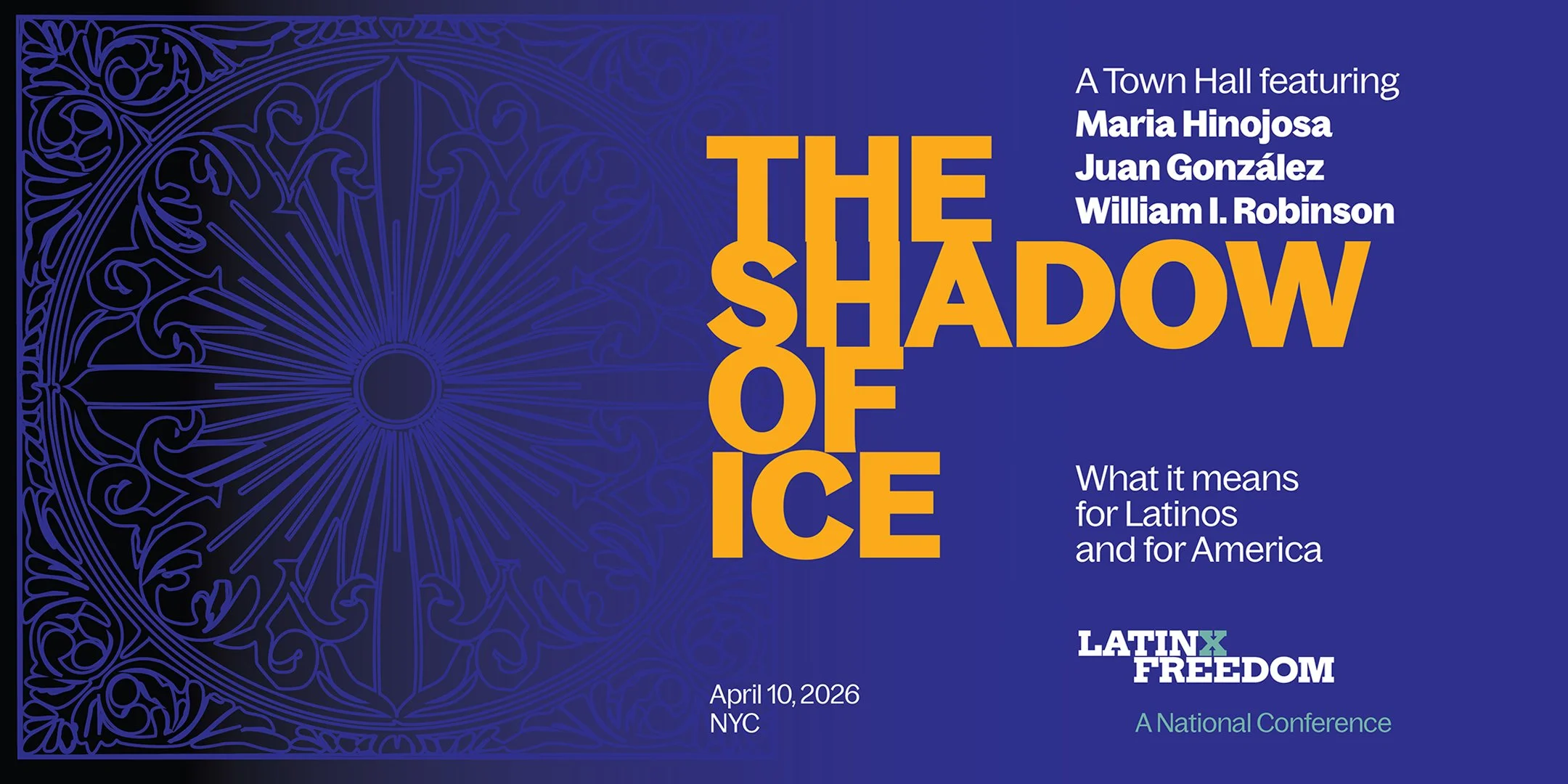
To that end, the conference will feature an evening town hall on Friday, April 10, 2026, from 6 p.m. to 8:30 p.m. titled “The Shadow of ICE: What It Means for Latinos—and for America.” The panel will feature Maria Hinojosa, Juan González, and William Robinson.
You’ll preserve portions of the conference for future generations. What kinds of public-facing and accessible interdisciplinary scholarship or archival resources do you hope will emerge from this project? How have historians and archivists worked to preserve and interpret these histories for future generations, and what remains to be done? What would you like to see more of?
Because they are now advanced in age, this may be the last moment when veterans of the 1960s Latinx movement can gather —together—to reflect on the history they made and its meaning for their communities and for American society.
We are committed to convening them, preserving their remembrances, and asking why this history matters now—precisely at a moment when its significance is being challenged in the public square. If we do not gather them, no one will. It is up to us to tell the fullness and diversity of these stories in our own words.
At the center of this work is a simple but urgent intervention: to establish that our archives—our papers, photographs, and cultural production—are essential to understanding American history. These materials, often hidden or overlooked, reveal a far more complex political history and standing for Latinos in the United States.
We aim to mainstream a truth too little known: Latinos were active participants in the civil rights movement and have a long, though often undefined, history in the country. This matters because it disrupts the persistent fiction of Latinos as perpetual foreigners in America and affirms instead a long-standing political presence and engagement with the nation’s struggles over democracy, race, and freedom.
Much like the broader civil rights movement—whose significance was brought into public consciousness through the efforts of Black movement veterans in the 1980s and 1990s—this history must be claimed, narrated, and insisted upon. Beyond its specificity to Latinos, it opens up broader questions about migration, empire, labor, and racial formation, while correcting a long-standing tendency in Latinx studies to privilege cultural analysis over political history.
The project is grounded first and foremost in trust-building with veteran organizers so that we can help preserve the archival record necessary to tell this history with depth and integrity.
There is also a clear public hunger for this work. Recent national research, including findings from the National Museum of the American Latino in 2021, shows that Latino youth movements rank among the most sought-after topics for public learning, particularly in the wake of the country’s most recent reckoning with racial injustice following the murders of Briana Taylor and George Floyd by police. Where this history is taught, student engagement and educational outcomes improve. And yet, it remains contested terrain—subject to restriction, political control, and erasure.
A stark example is the 2010 dismantling of the Mexican American Studies (MAS) program in Tucson public schools in Arizona. Despite its extraordinary success in improving student retention and academic achievement, it was banned for offering students a framework to understand themselves and their place in the nation—underscoring a longer struggle over who gets to learn, teach, and define the past.

Contact sheet © Luis C. Garza’s images from a Young Lords Rally, South Bronx, July 1970.
Our purpose is not to create a uniform narrative but to document and curate the complexities, differences, and solidarities of these movements: to view the 1969 Chicano Youth Liberation Conference in Denver through the eyes of Puerto Rican youth who traveled from Chicago and New York City; to see the Young Lords in Chicago from the perspective of young Mexicans and Mexican Americans in Chicago, Denver, and beyond. Many of the stories we will tell resonate broadly—such as that of Chicana teenagers in South Texas who, in 1969, challenged their exclusion from a school cheerleading team, or the Young Lords in the Bronx who drafted the first known Patient Bill of Rights at Lincoln Hospital.
Onsite exhibition programming will include mural creation by local artists working alongside community members. Drawing on the practices of the Student Nonviolent Coordinating Committee (SNCC), which used storytelling and testimony to humanize Black life and awaken public conscience, we envision the exhibition as a testimonial space—one where visitors are invited to share and record their migration stories within the broader context of U.S. economic intervention and colonization in Latin America across generations, whether inherited and learned as history through 19th-century colonial incorporations, or lived through contemporary crossings of the Darién Gap.
Local partnerships are critical to this work. In each city, collaborators help shape the exhibition’s design and public presence—working with movement veterans, artists, and grassroots organizers to integrate local histories through murals, art, and photography. These partners also play a key role coordinating outreach and social media, and positioning the exhibitions within the broader commemorations of the nation’s 250th anniversary in 2026.

Young Lords Party members demonstrate during a street rally in the South Bronx, July 1970 © Luis C. Garza.
The project also includes a visual art program with exhibitions and public art. Can you tell us more about what audiences will experience visually—what kinds of artists, themes, or public works will be featured, and how the art will connect to the histories and testimonies being shared at the conference?
Nothing captures the drama, intimacy, and stakes of movement life quite like photography. In each city, local curators will select images scaled to life-sized proportions—approximately eight by 10 feet—and integrated into a striking outdoor exhibition design. The aim is to construct a visual narrative of the movement that is immersive, immediate, and impossible to ignore.
Anchoring each installation will be murals, or fragments of murals, that pay homage to the artistic renaissance of the period—from the Nuyorican Art Movement prints to Chicano muralism (Emmanuel Martinez, Leo Tanguma, Judy Baca, Roman Villareal)—and to the broader tradition of public art across Mexico and Latin America as a vehicle for narrating the struggles of working people.
The Latinx Freedom Movement Project also envisions the exhibition as a space of encounter—one that places contemporary artists in dialogue with this history, inviting new interpretations that extend its meaning into the present.
We look forward to partnering with the Latinx Project to help identify and engage these artists.
Register for the two-day event here.