
Latinx Organizing at Sundance
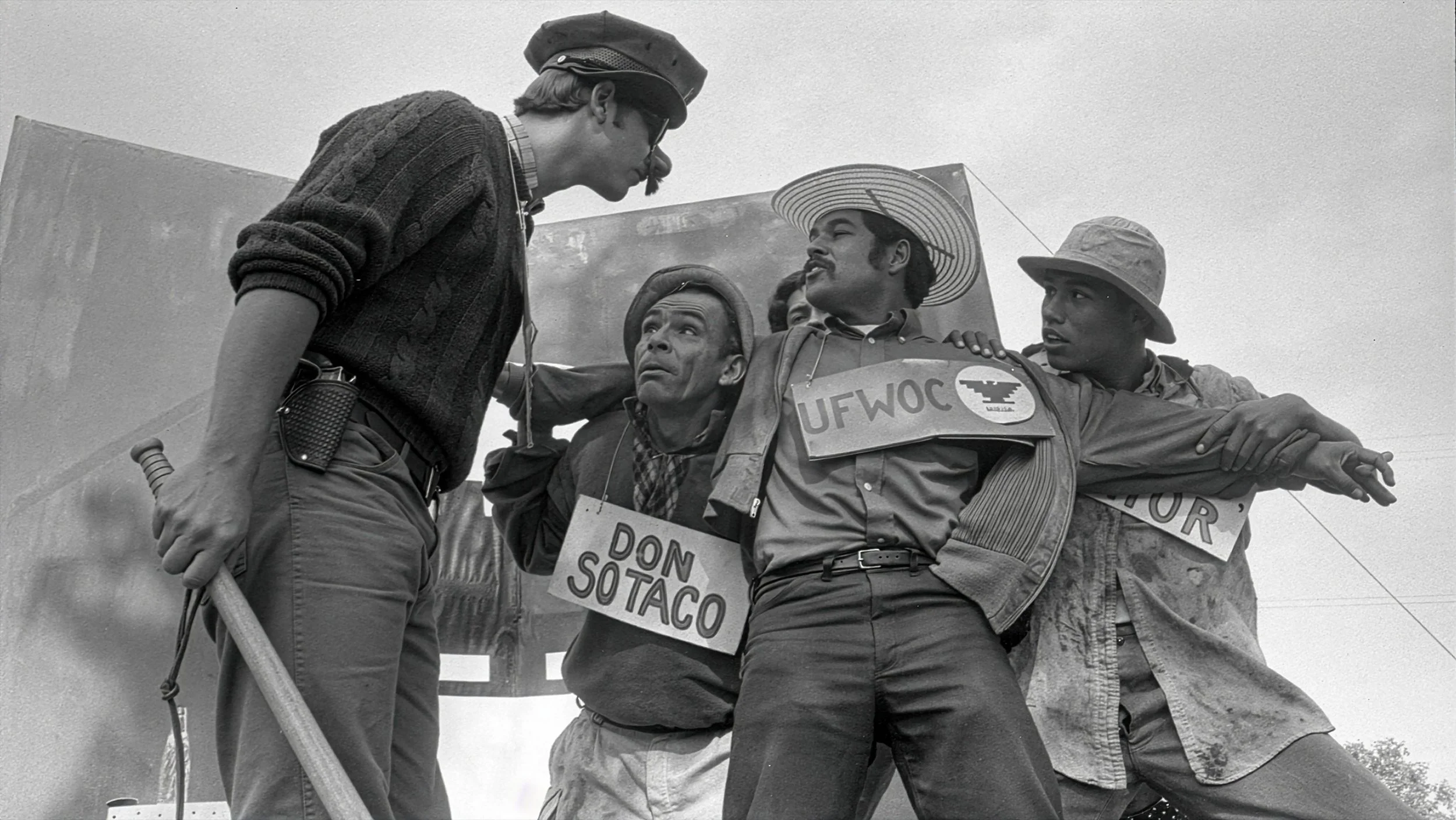
Still from American Pachuco: The Legend of Luis Valdez. Courtesy of Sundance Film Festival.
At the very first Sundance Film Festival, Robert Redford convened a small group of independent filmmakers to share their work in Park City. Among them was playwright Luis Valdez, who screened Zoot Suit, the Edward James Olmos–starring play adaptation that is a permanent fixture in Chicano history classes across the nation.
More than 40 years later, Sundance has lost its founder after Redford passed away in September 2025, and it’s leaving its home, taking the multimillion-dollar festival out of Park City, Utah, for the bigger and bluer pastures of Boulder, Colorado.
For its last iteration in Utah, Sundance went full circle, featuring a film about Luis Valdez’s life and bringing the famed organizer, theater director, and filmmaker back to the festival. Directed by David Alvarado and funded by PBS, American Pachuco: The Legend of Luis Valdez went on to win the Audience Award for its U.S. documentary category in a sign that Latino films are as needed and rare as ever.
Clearly, the Sundance Institute is and has been doing the work to platform Latinx and other marginalized storytellers. This year’s program was as diverse as any I’ve seen at the festival, demonstrating that programmers kept up their commitments to marginalized communities amidst President Donald Trump’s anti-diversity, equity, and inclusion maelstrom.
At this year’s festival, that meant showcasing a variety of Latinx stories, some that dealt directly with history and identity, like American Pachuco, TheyDream (which tells the story of one family through a mother-filmmaker son animation collaboration), and The Huntress (La Cazadora) (which explores a mother’s quest to stop the 2010s femicide in Juárez).
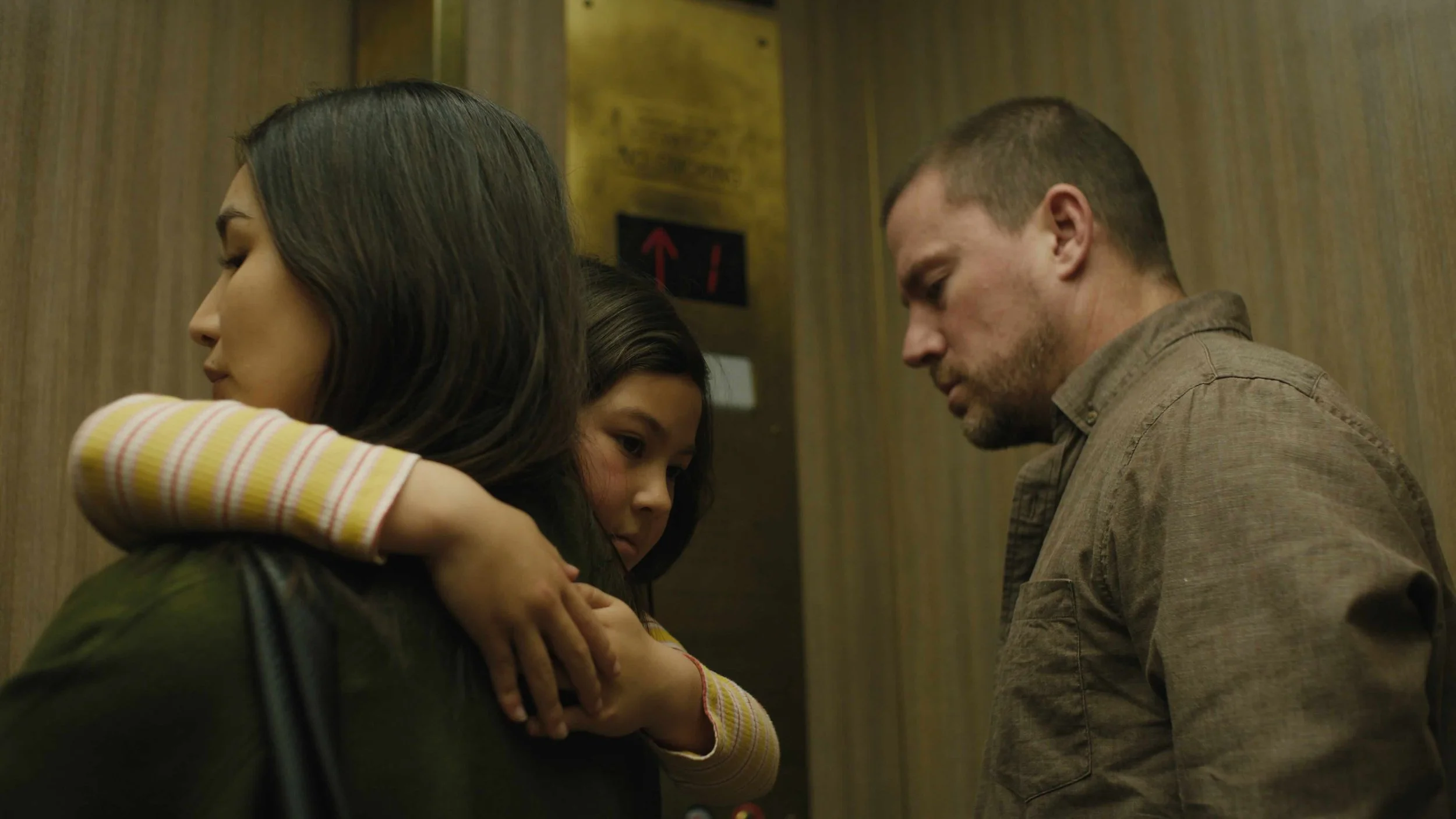
Still from Josephine. Courtesy of the Sundance Film Festival.
And others that took off in other directions—Giselle Bonilla’s The Musical is a comedy celebrating the power of spite and rage via middle school faculty. With Nuiscance Bear, Latina director Gabriela Osio Vanden partnered with Jack Weisman to give a look into how differently resourced communities in Canada respond to changes in polar bears’ behavior and habitats. Then, there was Josephine, based on writer-director Beth de Araújo’s experience witnessing a sexual assault as an 8-year-old. It went on to win both the Grand Jury and the Audience award for its category, breaking and building up the hearts of critics and attendees alike.
What’s notable here is how many of the Latinx filmmakers are homegrown talent for Sundance. If I Go Will They Miss Me writer-director Walter Thompson-Hernández introduced himself ahead of his film’s premiere as “a proud alumni of the Sundance Institute, of the Sundance Screenwriters Labs, the Directors Labs, the Sundance Catalyst.” While The Huntress writer-director Suzanne Andrews Correa was a 2018 Sundance Screenwriters Lab Fellow. De Araújo, too, got support from the Institute via the same program. De Araújo credited the Sundance Lab with helping her develop Josephine from a short script to an award-winning feature.

Bonilla, Alvarado, Alpizar, Calienes, Andrews Correa, Thompson-Hernández. Photo by Cristina Escobar.
Sundance is doing what it can. And it’s not just Redford’s institution that’s working to ensure this filmmaking community supports Latinx talent and communities. For 12 years, Maylen Calienes, founder of the Latino Filmmakers Network, has been organizing for Latinx inclusion at the festival. Calienes does year-long programming, including organizing an annual event on Main Street. The space is small (and plush), and the line to get in habitually wraps around the block. Last year, I got to speak on a panel offering practical advice to aspiring filmmakers. This year, I attended the “Our Road to the Sundance Film Festival” panel, featuring Bonilla, Alvarado, Andrews Correa, and the writer/director of the Sundance short film Norheimsund, Ana A. Alpizar.
What struck me was how supportive everyone was. In the audience, my seatmates were friendly, a mix of people I’d met last year and new attendees. We discussed ways we could help each other. On the panel, Bonilla gushed about American Pachuco, talking about how she was moved to tears by it and encouraging us all to go see it. It was a nice moment on a panel filled with them—I just wish there were more of them.
Each year, Sundance has a group of official “House” partners. From 2020 to 2024, there was The Latinx House, which programmed a full weekend of events. But since its departure, Calienes has largely been left to do all of the official Latinx-specific events alone. Thankfully, the Latinx-at-Sundance WhatsApp group was still active, as was the connection and support between Latina critics.
This year, I attended The Solidarity House and The Impact Lounge, both of which deployed a racial justice framework. It felt good to be in community with folks like the Center for Cultural Power, the Pillars Fund, and the Future Film Coalition. Certainly, as we face continued attacks on diversity, equity, and inclusion and the freedom of speech that goes with it, we need broad, multiracial coalitions—and I saw these alliances forming and bearing fruit at Sundance 2026.

Panel at Solidarity House Jon Sesrie Goff of Ford Foundation, Nicola Schulze of Women’s Foundation of CA, Arij Mikati of Pillars Fund, Aisha Goss of The Center for Cultural Power, Emily Best of Seed&Spark, and Sharifa Johka of Twenty. Photo by Cristina Escobar.
For example, I attended an event at the Filmmaker Lodge titled “From Short to Feature: Inside the Highways Lab Directors Program.” In it, The Latinx House cofounder, Olga Segura, moderated a panel of Black, Latinx, and Afro-Latinx filmmakers, who have gotten grants from her Highways Lab program in partnership with the Rideback RISE nonprofit. With this support, they’re developing short films that can work as proof of concepts for feature films. The selected directors are working on a variety of projects—from Aitch Alberto’s outlaw romance to Aristotle Torres’ horror comedy—representing a mix of concerns, styles, and approaches. What they all share, though, is the hurdles of filmmaking when you’re not what Hollywood execs think of when they envision a director—namely, a white male. And in case that idea sounds outdated, just remember that according to UCLA’s Hollywood Diversity Report, white guys directed more than 70% of feature films in 2025, despite making up 30% of the population.
Segura started off the panel talking about her program’s support of Isabel Castro, the filmmaker behind Mija and Selena y Los Dinos. The two women announced that Highways Lab and Rideback RISE are launching a new fund that supports mid-career filmmakers who’ve completed a title or two. These grants will help them fund their next project—even or especially if it’s risky by Hollywood’s standards. Castro is one of the first recipients, and she’s using the support to help her transition from documentaries into narrative film. Her next project focuses on Ruben Salazar, the Chicano journalist who the Los Angeles Police Department killed during the 1970 National Chicano Moratorium March.
Clearly, that’s an important historical thread for our community to follow. And it certainly wasn’t the only time during this year’s festival that the conversation turned to state violence against protestors. Immigrations and Custom Enforcement agents killed Alex Pretti on the third day of Sundance 2026. Both before and after his death, ICE was on everyone’s tongues as resistance to its wave of terror grew.
I was particularly struck by J. Alphonse Nicholson’s words on the subject. He’s the lead actor in Thompson-Hernández’s If I Go Will They Miss Me, which uses lyricism to explore a father-son story as the dad (Nicholson) must decide how he wants to show up for his family upon returning to their Watts home in South Los Angeles after being incarcerated.
“The part that gets me every time is when he says, ‘Dear God, keep every single one of us,’” Nicholson says at the premiere, referencing a particularly poignant line in the film. “You see those brown babies on that screen. We see what's happening in America today. Pray for those babies. You see that little boy with that ICE agent and his hand on his backpack. You pray for those babies and forgive me for being so emotional, but that's what this film does.”
He was tearing up, and so was everyone else in the Park City theater. Not for nothing, the group that waited in the cold to see If I Go Will They Miss Me was special, with a clear affinity to the film’s setting of the Nickerson Gardens projects. That screening perhaps had the highest percentage of Black and brown people of any crowd I was in at Sundance, and I went to several events focused on racial justice. They each brought a distinct energy, from the women rocking hoops next to me to the acclaimed director, Ava DuVernay, who sat up front and made her presence known by speaking up during the Q&A.
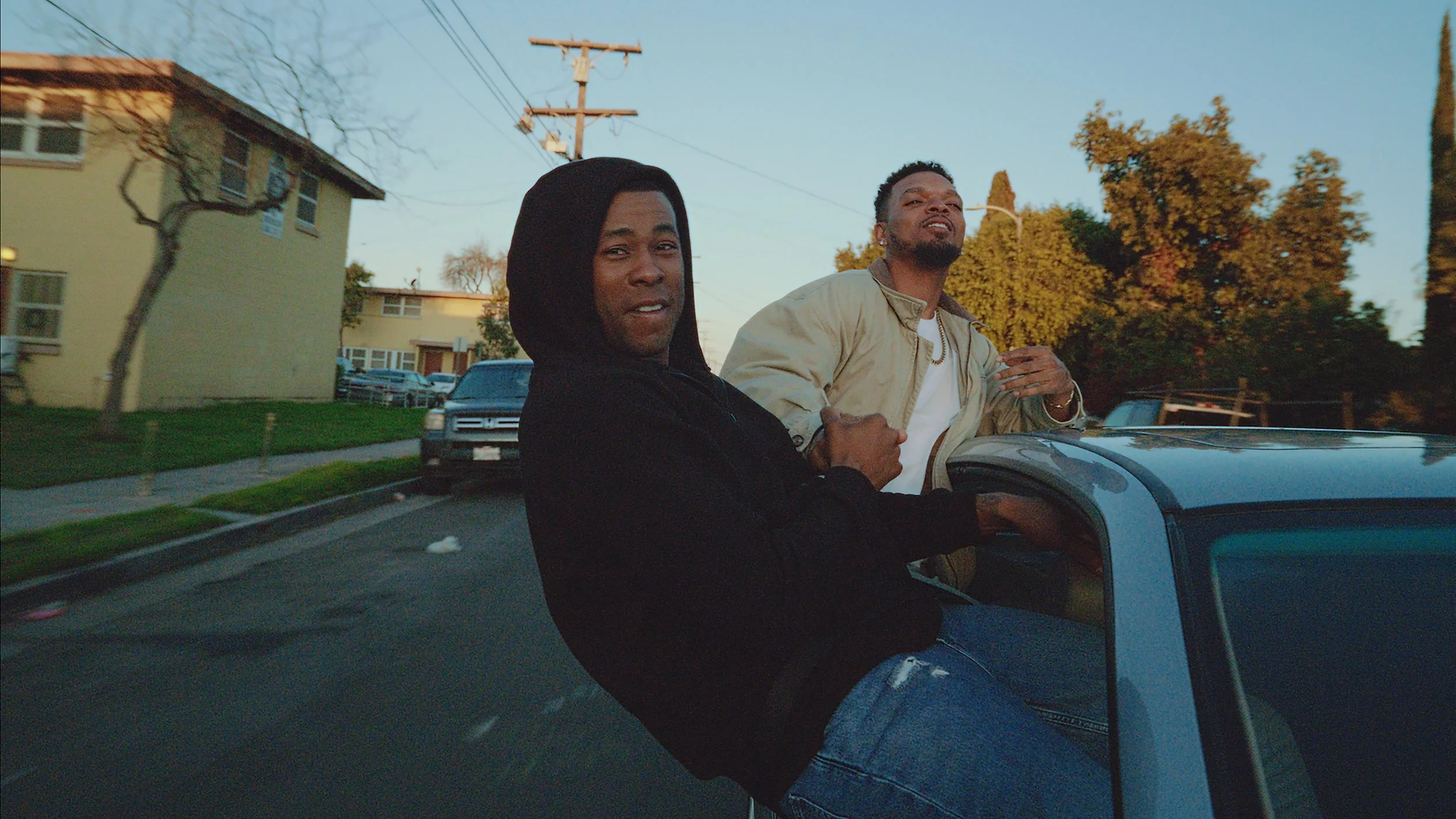
Still from If I Go Will They Miss Me. Courtesy of Sundance Film Festival.
Pro-immigrant sentiment was everywhere, not just in explicitly Black and brown spaces. Before premiering her dark comedy starring three white actors (Rob Lowe, Will Brill, and Gillian Jacobs), director Giselle Bonilla thanked her immigrant parents to loud applause. “My neutral is rage, but people don't listen to me when I'm yelling,” she says on the panel after the film’s premiere. “So if I can make them laugh first, sometimes they listen.”
She did make me laugh. As did other Sundance titles, although the festival leans more toward exploring the rage and anguish side of the human experience. Selected films are thoughtful, provocative works of art, and the community that gathers to see and support them is special.
But is it enough? The Hollywood ecosphere is collapsing all around. Mergers like the proposed Netflix acquisition of Warner Bros. studios mean further consolidation of media ownership into the hands of a few billionaires. I work at an organization called Free Press (not Bari Weiss’), and we recently released a report called “Complicit,” which details all the ways media companies have bent their knee to the Trump administration’s demand to end DEI. Spoiler—almost all of them have, and it’s only getting worse.
The Hollywood pipeline is broken, and while some lament the “death” of the indie film marketplace, I’m excited about what comes next, how the diverse and inclusive Sundance community can replicate its energy and excitement and get these boundary-pushing films out to wider audiences.
Because, just to be clear, that’s what our creative class does. Edward James Olmos and Lou Diamond Phillips both attended the American Pachuco premiere, honoring the man who had plucked them out of obscurity and made them stars. Afterward, they joined Valdez and the film team on the panel, offering emotional tributes to Valdez and the documentary that will introduce him to a new generation.
Speaking about Valdez and Olmos, Phillips shares, “I had these two men as mentors, who taught me not just art, taught me not just film and theater and respect for the written word. They taught me how to be a human being and to stand up for what you believe in . . . it’s been 40 years, and I have no intention of stopping.”
Through theater, Valdez helped Cesar Chavez and Dolores Huerta win rights for farmworkers, and he didn’t stop there. He kept organizing for Chicano civil rights through his Teatro Campesino and films like Zoot Suit and La Bamba. More than once at this year’s Sundance, I heard him talk about passing the torch to the next generation of Latino filmmakers and organizers, and that’s what I saw happening. Not just at events with Valdez, but in theaters and at events across the festival.
Perhaps my favorite film this year was Josephine, and I know I’m not the only one who felt that way, as it arguably won the festival, getting not one but two awards. It’s a thoughtful introspection into a lot of things—the ways our society fails survivors of gender-based violence, the struggles of parents to protect their kids, and the ways race and gender intersect to create cascading barriers to safety.
But as director de Araújo said after the screening, it’s also about something more. It’s about a person—here, a little girl of color—realizing that “whenever she hears suffering, she’s going to answer the call.” That’s the message the festival’s Latinx community brought to Sundance this year. That’s the realization we celebrated, the one we needed, and the one we took home. So yeah, it was a good year of Latinx representation at Sundance.