
Faculty Spotlight: Marie Cruz Soto
Marie Cruz Soto on teaching community-oriented history
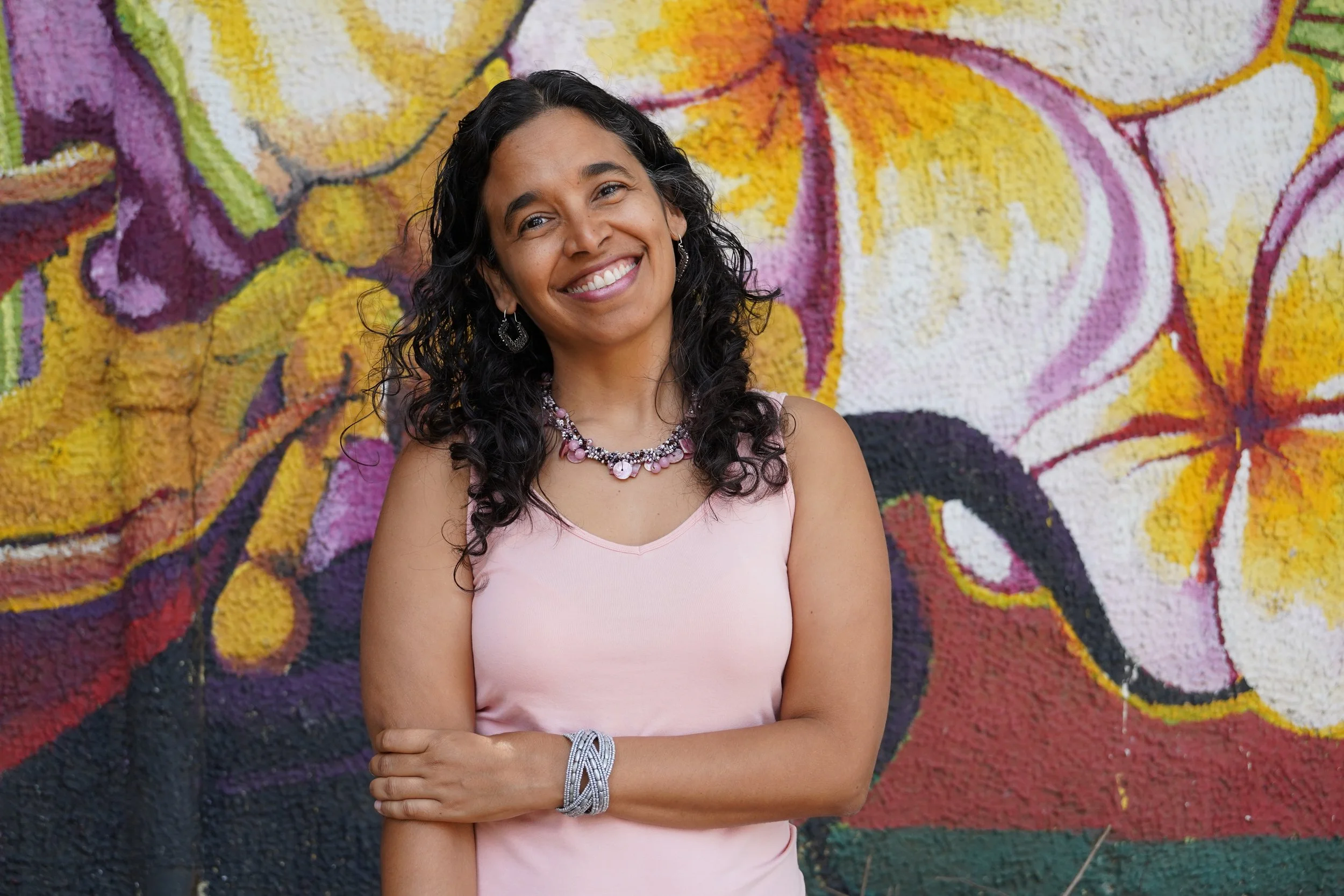
Marie Cruz Soto is a historian and a clinical associate professor at the Gallatin School of Individualized Study at NYU. Her research is grounded in understanding the effect of colonial systems and decolonization struggles on the history of Puerto Rican island Vieques. She aims to transform thought into practice beyond university walls through her involvement in community-centered projects that fight for the sovereignty and empowerment of Viequense communities. In fall 2026, Cruz Soto will teach the courses Feminism, Imperialism, Decolonization as well as Narrating Memory, History and Place.
What life or professional experiences led you to become a historian?
My family is from Vieques. I was born in San Juan, so my life when growing up was always coming and going between San Juan and Vieques. And both realities seem to be so disconnected. People in San Juan [...] did not understand what it meant to live on an occupied and militarized island. [...] Thus, there was this discourse in San Juan that the US is not bad but rather a human rights defender. But if you went to Vieques, you would see a land strip between barbed wire. You would see Marines, you would see service men, you would see, and can still see, occupied people. People in San Juan did not want to hear about the violence that was part of daily life in Vieques. And that history was not written in history books. So I wanted to understand more about myself, my family, and my community. I also wanted the ability to narrate this history and have the narrative recognized as history.
What aspects of history are your studies focused on?
I am a historian who focuses on Vieques, an island of the Puerto Rican archipelago. In the 1940s, the US Navy expropriated three quarters of the island and squeezed the civilian area between an ammunition depot to the west and a live fire target range to the east. I am interested in themes related to militarized colonialism; how people imagine community and establish relationships with place, land, and island. I research ways to think about land expansively. That is, more than just earth, not just a commodity that people can buy or possess, but land as in grounded relationships of reciprocity, which allows for communities to survive, thrive, and establish relationships with each other.
What kind of courses do you teach?
I teach a class called Boundaries and Transgressions. It’s an introductory course about how the “I” forms, about the formation of the self and the ego. We think about group dynamics, going from the ego and the self, to how people think of themselves as a “We,” and then how they think of themselves as a nation. So, in the class, we think about how humans draw boundaries around the self and a community, then explore those dynamics through the particular case of the U.S. as an empire and a settler colonial state. I also teach another class called Feminism, Imperialism, and Decolonization. In that class, we think centrally about epistemology from a feminist, decolonial, and anti-racist lens.
Your work involves researching and teaching about Vieques but also engaging in several projects with the Viequense community. Can we discuss the on-the-ground projects you are developing with the Viequense community and what decolonization imaginaries have emerged from them?
One of them is the Archivo Historico de Vieques, which aims to empower the Viequense community to narrate their own histories. I also work with La Colmena Cimarrona (The Maroon Beehive), an organization that strives for food sovereignty in the Puerto Rican archipelago, particularly in Vieques. And we are currently creating a land trust, Fidecomiso Tierra de Valientes, that addresses access to land for the Viequense community.
Why is your involvement in the community-based work in Vieques so important to you?
I think about knowledge production as the product of experience and transgenerational dialogue. It is built in conversation, shared. I cannot imagine teaching about feminist decolonial imaginaries without having some experience on the ground of what it means. How can we think about empowerment, liberation, or whatever theoretical word we use without experience? That is a responsibility I have. If I teach about this, it has to come with that work. Our commitment is to address the extractivism of knowledge from academia. Take what you are studying not as an object of study, but as a relationship.
—
Interview by Pamela Santana Oliveros (PhD student, Performance Studies). Edited by Isabel Saavedra-Weis (PhD student, English).
About The Latinx Project
The Latinx Project: Interdisciplinary Center for Arts and Culture advances Latinx Studies through creative and interdisciplinary programs. Founded in 2018 at New York University, the center’s distinguishing programs include the Artist-in-Residence, Curatorial Open Call, the Intervenxions digital platform and publication, and fellowships for junior scholars and graduate students.