
Q&A with Dr. Maya Doig-Acuña, 2026-27 Miriam Jiménez Román Fellow
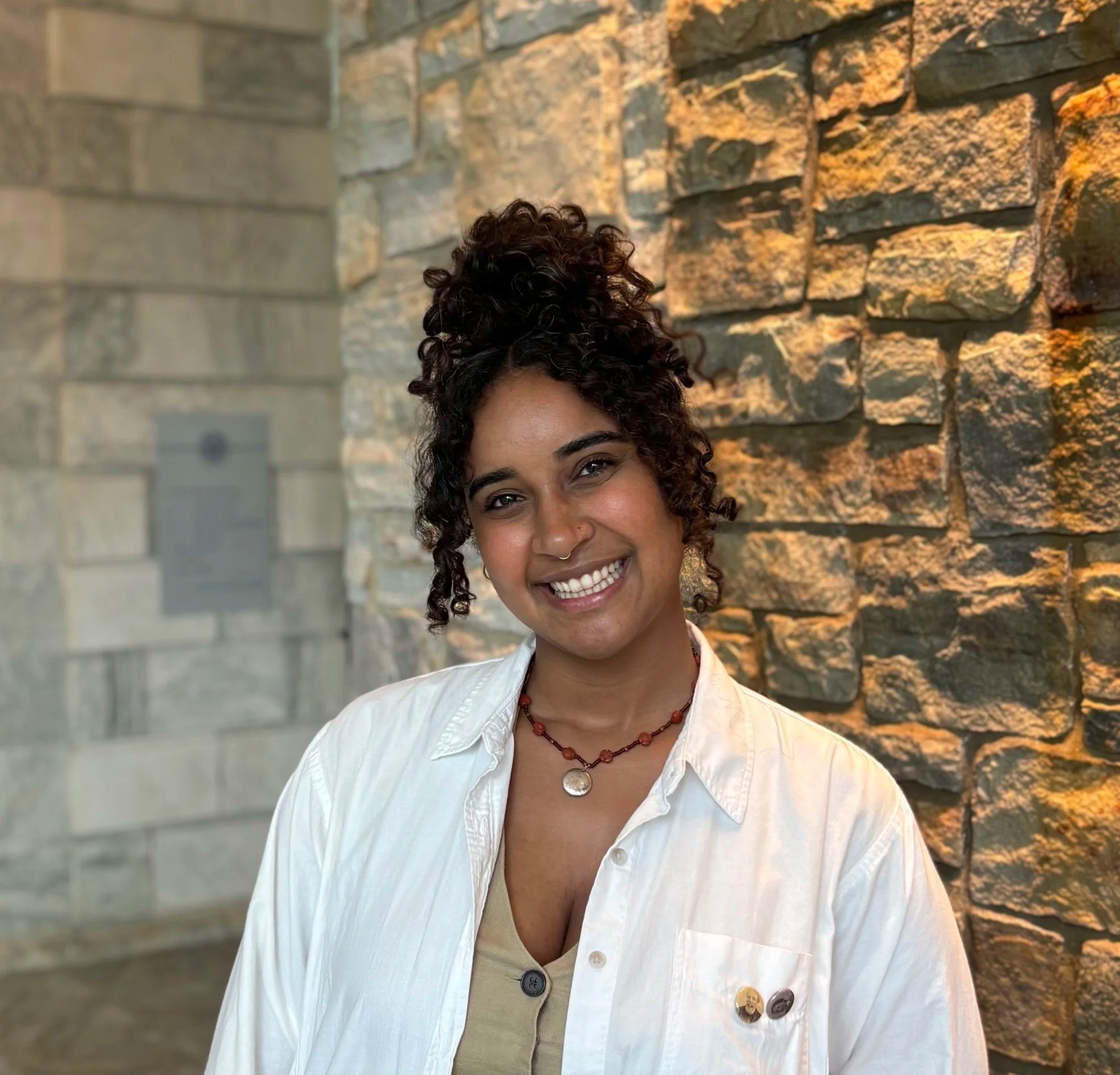
The Latinx Project announces the selection of Dr. Maya Doig-Acuña as the 2026-27 Miriam Jiménez Román Fellow. Named after the late Miriam Jiménez Román, a pioneer in the field of Afro-Latinx Studies, this fellowship supports post-doctoral candidates and junior scholars whose research advances the study of Afro-Latinx communities in the U.S.
Tell us about your work and how your work contributes to contemporary Afro-Latinx studies.
My work examines the idea and practice of kinship as it formed around twentieth-century diasporic Blackness between Central America, the Caribbean, and the U.S. – specifically New York City. I focus on Afro-Caribbean Panamanian transnational community formation in the afterlife of Panama Canal labor migration, and the vernacular memory work that animates this history into the present. Black Panamanian memory work, especially as led by Black women, offers an illuminating site through which we can advance Afro-Latinx Studies as an intellectual project that clarifies geographic multiplicity, liminal identity, and diaspora as a template for political kinship. Using Black feminist methodological approaches, I document how everyday Black Panamanian women in Brooklyn, Panama City, and the former Canal Zone have used commemorative practice to resist a logic of social alienation fomented by the state. Ultimately, I am interested in how we can more precisely understand the creative and intimate strategies through which Afro-Latinx communities – the people at “the seams of society,” as described by the late Miriam Jimenez Román and Juan Flores – navigate exclusionary conditions under and against empire.
What ideas do you have to enrich the NYU community?
At NYU, I’m looking forward to supporting the Latinx Project in strengthening links between the campus and local communities in New York. I am especially eager to continue building on former fellows’ efforts to forge connections with Black Central American folks in New York. I want us to engage Black Latinidad as deeply emplaced – in fact made meaningful mostly through place – and to honor our own communities as not only subjects, but producers of history, from the material culture that folks collect and preserve, to the oral histories they share, to their embodied relationships to local landmarks. I also want to cultivate more space for conversations that prioritize gendered experience as a central dimension of Black Latinidad in place.
What does it mean to be named this year's Miriam Jiménez Román Fellow?
Miriam Jiménez Román’s legacy has nourished all of us in Afro-Latinx Studies; for me, her work offered one of those early entry points to this field, before I had the precise language to recognize it as such. It is an honor to carry her name this year as a 2026-2027 Miriam Jiménez Román Fellow. As a fellow, I am thrilled to contribute to the collective labor of expanding infrastructure and resources in Afro-Latinx Studies – which now feels quite urgent – as well as forging deeper connections between the academy and community. Both of these efforts represent what public humanities, at its best, can do. That work is also very much what Dr. Jiménez Román accomplished as a scholar, and is part of the pathway she opened for us.
Now in its fifth year, this fellowship is also forming its own lineage – with an emphasis on feminist and queer Afro-Latinidad, Caribbean and Central American Afro-Latinidad, Afro-Latinx geographies, and New York Latinidad. Being part of that emerging lineage feels like a tremendous and rare opportunity!
—–
About Maya Doig-Acuña
Dr. Maya Doig-Acuña is a writer and interdisciplinary scholar of Black hemispheric diaspora, memory, and 20th-century migration in the Circum-Caribbean world. She recently completed her doctorate in African & African American Studies at Harvard University, and will begin as an Assistant Professor of Africana Studies at John Jay College in January 2027. Doig-Acuña’s scholarship centers Black Panamanian women as diasporic memory workers, and traces their commemoration and placemaking as practices of kinship that exceed national inclusion. Her essay, “The Most Caribbean of Stories,” was selected as one of Southern Cultures Journal’s Top Ten of 2021. You can find their other published work in the NACLA Report on the Americas, Guernica Magazine, Remezcla, and in the forthcoming volumes, Black Central Américas, Ebbs and Flows of Hemispheric Blackness, edited by Kaysha Corinealdi, Natasha Gordon-Chipembere, Paul Joseph López Oro, and Nicole Ramsey, as well as Latinx Methods and the Politics of Praxis, edited by Maia Gil’Adí and Thomas Conners. Doig-Acuña is a born-and-raised Brooklynite.
About the Latinx Project at NYU
The Latinx Project: Interdisciplinary Center for Arts and Culture advances Latinx Studies through creative and interdisciplinary programs. Founded in 2018 at New York University, the center’s distinguishing programs include the Artist-in-Residence, Curatorial Open Call, the Intervenxions digital platform and publication, and fellowships for junior scholars and graduate students.
Supporters
The 2026-27 Miriam Jiménez Román Fellowship is made possible with support from the Mellon Foundation.