Abinadi Meza: Latinx’s “X” and the Abstract Film
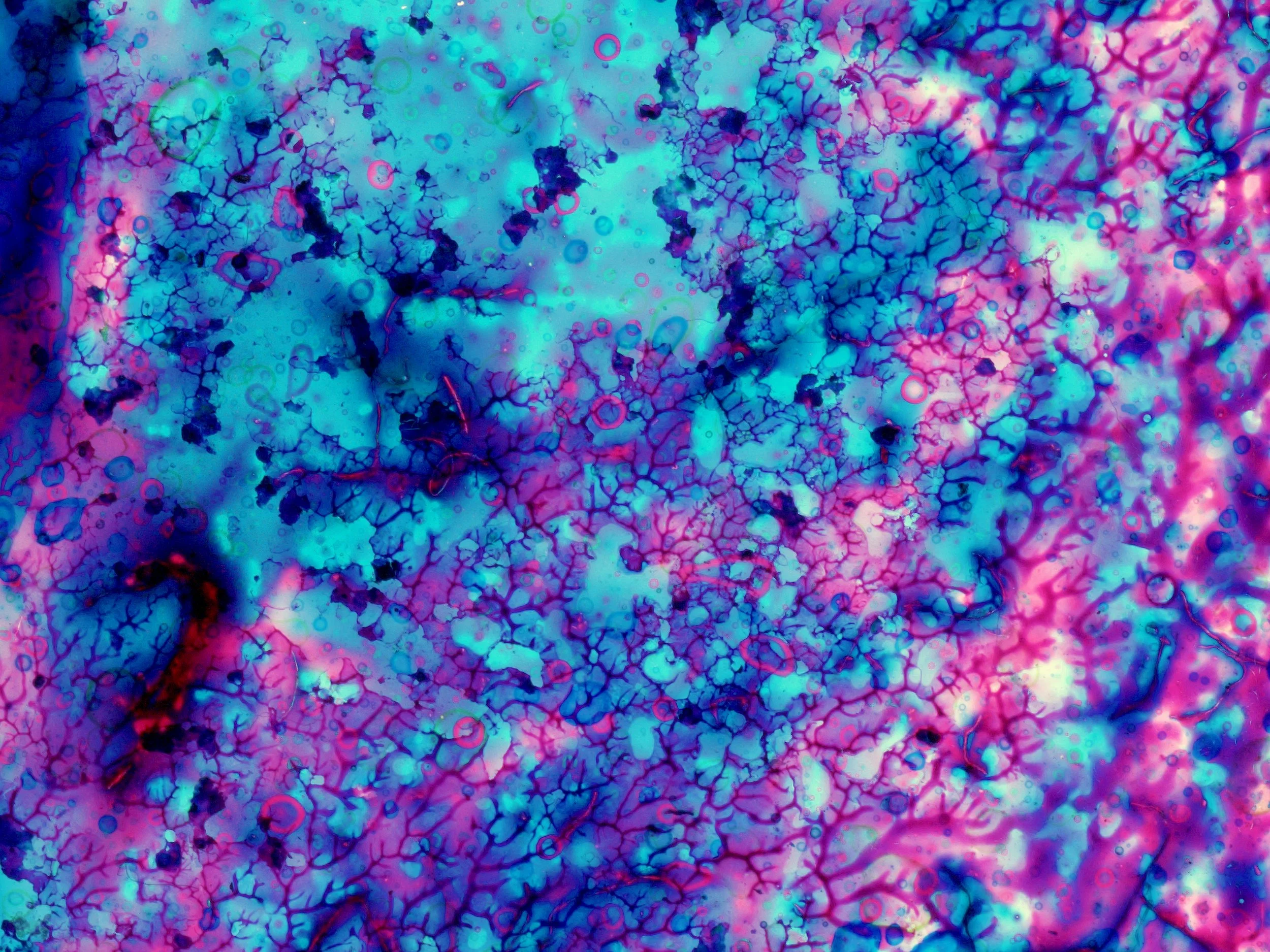
Abinadi Meza, still from Sunspots, 2025
Latinx filmmaker Abinadi Meza has released eight abstract animated short films since 2023 at experimental film festivals in the Americas and abroad. He’s done this without ever touching a camera. Instead, he paints or scrapes directly onto film stock and exposes it to dust and dirt. The reception these works have received within this specialized circuit acknowledges, above all, his mastery of this technique.
The most recent of these shorts is Polychora (2026), which premiered at Art + Film + Vienna and screened at the Brooklyn Film Festival. The first, Tlaloc (Lines Drawn in Water) (2023), made its debut at Experimental Brasil in Rio de Janeiro. In 2024, it was shown alongside films by Stan Brakhage, David Gatten, Chick Strand, and Joyce Wieland, among other prominent historical figures in experimental cinema, at the Hamilton Fish Pool in NYC as part of “No Swimsuit Required: Water Works,” a program the Public Art Fund and the Filmmaker’s Cooperative organized.
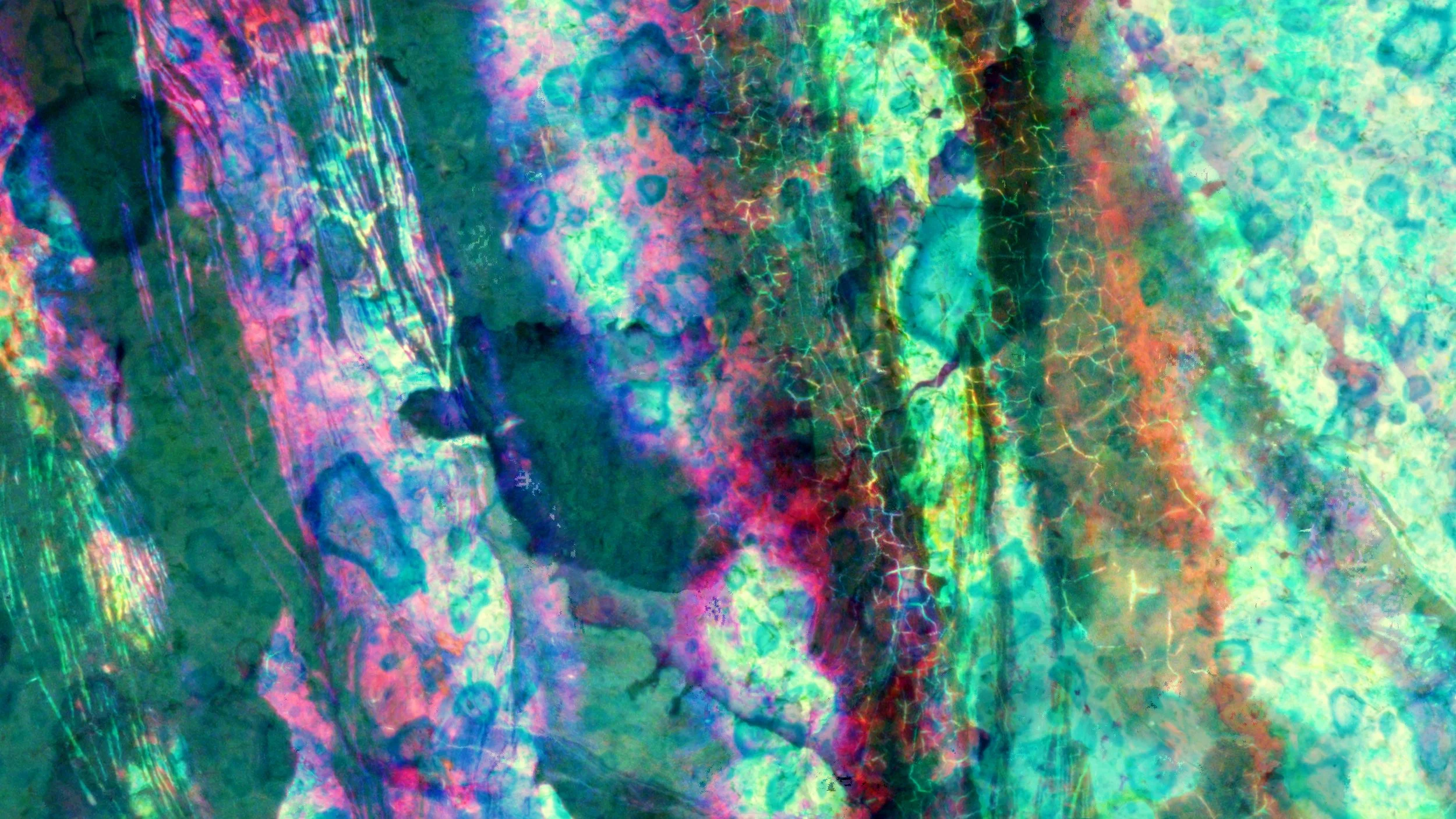
Abinadi Meza, still from Polychora, 2026
There is not a great deal of critical literature on abstract animation. Among the first examples in early 20th-century European avant-garde cinema are Walter Ruttmann’s Lichtspiel Op. 1 (1921), “play of light,” and Hans Richter’s Rhythmus 21 (1921), among others. These films use geometry and the concept of “visual music.”
However, neither these movies nor those by Norman McLaren—one of the most important figures in modern abstract animation—are sources for Meza. His references are the hand-painted works of Stan Brakhage, the leading filmmaker of the American underground who worked on movies like Night Music (1986) and The Dante Quartet (1987), or of the Spanish filmmaker José Antonio Sistiaga’s feature Ere erera baleibu izik subua aruaren (1970) and the short film Impresiones en la alta atmósfera (1989).
Beyond geometric abstraction and “visual music,” he also looks at Abstract Expressionism in painting and to the prominence of emotion and gesture captured directly on film. The painter Mark Rothko associated the images of this artistic movement with the symbolism of myths and with the most ancestral, primitive aspects of our psychology. This invites us to draw connections between the color and texture of Meza’s films and the deepest layers of our memory, dreams, and identity.
Tlaloc is one example. The title refers to the Aztec god of rain who makes plants sprout and crops grow. Therefore, it looks as though the images emerge from the film stock in the movie just as life on Earth springs from rain. The movement of the 16 mm film as it passes through the projector resembles rain. It is like a torrent of images.
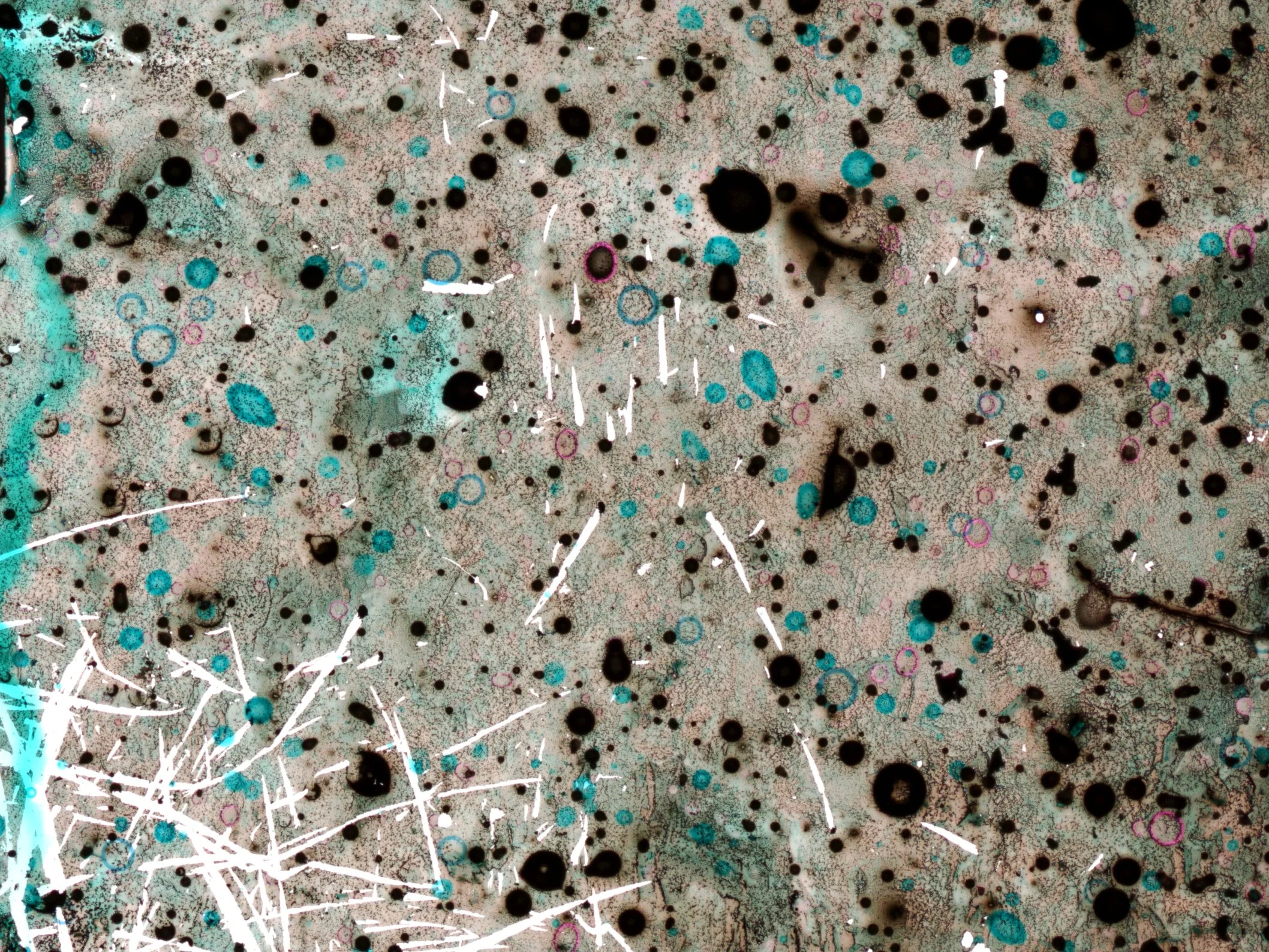
Abinadi Meza, still from Tlaloc (Lines Drawn in Water), 2023
The experience of watching abstract animated films like Meza’s is primarily sensory. There are colors and shapes that are difficult to identify since they move so quickly that it’s impossible to retain them in memory. Meza is ironic about stills. The images never look like they do in those reproductions.
For Rothko, however, abstract expressionist works were not just sensory. He defended the subject. Titles and statements by the creators of hand-drawn abstract animated films are clues for viewers who are trying to understand what the films aim to convey. The title Tlaloc is a good example. Without this, an audience might not be able to associate the work's sensory experience with mythology.
Tlaloc is also a film about identity, an important issue for Meza. In an email, he writes that he identifies as Latinx because of the “x.” Born in Chicago in 1977 to a Mexican immigrant father and an American mother and now living in Austin, Texas, he knows little about his origins. As an adult, he acquired Mexican citizenship because of this anxiety. The subtitle of Tlaloc, Lines Drawn in Water, invites reflection on how blurred connection with ancestors can be—that void that may exist in the past.
In Latin America, Tlaloc was selected for festivals in Argentina, Ecuador, Mexico, and Brazil. Meza’s search for Latinx identity found a welcoming reception in these countries and continued in Parangolé (2023), which premiered in Venezuela. In this short film, he pays homage to contemporary Brazilian artist Hélio Oiticica, who created the works of that name to cover dancing bodies, turning them into part of life’s movement.
Abstract films made without a camera can also express political rebellion. Sistiaga titled his feature in Basque, the language of the Basque Country. Francisco Franco’s dictatorship at the time suppressed its use in Spain.
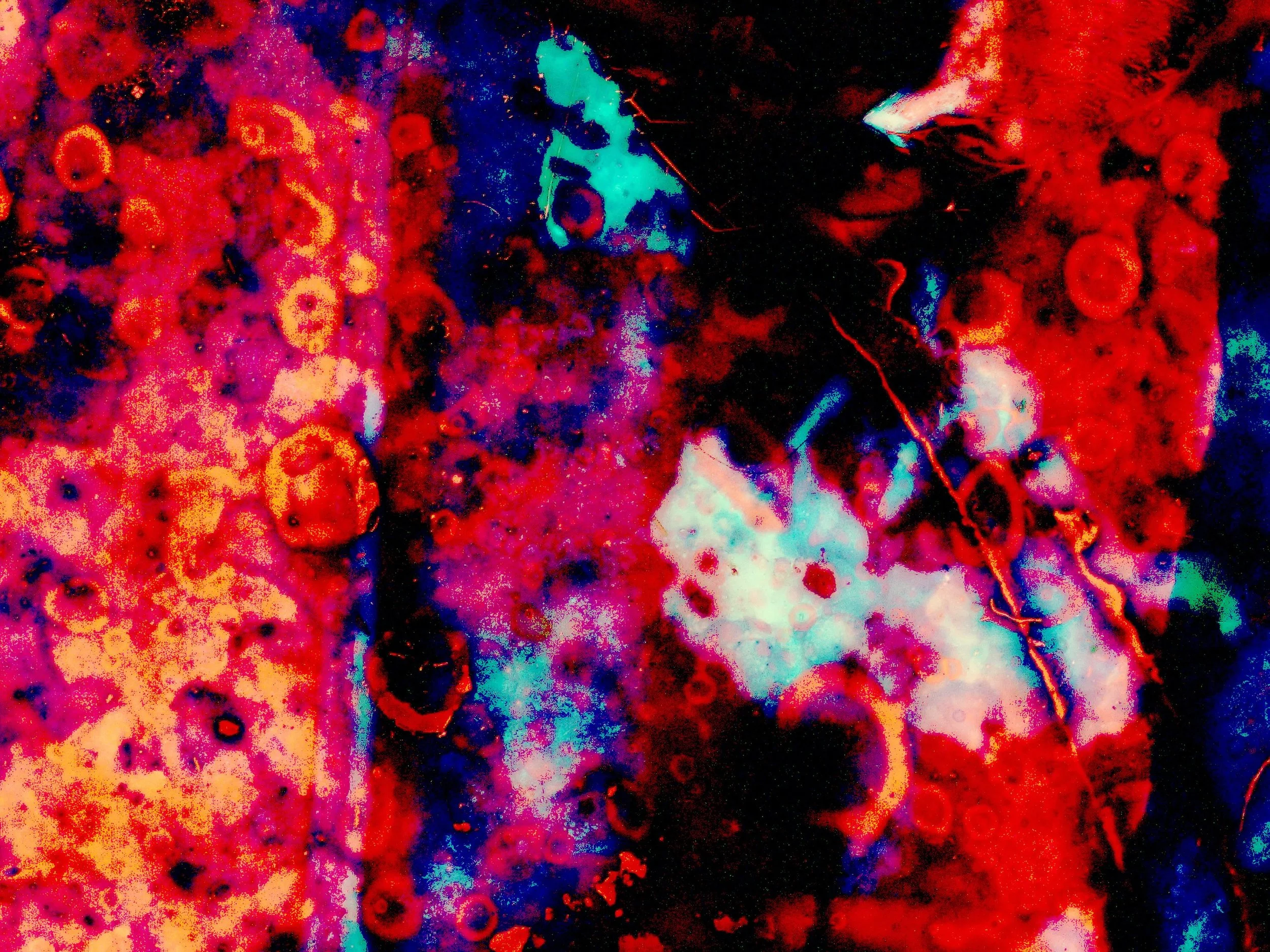
Abinadi Meza, still from Manifesto of Feeble and Bitter Love, 2025
Meza follows a similar path in Manifesto for Feeble and Bitter Love (2025), which premiered at the Bideodromo festival in Bilbao, in the Spanish Basque Country. The title comes from a 1920 manifesto by the Dadaist poet Tristan Tzara, in which he proposes chance as a method for creating poems from newspaper clippings. The way Meza makes his films is subject to chance interactions between the film and its elements. His work also revives the Dadaists’ protest—through their art of nonsense—against war.
This leads to another important element to consider: sound. It is another striking aspect of Meza’s films; in addition to being a filmmaker, he is also a sound artist and musician. The sound in Manifesto for Feeble and Bitter Love is from a two-second documentary clip: the pause a recently released Palestinian prisoner takes from crying to catch his breath. A moment like this is a reminder that people are living, breathing human beings. It is reminiscent of the “politics of breathing” in Tear Gas (2019) by Los Ingrávidos Collective from Mexico.
The dominant red in the color palette may be an expressionist reference to the mythical blood and fire of war. The title and paratexts can politicize visual perception and encourage discovery of such elements. There is a hope here that cinema will revitalize people’s sensitivity so they can perceive other impressions in the images automatically consumed in the media, without recognizing the reality of the world within them. The prisoner’s breathing is another example. Its connection to life can be lost in the sensationalist context that turns it into drama.
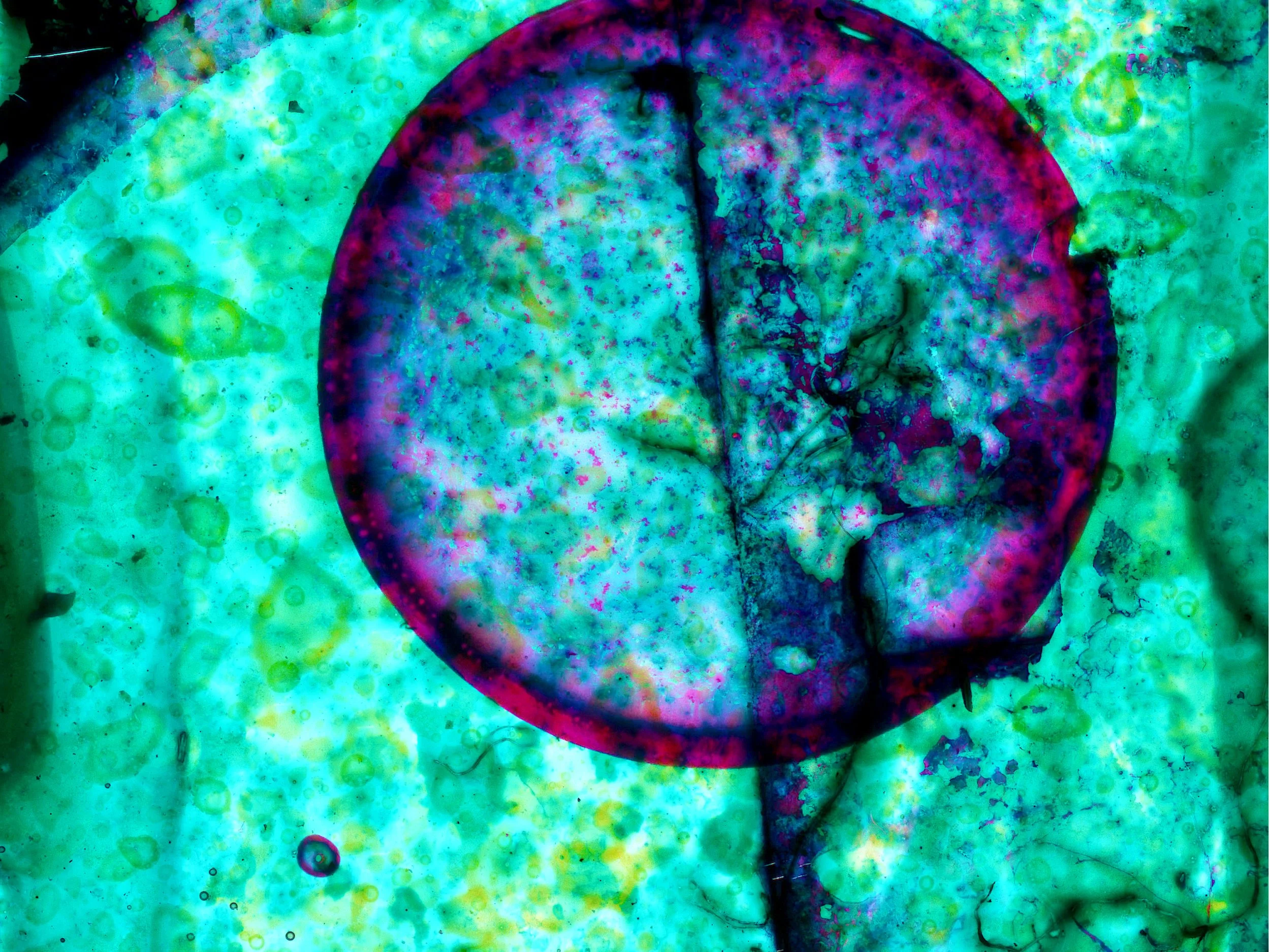
Abinadi Meza, still from Parangolé, 2023
Returning to the sound, the track in Parangolé reinforces the title’s connection to Oiticica. Meza recorded it in Rio de Janeiro, and it is recognizable because there are people speaking Portuguese. The recording happened during a rainstorm, which also evokes the film’s interaction with the elements and the randomness inherent in the creation of cameraless animations.
The soundtrack for Tlaloc was created using contact microphones. They do not pick up sound waves transmitted through the air but rather the vibrations produced by their interaction with solid surfaces. The sound is therefore the result of a physical intervention similar to the scratches on the film and the deterioration caused by its exposure to the elements.
The journey from Tlaloc to Parangolé did not lead Meza’s abstract, cameraless animated films to adopt a Latin American theme. However, it has taken a direction that is also characteristic of some Latinx identities: toward cosmopolitanism. The title of his next short film, Aka (2024), means “red” in Japanese and is accompanied by the character 赤 in that language.
Meza used the sound of a bullet train in Japan, but the focus shifts from geographical space to time. Aka is a piece about the simultaneous experience of three temporalities. The first is the movement of the film reel that produces the images—the time of cinema. The second is perceived in the sound—that of a vehicle traveling at very high speed. The third evokes an image of blood—not mythical blood spilled in war but that which circulates through a body like a train moving through an unseen landscape. It becomes pure movement of life in abstraction and pure time. Here, red appears as the color of time.
In Sunspots (2025), the Mexican-American filmmaker’s abstract, cameraless animated film takes another turn toward a cosmic theme. The soundtrack is reminiscent of Sistiaga’s Impresiones en la alta atmósfera. It is based on recordings made in the ionosphere, one of the Earth’s highest atmospheric layers. Particles there become electrified by sunlight, creating a crystalline, vibrating soundscape in the short film. It is another way of seeing the Sun—through sound.
In Meza’s piece, however, there is nothing that represents planet Earth, like the circle in Sistiaga’s. It resembles a microscopic plant world. The cosmic and cellular dimensions are connected, as in Dog Star Man (1964), Brakhage’s best-known film. The viewer thus gains a perception of the cosmos and life within the context of an interest in the relationship between the infinitely large and the minuscule—yet one that does not follow the environmentalist line of so many films in contemporary experimental cinema.
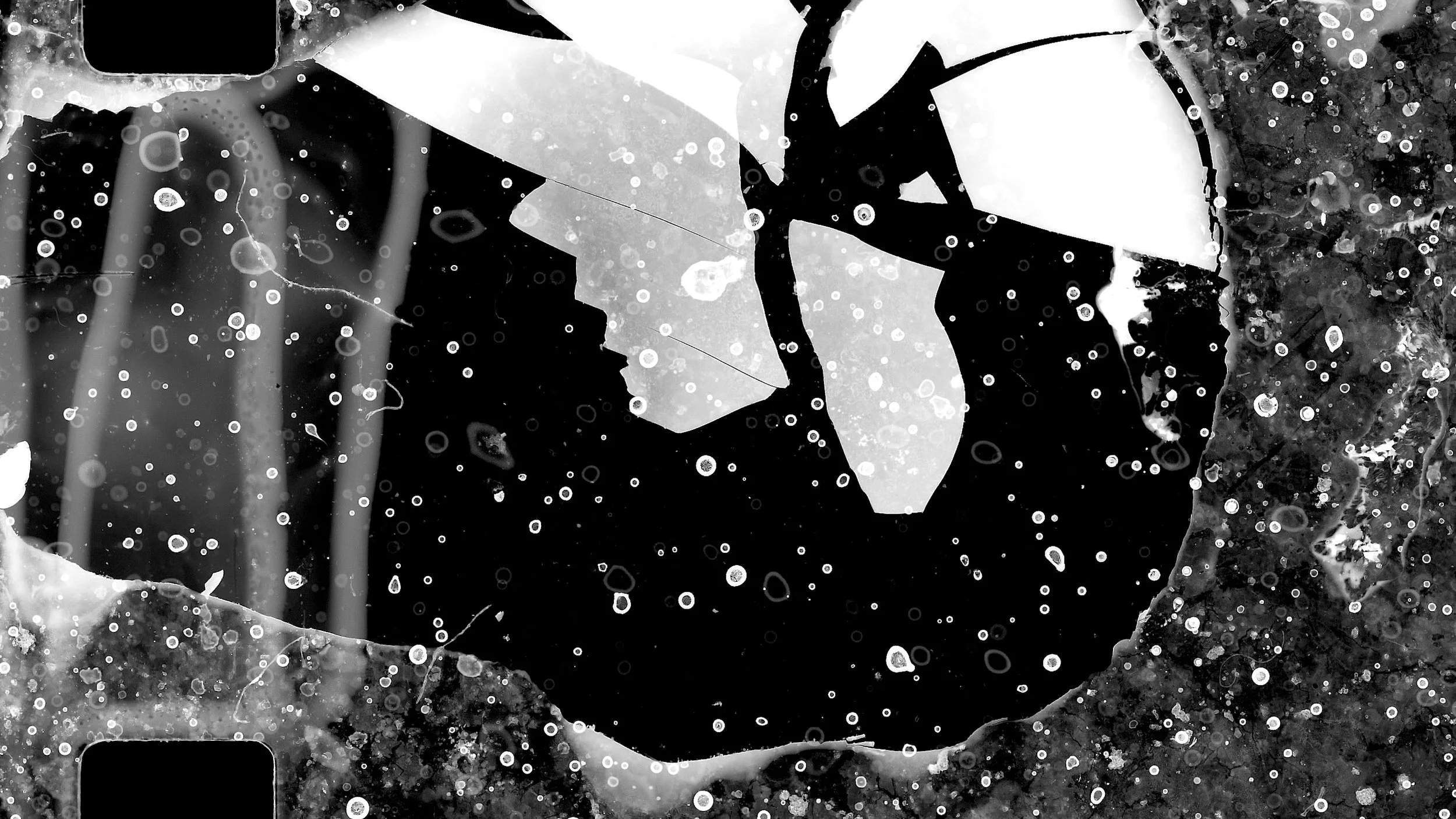
Abinadi Meza, still from Eyes Break Into a Thousand Lights, 2024
In Eyes Break into a Thousand Lights (2024) and Polychora (2026), Meza revisits the trajectory of Aka to explore even more abstract speculations about light and space, respectively. This links the abstract animations to Meza’s Ouroboros Transmission cycle (2012–2023). The selection of another of these films, Time Crystals (2021), for the Crossroads experimental film festival at the San Francisco Cinematheque in 2022 was instrumental in sparking the interest that now surrounds the filmmaker’s work.
The title Eyes Break into a Thousand Lights refers to Stan Brakhage’s manifesto about an eye capable of freeing itself from the barriers imposed by visual education and recovering its innate ability to perceive a thousand shades of green in what’s recognizable as “green,” for example. Ironically, Meza works here without color, using images that suggest the explosion of the visual organ into an expanded perception, and speculating again on the possibility that the eye might see sounds, not just light.
In Time Crystals, Eyes Break into a Thousand Lights, and in Aka’s perception of time, one can discern an engagement with the philosophy of Gilles Deleuze and Félix Guattari. This is explicit in the concepts evoked in the titles, such as “time crystals” or “a thousand plateaus.” It reflects a widespread trend in contemporary cinema, which seeks validation in academic thought. Meza also shows an interest in speculation surrounding fractals.
This is philosophy, but expressed through art, which brings to mind a key figure for the filmmaker—a Latin American writer who is also a universal figure: Jorge Luis Borges. This brings about another possible meaning for the “X” in “Latinx.”
In Polychora, as the title suggests, philosophical and literary speculation takes on a geometric form. The abstract shapes look like liquid and cells, but their mutations refer to four-dimensional figures that lie beyond the reach of the human capacity to perceive space.
The series of abstract, hand-drawn, cameraless animated films seems to culminate in Polychora before opening toward something different. Could it be speculation similar to that in Time Crystals and the Ouroboros Transmission cycle? These other films are centered on memories that are not psychological states but lattices existing outside consciousness, in a time where—just as in space—they can be like objects that remain even when they are not perceived, shifting from a formless state to a crystalline order, and then fracturing.
These short films confront memories and thoughts that could belong to anyone. The narrator, Ouroboros A2M37, is a synthetic voice, and the images are within archival footage. A viewer may recognize something of their past in those images, yet only in unfamiliar people and places. This sense of emptiness can lead to a melancholic reflection on identity, returning to the question of the “X.”
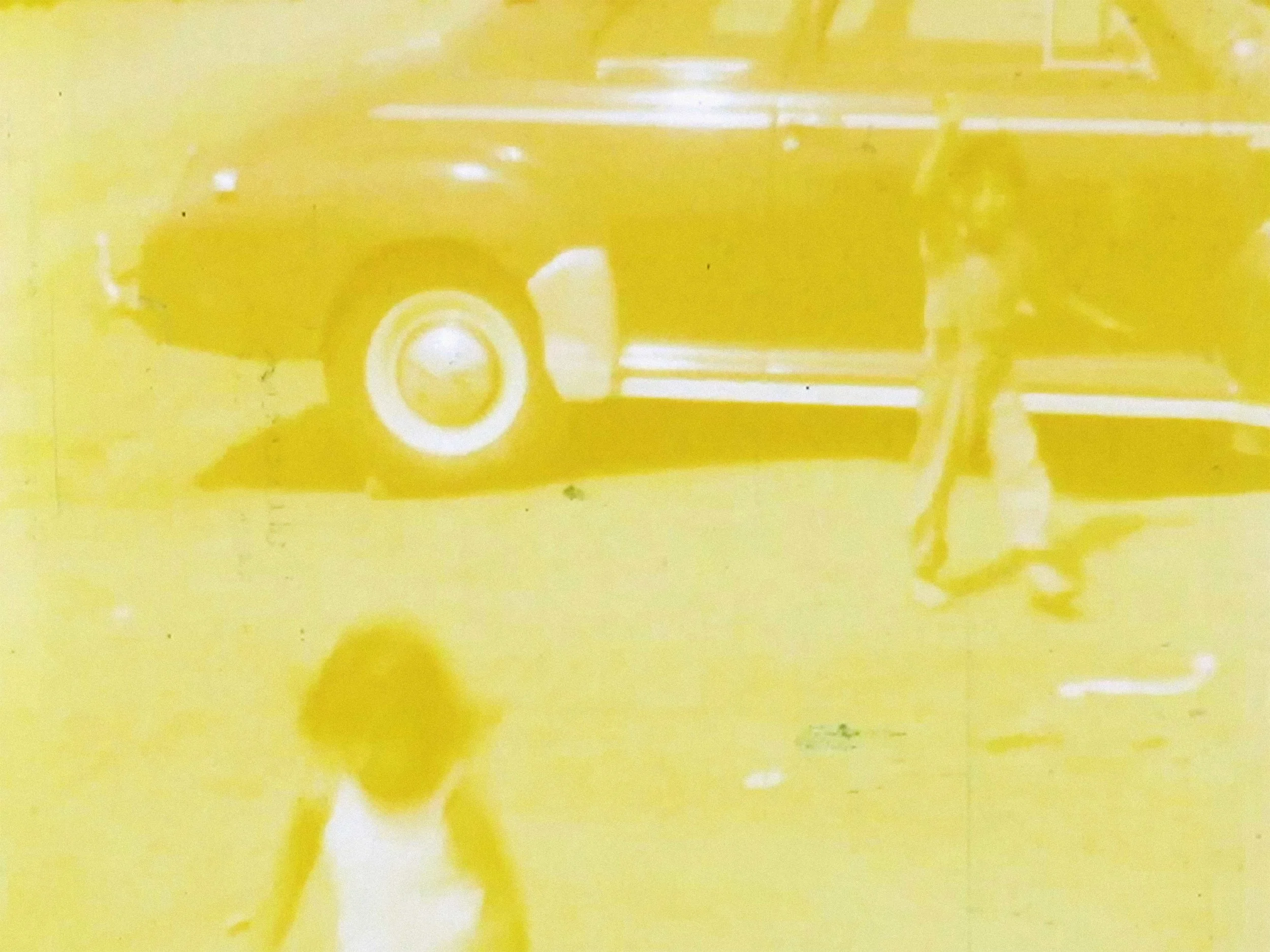
Abinadi Meza, still from Surrounded by Colors We Could No Longer See, 2022
In Surrounded by Colors We Could No Longer See (2023), the “X” takes on meaning in relation to the desert—Meza is a coauthor and coeditor of a book about this space. There is a flag, and it is an American flag. But the piece includes a written text that refers to trips to Mexico, the Border Patrol, and the experiences of a family that could have been Meza’s—“They stopped us, but she was white, and she did the talking,” for example.
Airplane contrails and a rocket in the sky open a vision of the future in the past. So does electronic music. But there is an image from Alfred Hitchcock’s Vertigo (1954)—a tree trunk whose rings form a time spiral. It springs from the depths of the past, deeper than Independence and the conquest of the Americas. It comes from the era of the mythical, ancestral desert.
It’s not obvious whether Meza or a family member filmed the images. Perhaps they are found footage. But there is a point-of-view shot in which the young mother of a nomadic desert family appears. She sets a plate of food as if it were before the viewer, as if they were sitting at the table, eating with these people in the past. But the editing creates long pauses of black limbo between the fragments, and this image—like all the others—is lost in this way in the abyss of time.
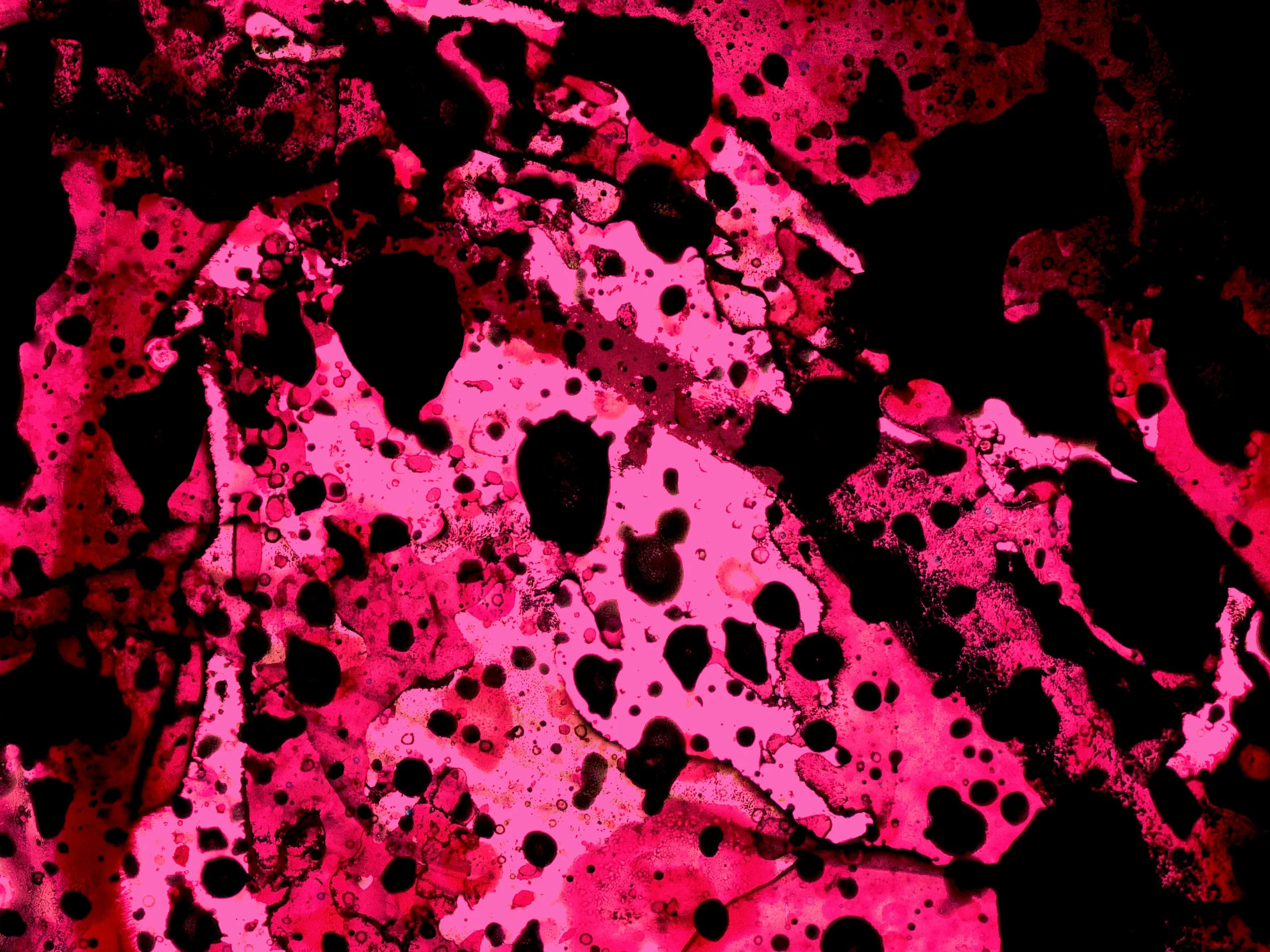
Abinadi Meza, still from Aka 赤, 2024
The “X” here once again represents melancholy, but also abstraction. It’s present in a shot where the image dissolves into a desert color, one that also arises from the worn film stock. Confronted with elusive answers to the question of identity, there’s another abstract truth, such as the fluidity of life in Tlaloc or the red of time in Aka. The deepest part of memory is color, and it may be that yellow, before it disappears into the void.