
Tamara Cedré’s Visual Echoes of History
In June 2025, I participated in a panel discussion at the Culver Center for the Arts to discuss To Rise Above the Ruins, an exhibition then on view at the Riverside Art Museum. Curated by Dr. Catherine Gudis, this exhibition showcased the last decade of Tamara Cedré’s multi-sited social practice artwork.
I first met Cedré over a decade ago. After reading my book, Imaging the Great Puerto Rican Family, she contacted me to discuss the American Century’s visual archive of Puerto Rico.We had an instant connection shaped by a mutual interest in historical images, the history and theory of photography, and the process of community-minded, image-making. All of this we discussed over delicious tostones at Cafe Berlín. In the years since, we have maintained an ongoing dialogue about these and other related topics. So, the panel discussion was a way of making public what had been a decade-long private conversation.
Interested in showcasing the longue durée,To Rise Above the Ruins engaged viewers in the American Century’s history of colonial and capitalist extractivism and infrastructural development in the name of progress and profit, and the resulting environmental injustices in Puerto Rico and California’s Inland Empire. The exhibition drew from Cedré’s carefully collected archive composed of documents, objects, historical images, and videos taken by itinerant, government, photojournalists, private company, tourists, and marketing photographers over the last century. This documentary evidence juxtaposes a selection of Cedré’s black-and-white contemporary photographs and moving images depicting the same sites, landscapes, and sometimes, the same still-standing infrastructure in historical images.
Cedré shot her stark and austere black-and-white images in the clinical style pioneered by the New Topographics. This 1975 group show, featuring a lone woman photographer, established an unromantic but aesthetic landscape photography canon depicting the industrial, rapidly urbanizing postwar built environment as critique of the despoliation of nature.
To Rise Above the Ruins evinced the racialized capitalocene’s ongoing sociopolitical and economic processes, on which the material and economic conditions of modernity as we know it today are built. The show’s images and objects bore witness to economic ruination and environmentally depleted and despoiled Earth systems, and to the human and other- than-human communities that still take root in defiance of hu/man-created ecological disaster.
To contextualize the similarities between Puerto Rico and the Inland Empire, two seemingly disparate places, during the panel discussion I drew on Antonio Benitez Rojo’s “repeating island,” thereby stretching this apt metaphor and concept well beyond its Caribbean origins. For me, sacrifice zones are repeating islands indexing analogous economic, labor, and environmental conditions as well as the kinds of populations, such as colonial subjects; immigrant, low-wage workers; and racialized and minoritized so-called surplus humans that dwell there. Sacrifice zones are repeating islands on a hemispheric, and indeed, on a global scale and individuals who live in these environmentally unjust communities share a bond across space and time, as Cedré’s exhibition illustrated.
Examining environmental justice’s visual terrain, Teena Gabrielson fittingly identified three commonly depicted genres: the fence-line photo, the portrait, and the protest snapshot. These documentary, evidentiary images help communities and organizations make a case against their environmental injustice experiences. I categorize Cedré’s historically and socially engaged photography practice as adding a fourth genre: the conceptual, artistic landscape image. Cedré’s artistic practice is frontally engaged with showing environmental and ecological injustices as part and parcel of the racialized capitalocene’s ongoingness.
Cedré’s current photographic work contributes to building an environmental justice photography canon in the United States, and in the Americas. Indigenous, Black and Afro-descendant, and Latinx photographers are actively building this photographic catalog and working to call attention to the climate, environmental, and ecological injustices plaguing their communities.
Supported by a Magnum Foundation’s “Counterhistories” fellowship, Anonymous Was a Woman, and the New York Foundation for the Arts grant, Cedré uses her emblematic historically informed approach to visualize and contextualize contemporary infrastructures including the water-energy nexus, warehouses, data centers, tourism development, and master-planned communities, such as Cotino and Esencia, and the resulting environmental fallout and injustices in Puerto Rico and California.
In No Puedo Ver el Fondo (I Can’t See the Bottom), archival images of Puerto Rico’s natural and human-made hydrologic and energy infrastructure are placed against present-day landscape views. Cedré’s Puerto Rican landscape photographs alternate between muscular black-and-white images that successfully depict the massiveness of Puerto Rico’s “modern” infrastructures and Edenic landscape views shot in color. Aqueduct pipes, a dam, a sugar mill, and power plants dwarf the human, and the natural world alike (See, Loíza Dam Pipeline, Carraizo Dam during drought, and Ruins of the sugar mill against the power plant). These structures literally reorder and control the flow of nature (e.g. water and fossil fuel–generated energy).
“Ruins of the sugar mill against the power plant,” pictures a significant sacrifice zone where the defunct Aguirre Sugar Mill and the Aguirre Power Complex are set against the Jobos Bay. It poignantly illustrates author Kate Brown’s relevant assertion: “Infrastructure can be deployed to organize social difference and distribute power. Infrastructure can be a form of violence.”
As black-and-white renderings, there is a forensic, evidentiary quality to these detailed images depicting conditions of ruination. These images serve as visual reminders of the present-day conditions of infrastructural and societal neglect that occurs in Puerto Rico. Viewers of these images would be correct in asking: “Given that these State-sponsored infrastructures of modernity have created today’s ecological disasters, isn’t it past time to build life-supporting ecologically just infrastructures?”
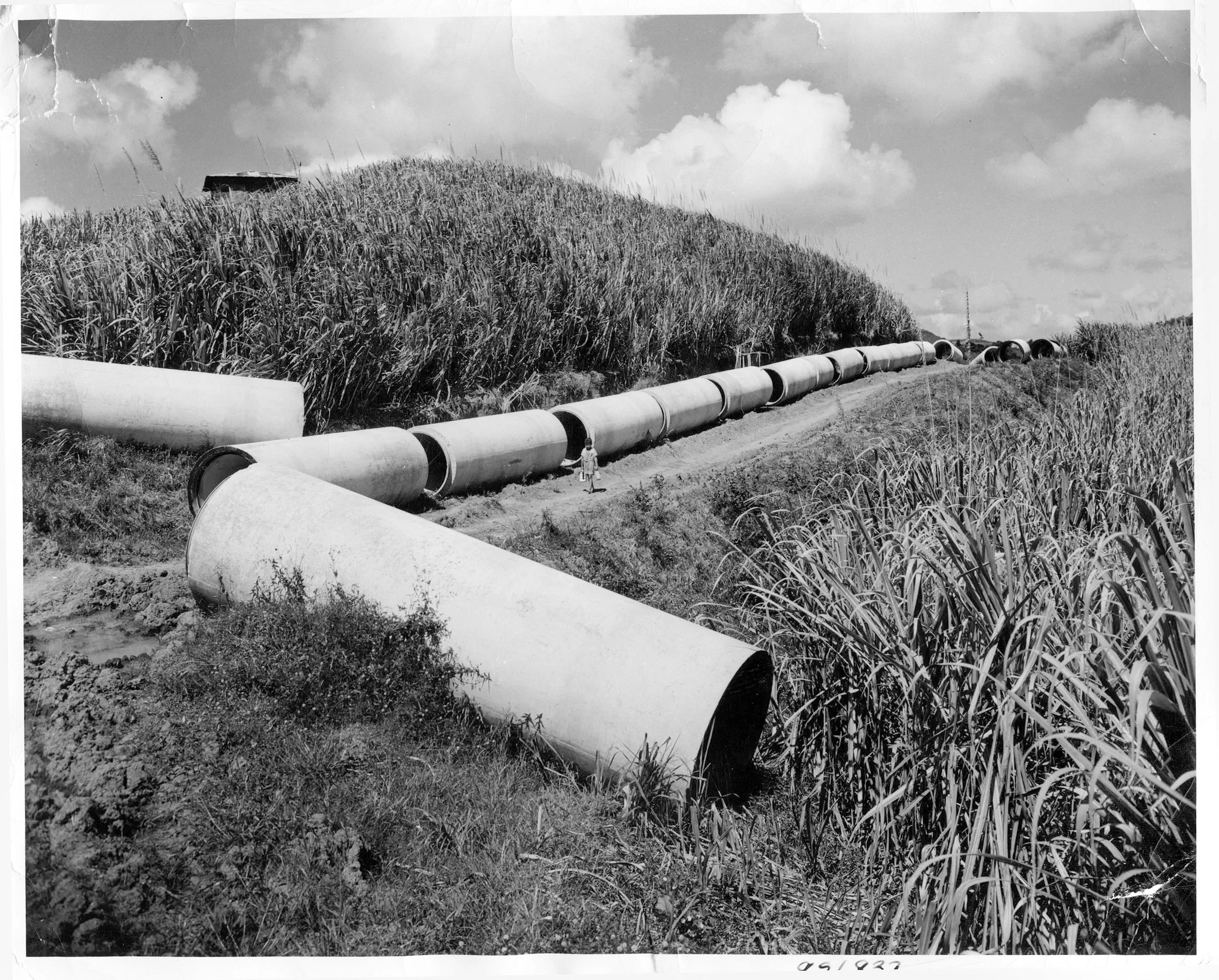
Loíza Dam Pipeline, ACME Pictures, 1949.
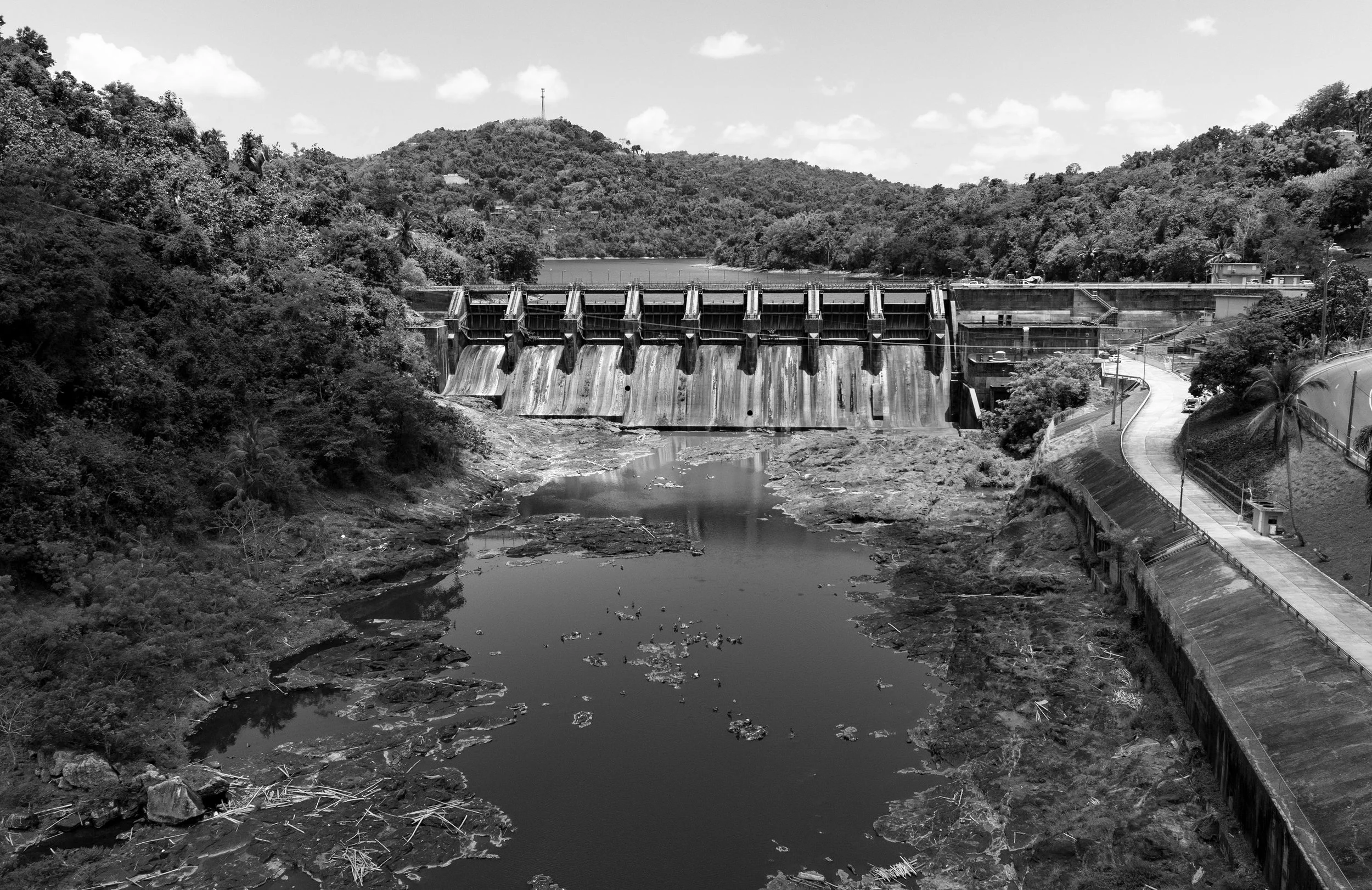
Tamara Cedré, Carraizo Dam during drought, Trujillo Alto, 2026
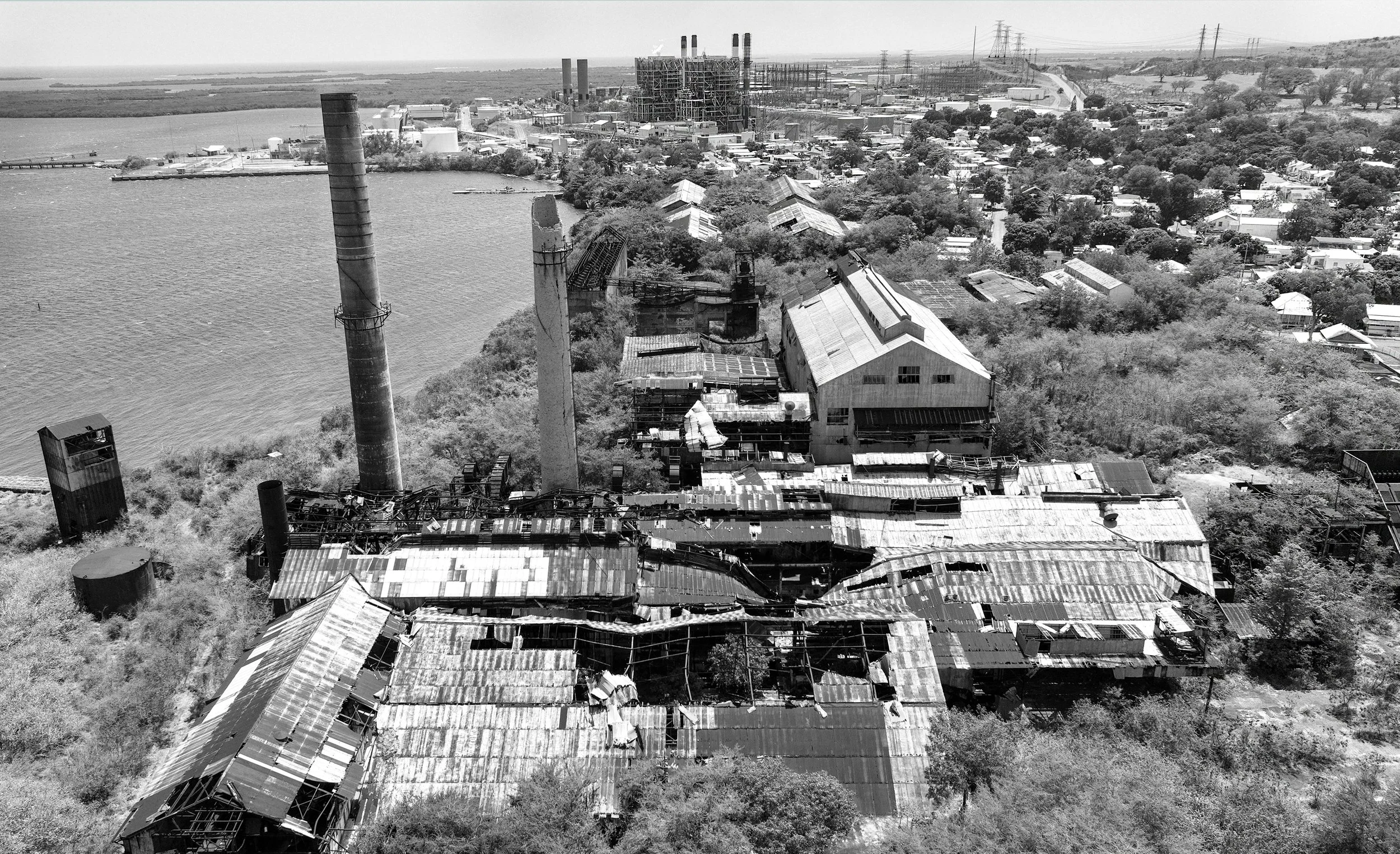
Tamara Cedré, Ruins of the sugar mill against the power plant, Central Aguirre, Salinas, 2026
Cedré contrasts the previous images with Edenic color photographs of dams, rivers, and tropical flora (See Río de la Plata meets Lago Carite and The shallowing of Tanamá River). Offering carefully and tenderly composed painterly photographs of watery verdant landscapes. For me these images evoke feelings of awe, admiration, love for the natural world, and gratitude for its aliveness. I often feel these emotions when looking at the pristine, idealized beauty illustrated in landscape impressionist paintings.
Yet, for Cedré, photographing in color is a deliberate commitment to realism. This is because color in photographs has, historically, seduced viewers of paintings or in tourist photography, wherein images are saturated in otherworldly colors. For Cedré, composing images in color produces another level of detail, description, and presence. This commitment to realist detail highlights that, for instance, the green in the leaves is only that specific color green at a particular time of day or maybe even during just that one moment in the plant’s life trajectory. In other words, landscapes, though often taken for granted as stable, are ephemeral, and color in Cedré’s photographs work as a language to describe the fleetingness of realism.
The distance and height from which these images were taken allows the viewer to feel as if they are peeking into another dimension, into another more hopeful and just world in which nature can thrive rather than be under the control of human economic-political whims. These color images are salves in what is an otherwise sociopolitical and ecological dystopian present. Viewers might ask, “How can hu/man ambition continue its negligent march to destroying the very living-Earth systems that make all life possible?”
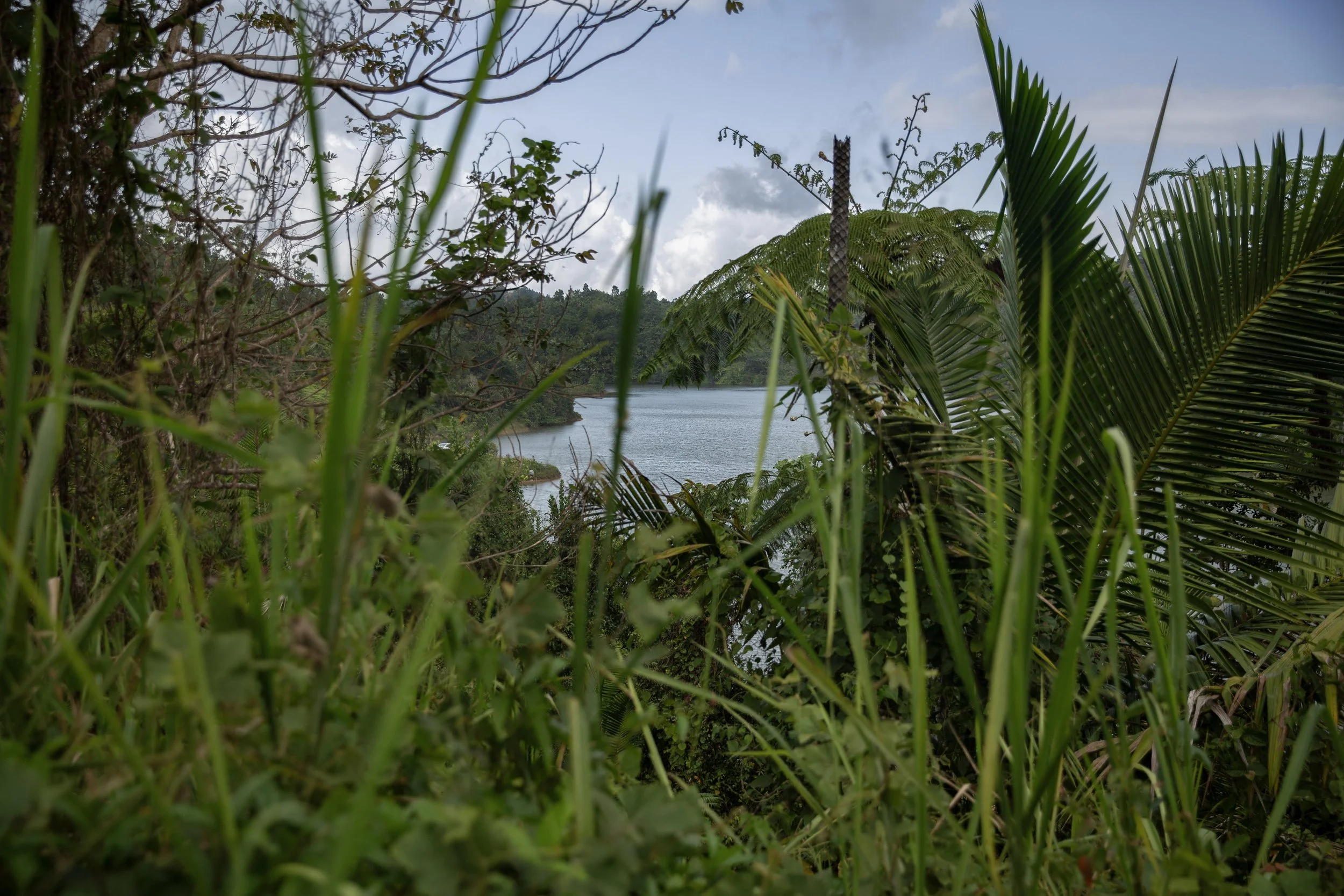
Tamara Cedré, Río de la Plata meets Lago Carite, 2026.
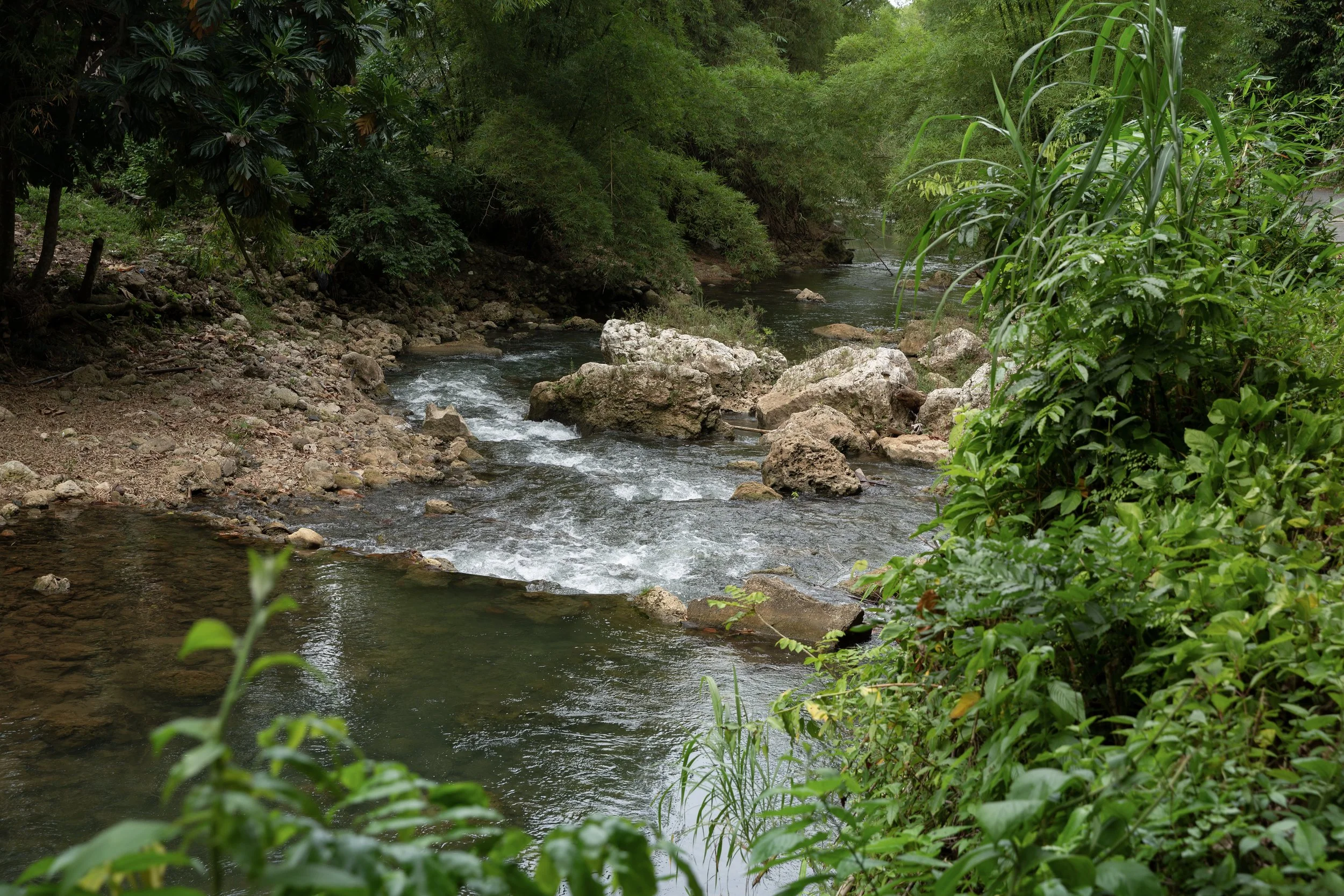
Tamara Cedré, The shallowing of Tanamá River, Arecibo, 2026
Calling attention to Walt Disney’s 1953 documentary The Living Desert, and in critical alignment with architect and historian Samia Henni’s Deserts Are Not Empty (2022), Cedré follows the hydrologic trail pointing her camera toward the Coachella Valley desert.
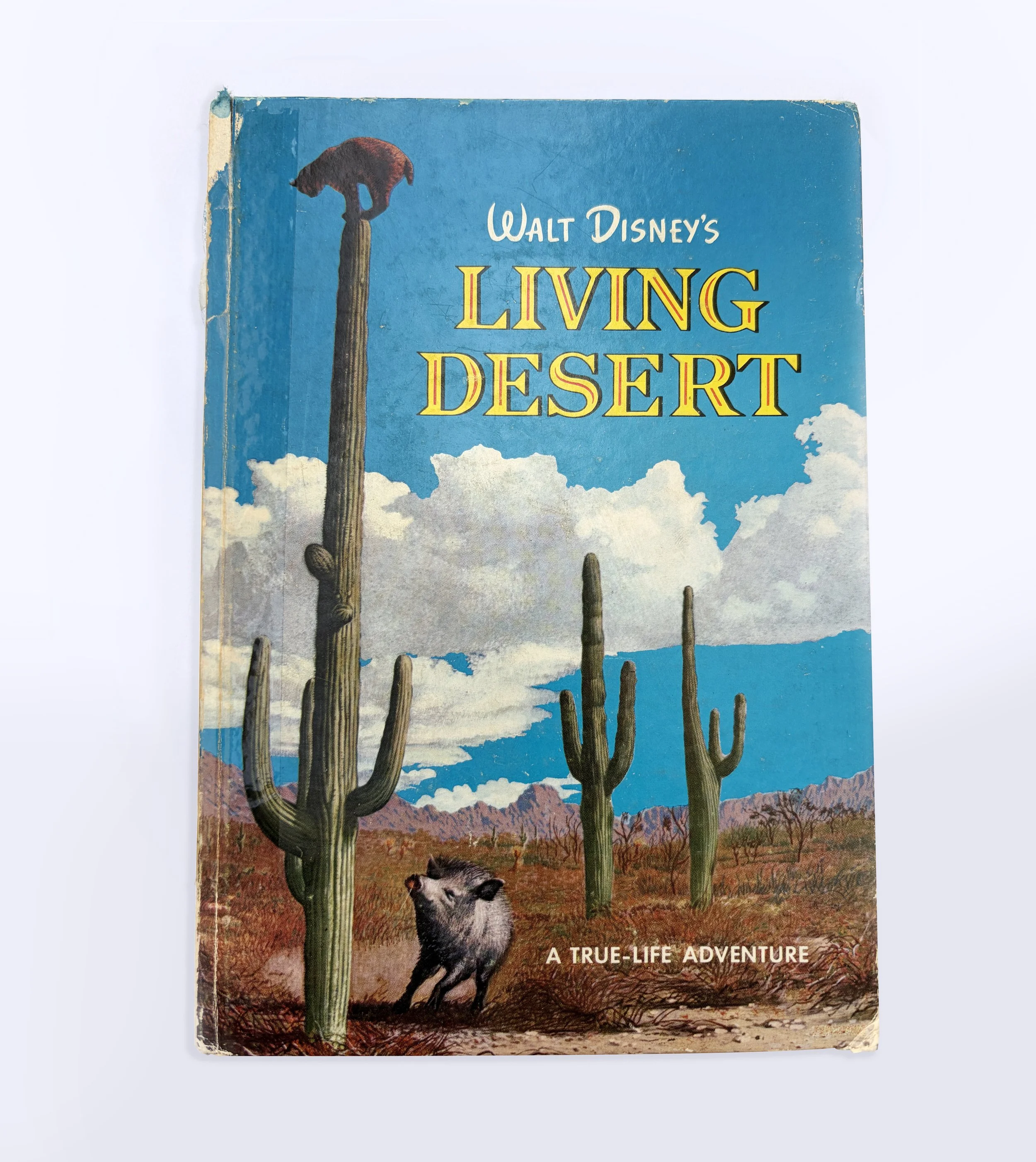
Cover of Walt Disney’s Living Desert storybook, 1954
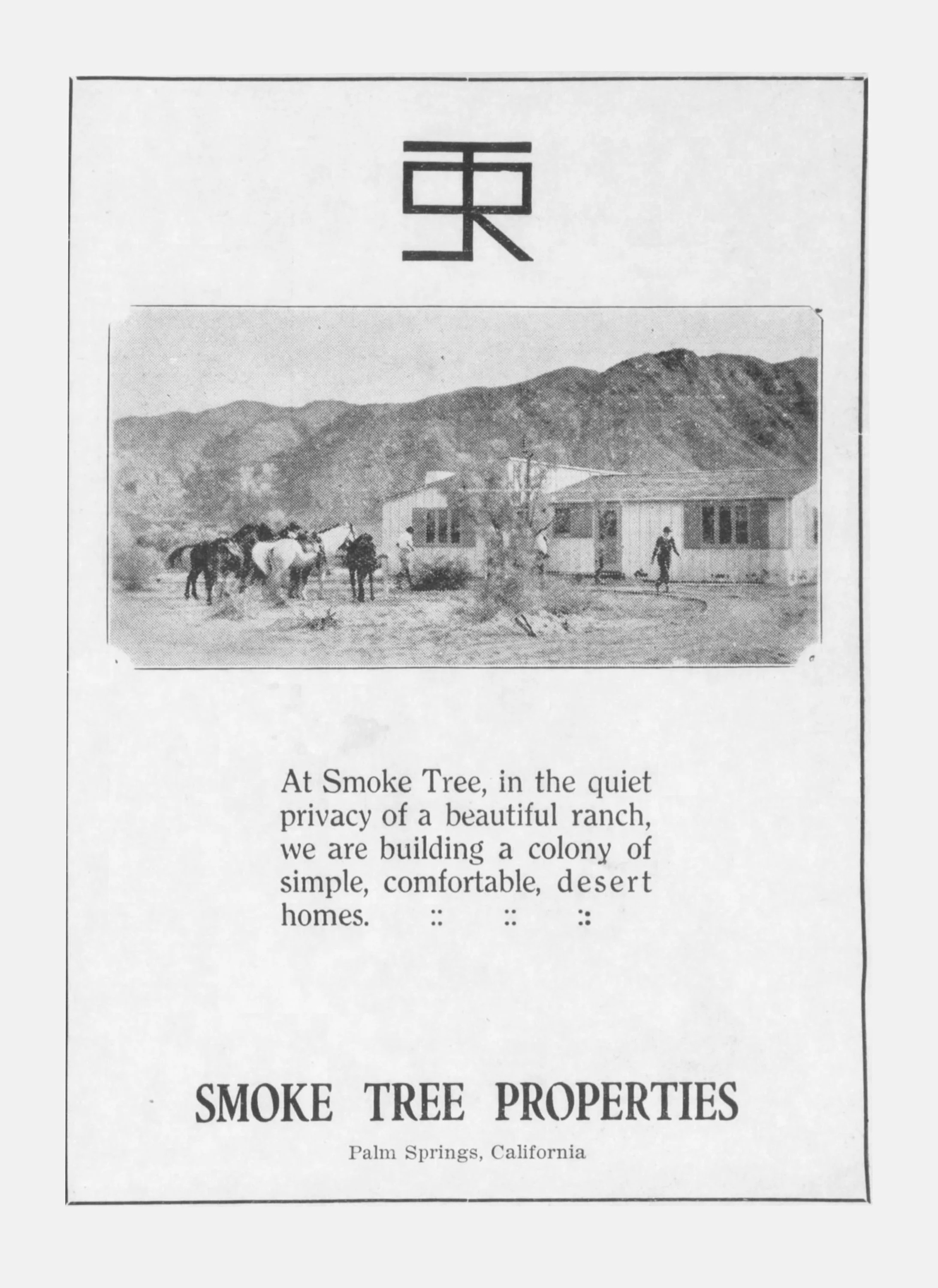
Ad for Smoke Tree Ranch, 1930, from Maynard L. Parker Collection at The Huntington Library
As if learning nothing from the history of the defunct resort destinations bordering the Salton Sea, now an ecological disaster, located 50 miles and less than an hour away, StoryLiving by Disney is building a master-planned community named Cotino. Its marketing motto is “Beach Living. Desert Beauty. Touched by Magic.”
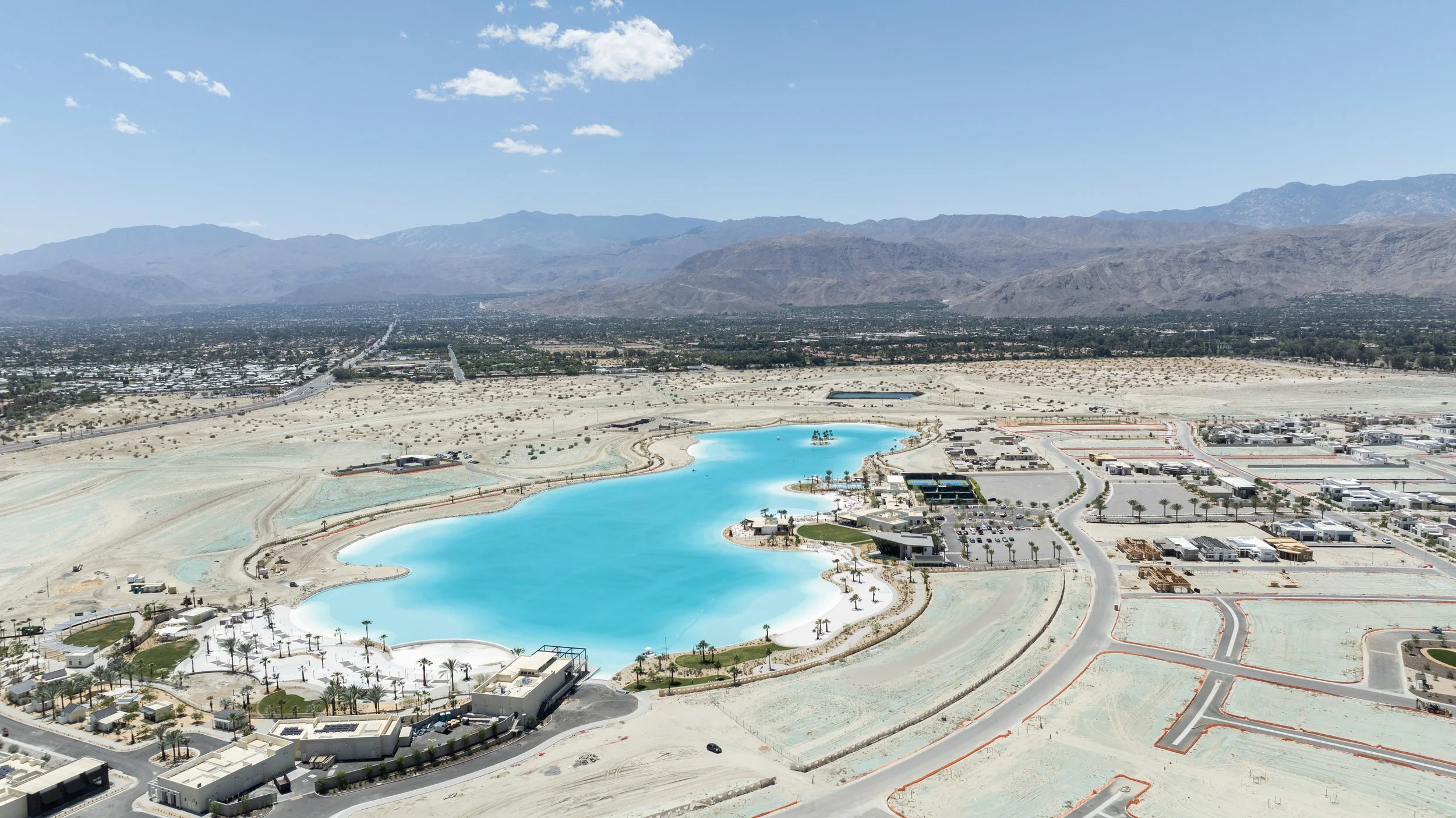
Tamara Cedré, Aerial of Cotino Bay in Development, Palm Springs, 2026
Cotino appears to be set a world apart, perhaps in another dimension altogether from the Indigenous and Latinx communities in the Coachella Valley that struggle with water scarcity, water contamination, water waste (mis)management, and other forms of environmental injustice. This master-planned community is one in a long history of the region's gentrification, now turned into super-gentrification as the ultra-wealthy hoard resources and land, making this region even more unaffordable than it already is.
Along with the destruction of ecologically sensitive habitats, the buildout of warehouses and data centers contribute to the present unbreathable levels of air pollution and water scarcity. As urban planner and geographer Jessica Bremner aptly explained, “successful white settlement in the Coachella Valley through Indigenous water dispossession” has left “a path of ongoing water dispossession and uneven water access that continues today.” Mobile home in Desert View Mobile Home Park, shows a human-scale house in which working-class residents of the region live and contend with water contamination and scarcity. Because of contaminated or dry wells, residents of this community in Thermal must install water filters in their homes or purchase water for consumption.
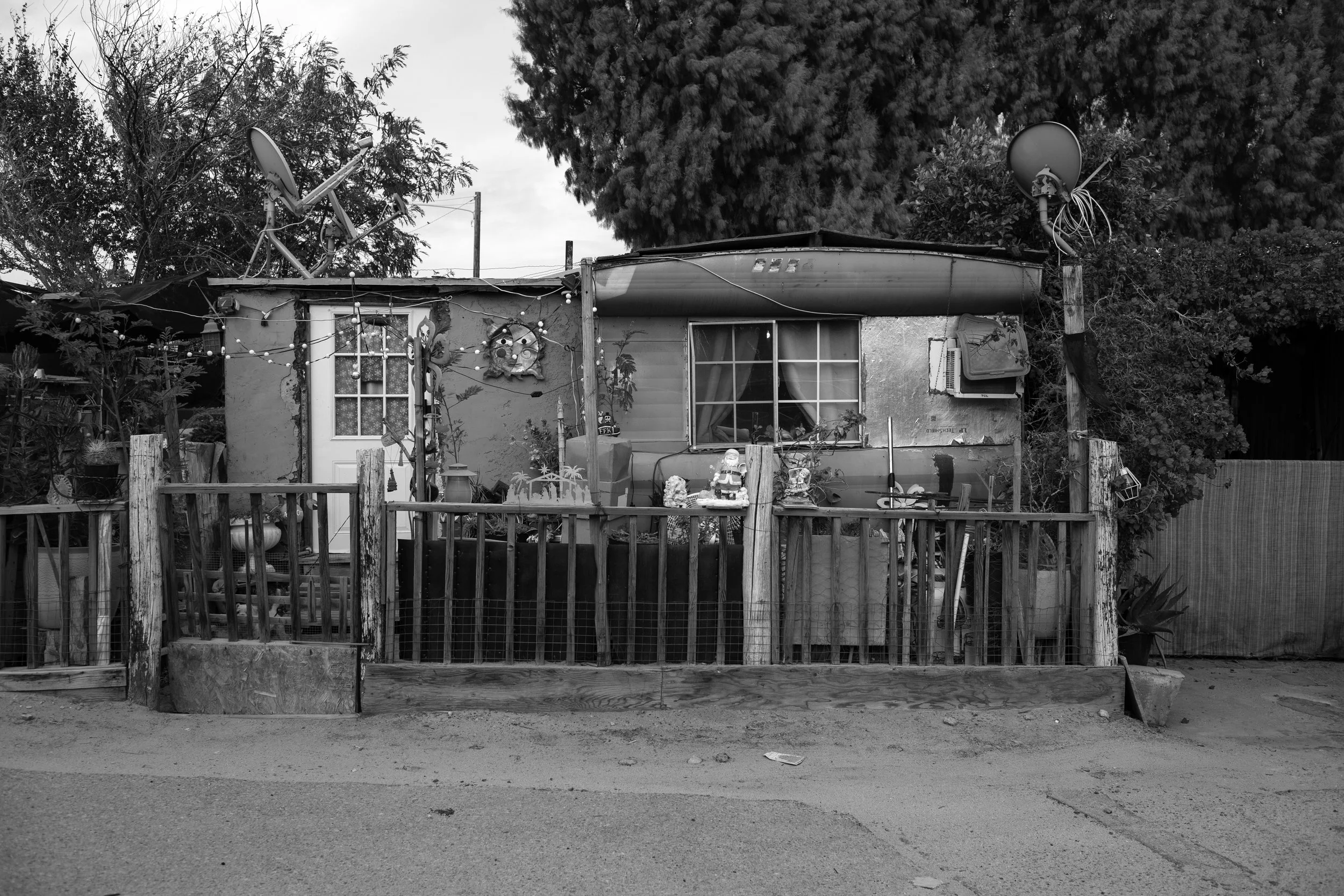
Tamara Cedré, Mobile home in Desert View Mobile Home Park, Thermal, 2026
Cedré’s critical lens images the fantastical white-American-settler insistence of turning the desert into a coastal oasis. An example of this persistence is Cotino Bay’s 24-acre “eco-friendly,” “man-made lagoon,” and the “beach oasis” theme within the community’s street names. This high-end gated community offers buyers a collection of house styles and sizes from the Cottage to the Estate with prices ranging from the mid $1 million to the upper $4 million in Rancho Mirage. Unlike residents of Desert View Mobile Home park in nearby Thermal, these fortress-like Cotino houses offer buyers excess, and access, to water, energy, space, and comfort. To become a member of the country club—that includes access to the private “beach” and other amenities—requires an additional one-time fee of $20,000 with annual membership costing between $11,000 and $19,000 a year, plus fees for food and taxes.
The environmental impacts of this and all the other gated communities in the Coachella Valley, a water-stressed desert bioregion, are significant. The continued rise and popularity of private, resort-like gated communities developed in areas of high ecological value all over the globe, is reminiscent of Octavia Butler’s prescient world in Parable of the Sower. Surely, drawing from the already existing examples such as Smoke Tree Ranch, among similar others, she foretold of a time when the wealthy would ensconce themselves in private, highly guarded communities to insulate from societies ravaged by the very social and environmental inequalities they created.
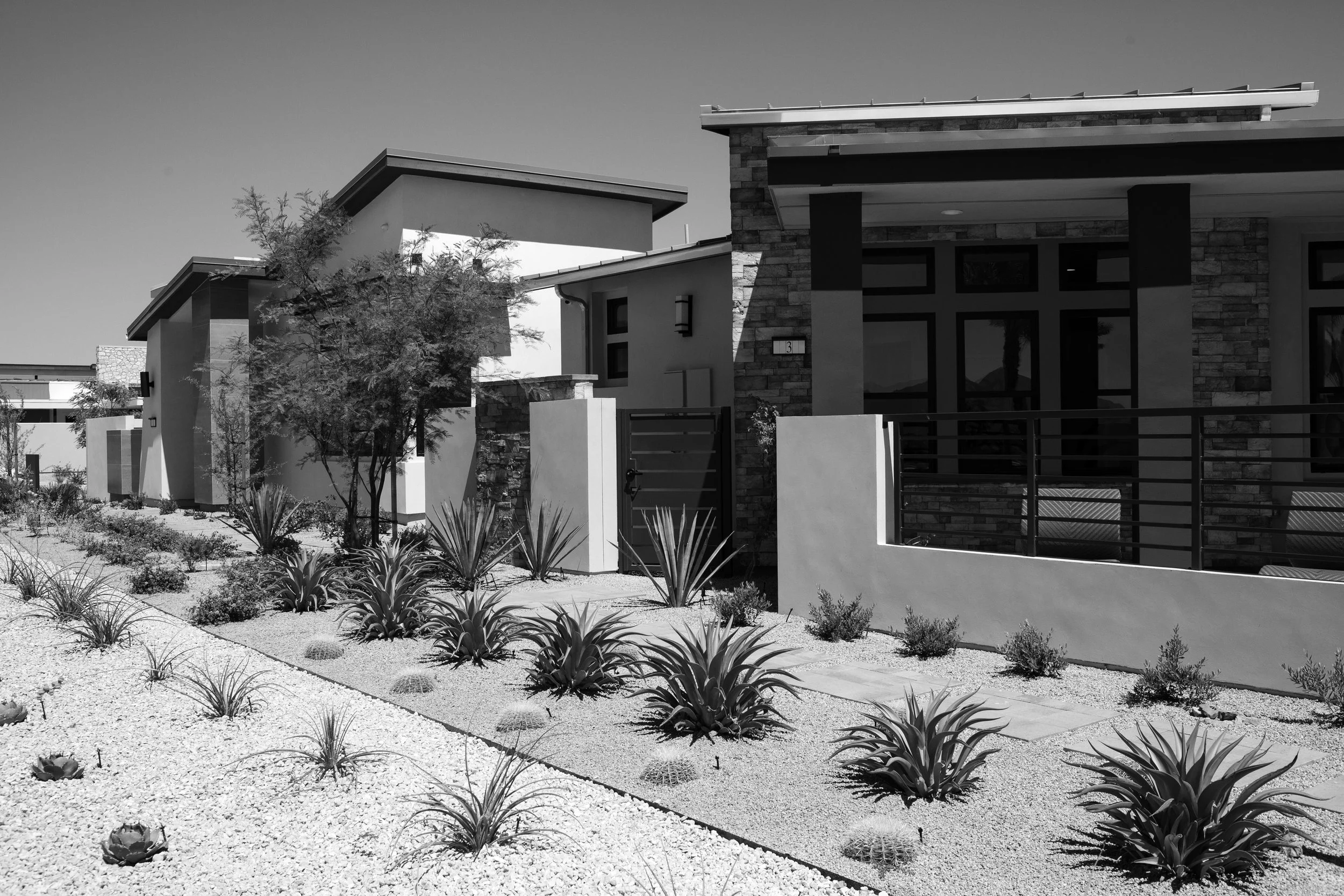
Tamara Cedré, A model home in the Cotino development, Palm Springs, 2026
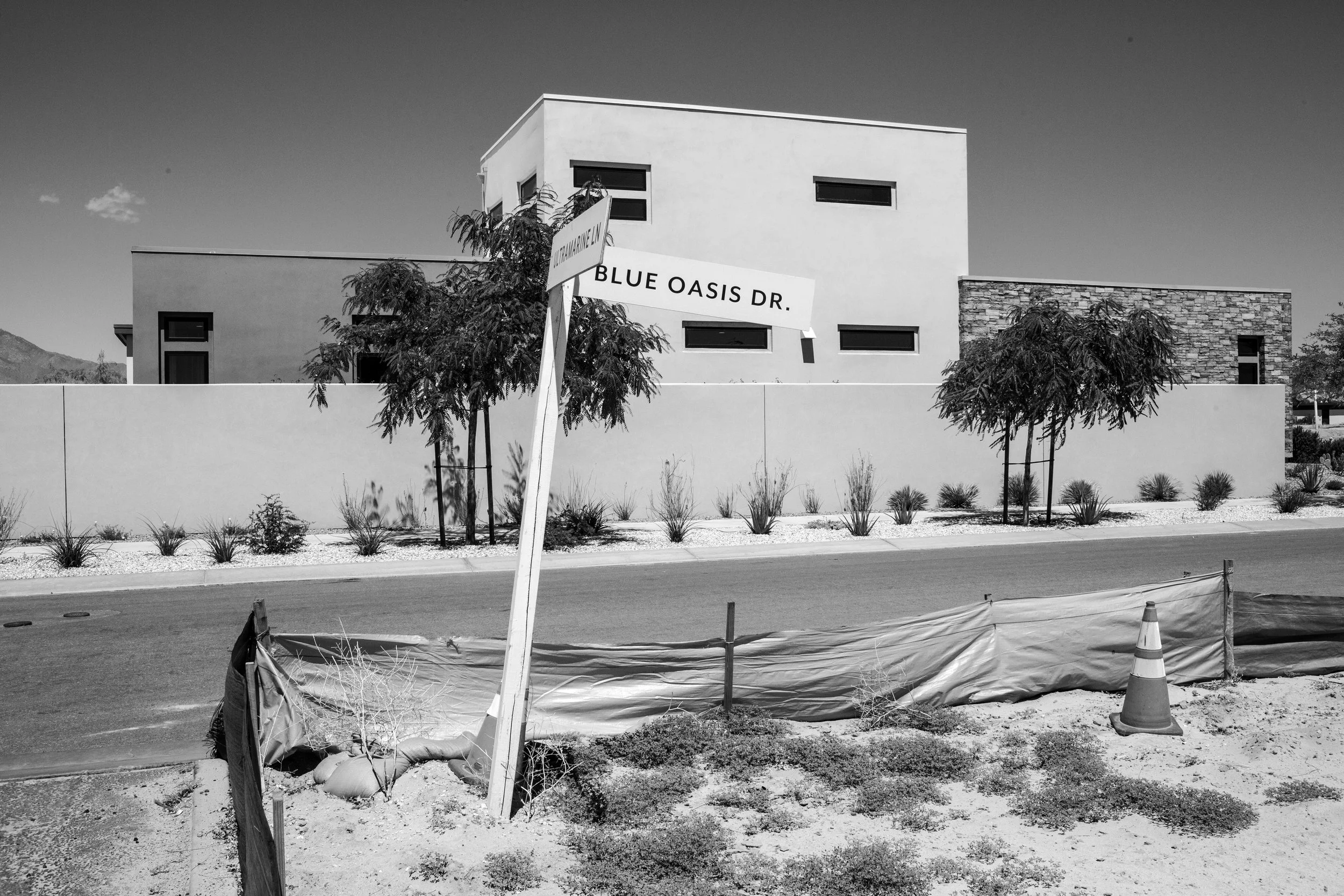
Tamara Cedré, Blue Oasis Drive under construction at Cotino, Palm Springs, 2026
Cedré’s photographic and artistic practices offer viewers the possibility to see beyond the surface to peel back the layers and enter a visual journey spanning the American Century. Her approach of contextualizing her contemporary images with archival and often long-forgotten images, documents, and objects produces a visual matrix of how we arrived at this moment. It also suggests this moment’s dynamism as it unfolds into future material and conceptual infrastructures. Cedré’s body of work exposes the repeating environmental injustices dotting the globe like an archipelago of islands weathering the onslaught of hu/Man made unnatural disasters.
The title of this piece draws from Derek Walcott’s “visual echo of history,” from “The Antilles: Fragments of Epic Memory.” Nobel Prize Lecture, December 7, 1992. https://www.nobelprize.org/prizes/literature/1992/walcott/lecture/