Con Tiempo Fashions Chicano Art Spaces
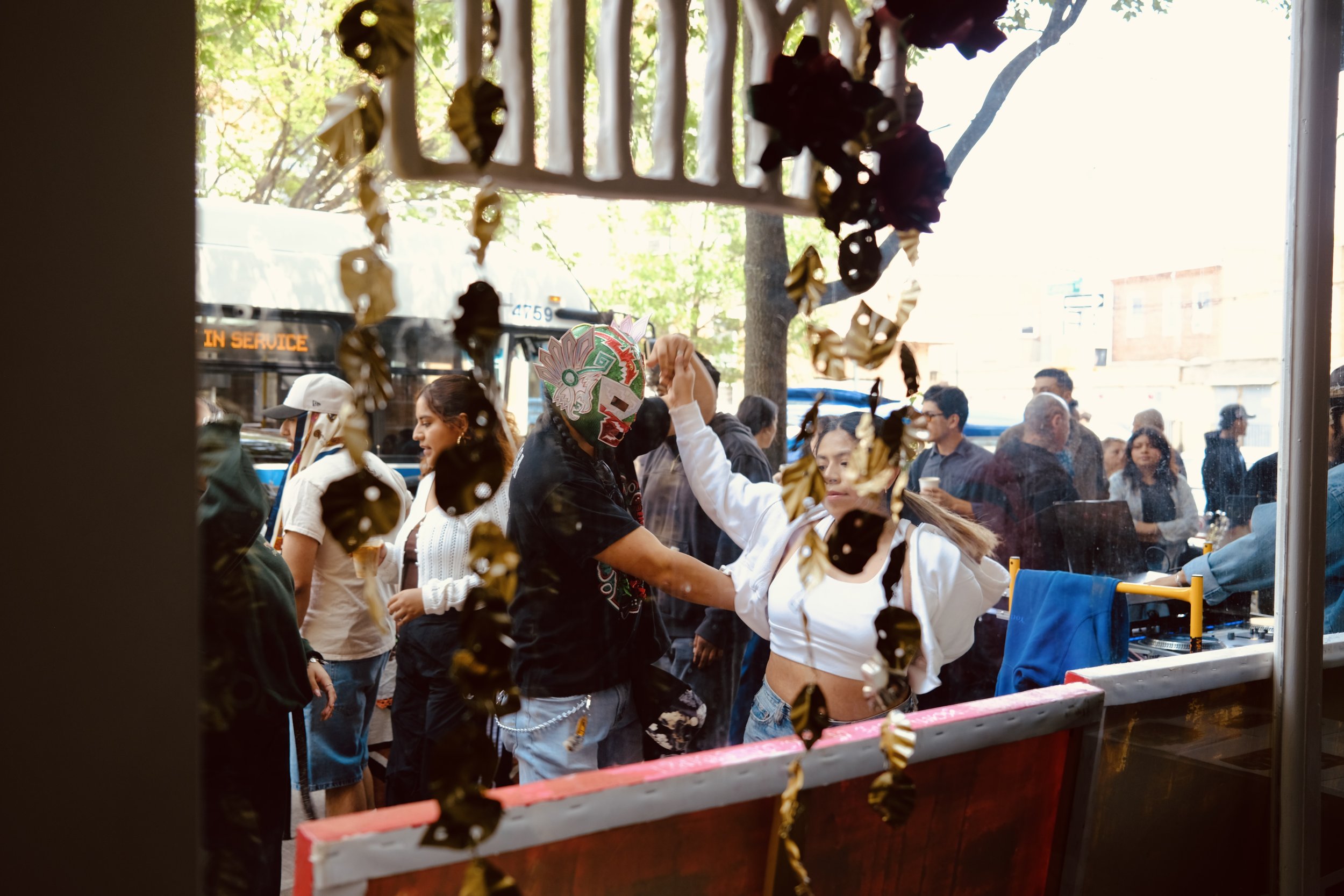
Attendees dance cumbia during Con Tiempo’s block party. Photo by Nico A. Montano.
On a Sunday afternoon in February, people braving single-digit temperatures fill the back of Tequila Time Bar Cafe in Ridgewood. They are there to attend an art event put on by the New York-born fashion brand Con Tiempo.
The event, titled Sentimientos, is a gallery of poetry and stories. Mounted on the walls are poems about love, immigration raids, heartbreaks, and abuelas. Vendors selling jewelry, air-brushed tote bags and upcycled clothing set up tables around the room.
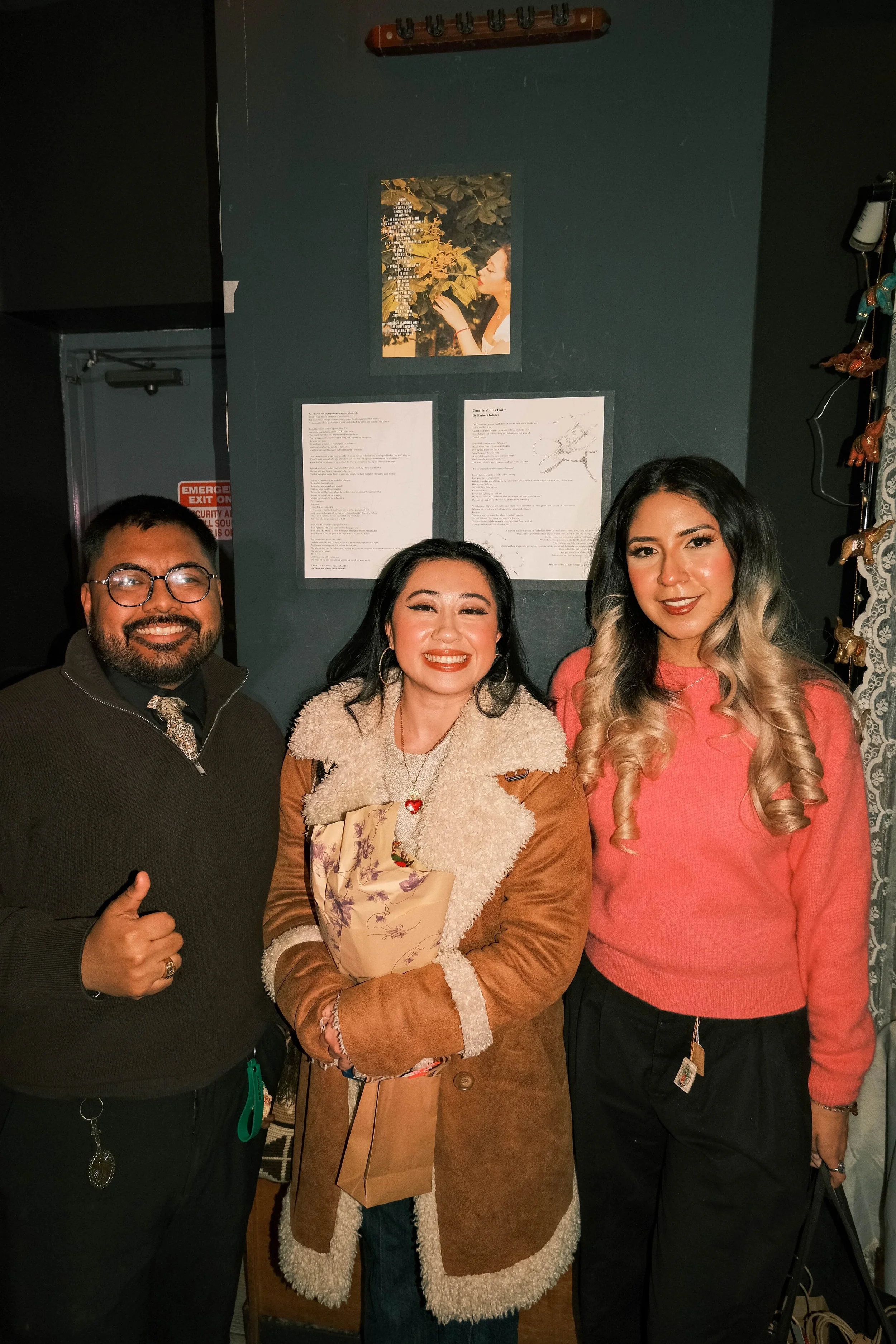
Julio Chavez, Karina Ordoñez, and Ari Cruz smile in front of Ordoñez’s poem at the Sentimientos gallery in February. Phhoto by Jimena Ortiz.
In the far corner, visitors pay for a limpia, performed by a community elder using techniques that derive from Yaqui and Mexica curanderismo. The smell of the herbs she burns slowly fills the room with its comforting, musky scent. DJ Xolo Huizo plays rancheras and cumbias while people read, mingle, and shop.
The mind behind Con Tiempo is Julio Chavez, a New Yorker and Chicano culture enthusiast. Con Tiempo started in 2020 as his one-man fashion label that specialized in graphic T-shirts featuring Chicano motifs: luchador masks, lowriders, gothic Blackletter font, La Virgen de Guadalupe, and cholo clowns.
Con Tiempo is primarily a fashion brand; it is the profit of these clothes that funds community events like the Sentimientos gallery. But over the past few years, Con Tiempo has become synonymous with community-based pop-up galleries, block parties, markets, and fashion shows.
It was a community cultural event like this one where Chavez met Ari Cruz, Con Tiempo’s creative director, in 2024. They quickly bonded over their shared passion for the arts and similar cultural identities. After attending many Latinx-focused art events in the city together, they decided to start organizing their own.
Both Chavez and Cruz cite the lack of Mexican-American community spaces in New York as the inspiration for these events. Growing up in Washington Heights, a neighborhood with a large Dominican population, Chavez lacked community and spaces to celebrate his culture as a kid. Cruz, who grew up in Sunset Park, says that even now, folks express their surprise that there is a Mexican-American community to organize for.
“We get that comment a lot, ‘There are no Mexicans in NYC,’” Cruz says. “That makes me sad because our people have communities in this city and there’s so much creativity there.”
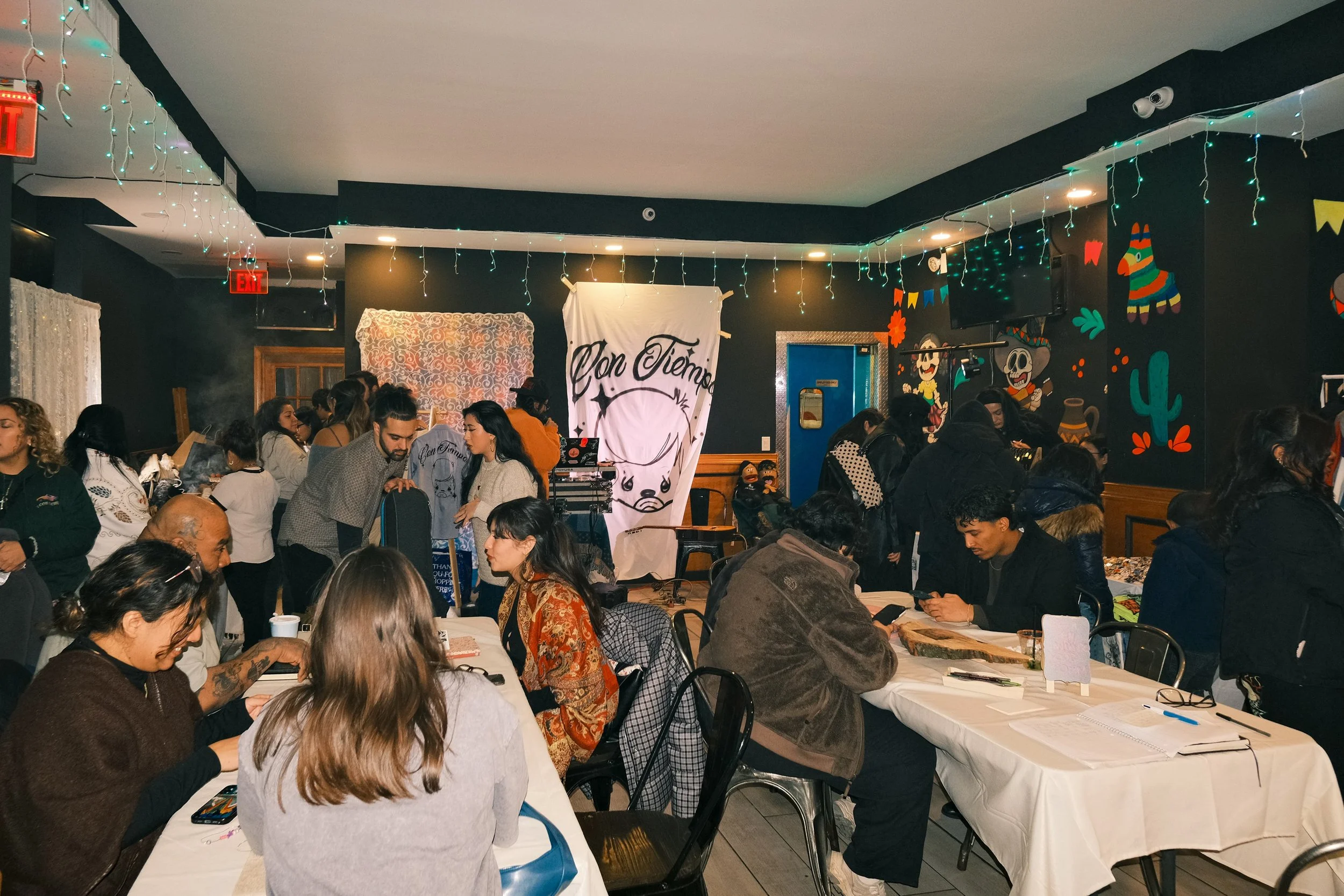
Chavez and Cruz host the Sentimientos gallery and open mic in the Tequila Time Bar in Ridgewood. Photo by Jimena Ortiz.
Historical narratives of Latinidad in New York City have primarily centered Puerto Ricans and Dominicans. But there has been a community of Mexicans in New York City since at least the 1940s, and the population has grown steadily since.¹ Between 1990 and 2010, Mexicans were reportedly the fastest-growing immigrant community in New York, according to a 2013 CUNY report. Recent data from the Center for Migrant Studies shows Mexicans as the fourth largest migration community in New York, following populations from the Dominican Republic, China and Jamaica. A large portion of this population comes from Puebla, sparking the endearing nickname “Puebla York.”
For Chavez and Cruz, it's important to provide a spotlight and reframe the public’s image of the Mexican-Americans in New York from a small, new migrant group living on the city’s margins to an established, creative community contributing to New York’s art scene.
Chavez and Cruz are tackling this gap in representation from several angles. On top of the clothing line and the monthly pop-up events, they are cohosts of the podcast Raices NYC. Guests are diverse: a photographer that shot the Willy Chavarria fashion show, a pro-wrestler who does lucha libre shows, the ranchero artist Santy y Su Estilo Unico.
They post clips of these podcast episodes daily on the Con Tiempo Instagram page—which Chavez and Cruz use to both promote their events and those of other young, Chicano creatives. With their consistent social media presence, Chavez and Cruz have obtained influencer-esque status and have been invited to represent their brand at the Mexican Independence Day parade or a Gothicumbia party at the club.
And while hours of designing clothes, coordinating with vendors, and producing content for social media goes into the growth of their brand, they both agree there’s a certain magical element to their process, too.
“We keep having this thing where we kind of manifest our events,” Cruz says. “We’ll sit down and talk about how we want to plan a comedy night, and then, two weeks later, we’ll meet a bunch of comedians.”
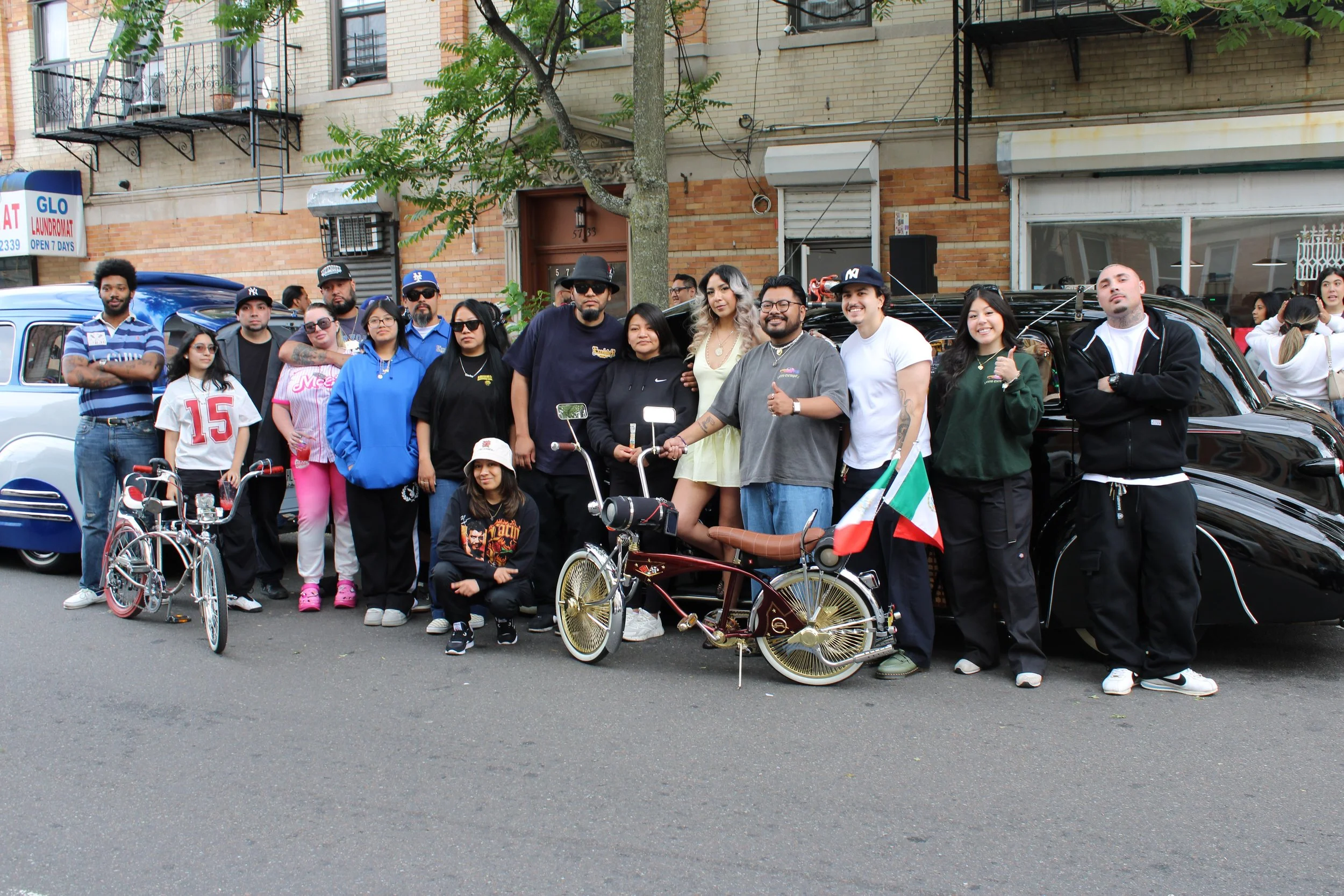
Chavez and Cruz pose with lowrider bike and community members at summer block party. Photo by Nico A. Montano.
At the Tequila Time Bar, the lights dim, the music stops, and all eyes turn to an open mic at the front of the room. Young singer Camila Gomez kicks off performances singing rancheros while her proud parents film her. Poets whose work is on display take turns coming up to read their poems aloud.
Karin Ordoñez, a local musician and youth coordinator at El Centro, recites a poem she wrote about femicide in Latin America. As part of her performance, she sings “Si Me Matan” by Silvana Estrada while her friend accompanies her on guitar.
“I’ve done this piece before, including in non-Latino spaces, but I really like to do it for Latino audiences,” she says. “The song is in Spanish and the poetry is in English, and it hits different when the audience understands both, and understands the shared experience of machismo in immigrant communities.”
Cruz and Chavez continue to dream big about the future of Con Tiempo. In March, Con Tiempo hosted a formal, which invites community members to dress up and gather for a night of dancing to “oldies and cumbias viejitos pero lindos.” Most recently, the brand collaborated with local vendors and artists for their “Niñas Fresas Fundraiser,” which entertained attendees with a cumbia dance lesson, traditional hair braiding and flash tattoos while raising money for a local DACA recipient. One day, they hope to take their events to other cities across the country, and maybe even abroad to Paris.
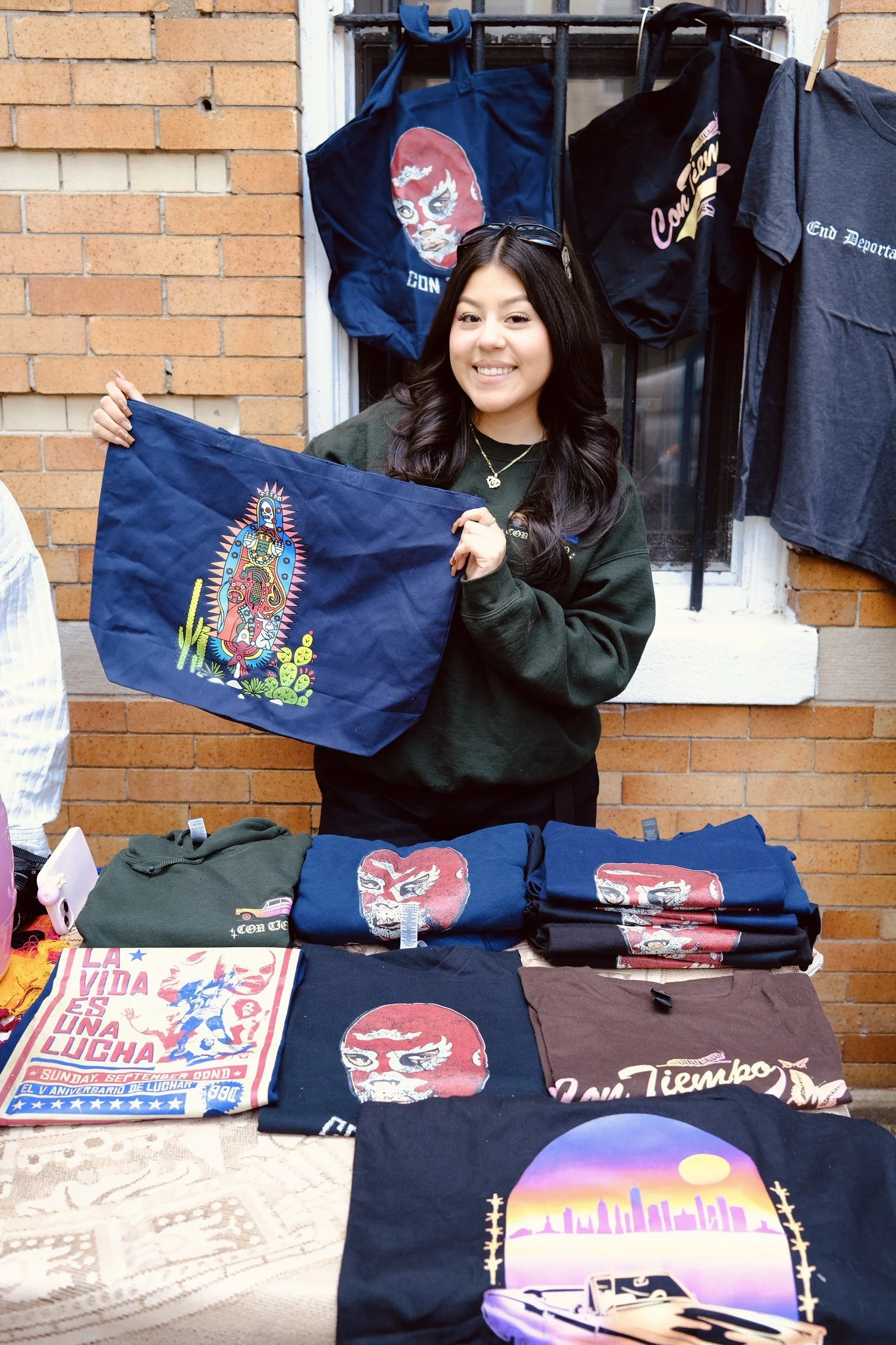
Vendor sells Con Tiempo clothing at summer block party event. Photo by: Nico A. Montano.
Their dreams of expanding are possible because of a strong foundation that the local community built. As the poetry gallery event goes on, visitors who didn’t plan to participate pluck up the courage to share some words. The restaurant owners take orders for tamales and spiked hot chocolate. Soon, like any good Mexican party, the tables and chairs get pushed to the side to make space for dancing, and the DJ hits the music again.
Chavez and Cruz insist Con Tiempo is first and foremost a fashion brand, but what they are fashioning is much bigger than clothes; it’s an art scene that encourages you to bring your elders and younger siblings along. It’s a room where young creatives meet face-to-face, finding fellow musicians, DJs, poets, painters, and fashion enthusiasts. With time, Con Tiempo is designing a network of young Chicano New York.
¹ Robert Smith, Mexican New York: Transnational Lives of New Immigrants (UC Press, 2005), 22.