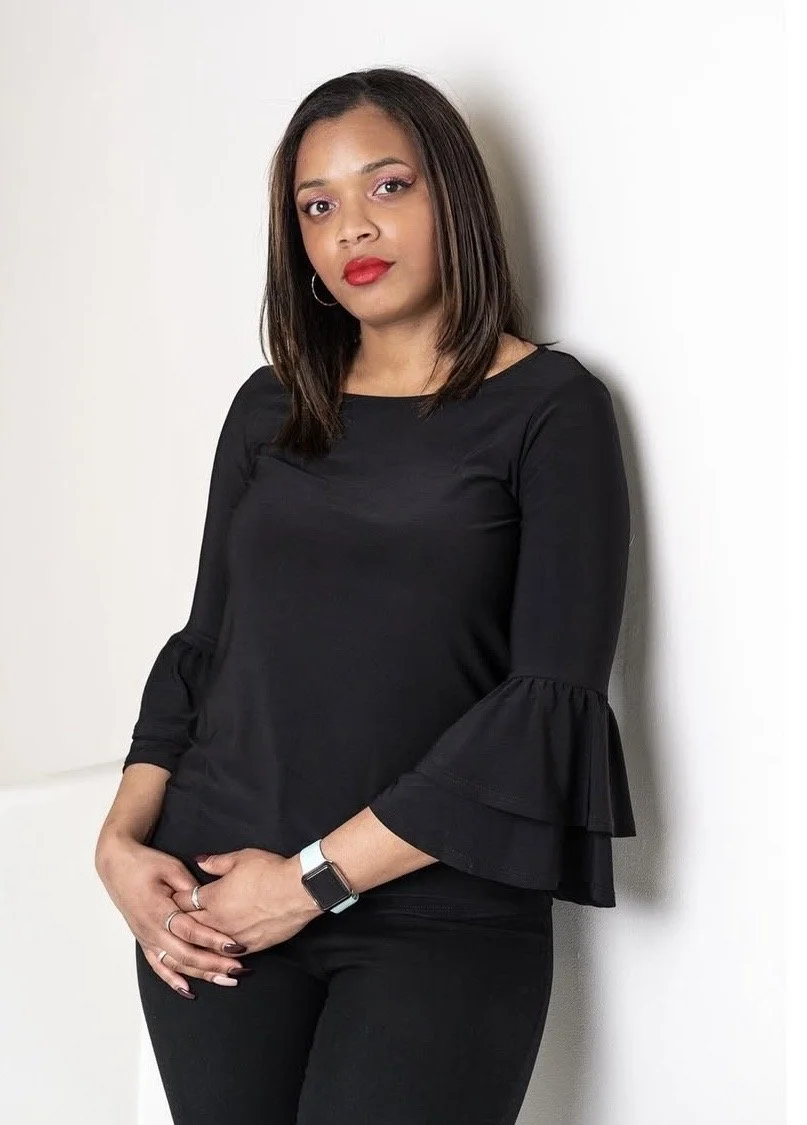
Hagudeza Rullán-Fantauzzi, Becoming Unbound
Dancing embodies forms that create space for the body to move joyfully, whimsically, and unapologetically. It creates a language that can be understood without using a single word. For Afro-Boricua, Philadelphia-based interdisciplinary artist Hagudeza Rullán-Fantauzzi, the art of choreographing provides the opportunity to unbound from societal expectations of gender. These performances—largely filmed and displayed to an audience through video installations, textile works, and projection mapping—often include charged objects and sacred spiritual movements found within Santería and Pentecostalism.
Through an autobiographical approach, Rullán-Fantauzzi explores how movement becomes a mode in which to express oneself—becoming another vehicle of expression when words are not enough. Shaped by her spiritual practice and Puerto Rican and Philadelphian upbringings, Rullán-Fantauzzi’s choreographic work creates the environment for her to express their trans experience more freely and connect and find a place of kinship within Philadelphia's Black and queer communities.
Rullán-Fantauzzi was born in Ponce, Puerto Rico, in a predominantly Pentecostal household with fixed views on gender and sexuality, which made it difficult for the artist to come out. Around 5, Rullán-Fantauzzi would find herself trying on her sister’s clothes, which her parents disapproved of because they deemed it socially inappropriate.
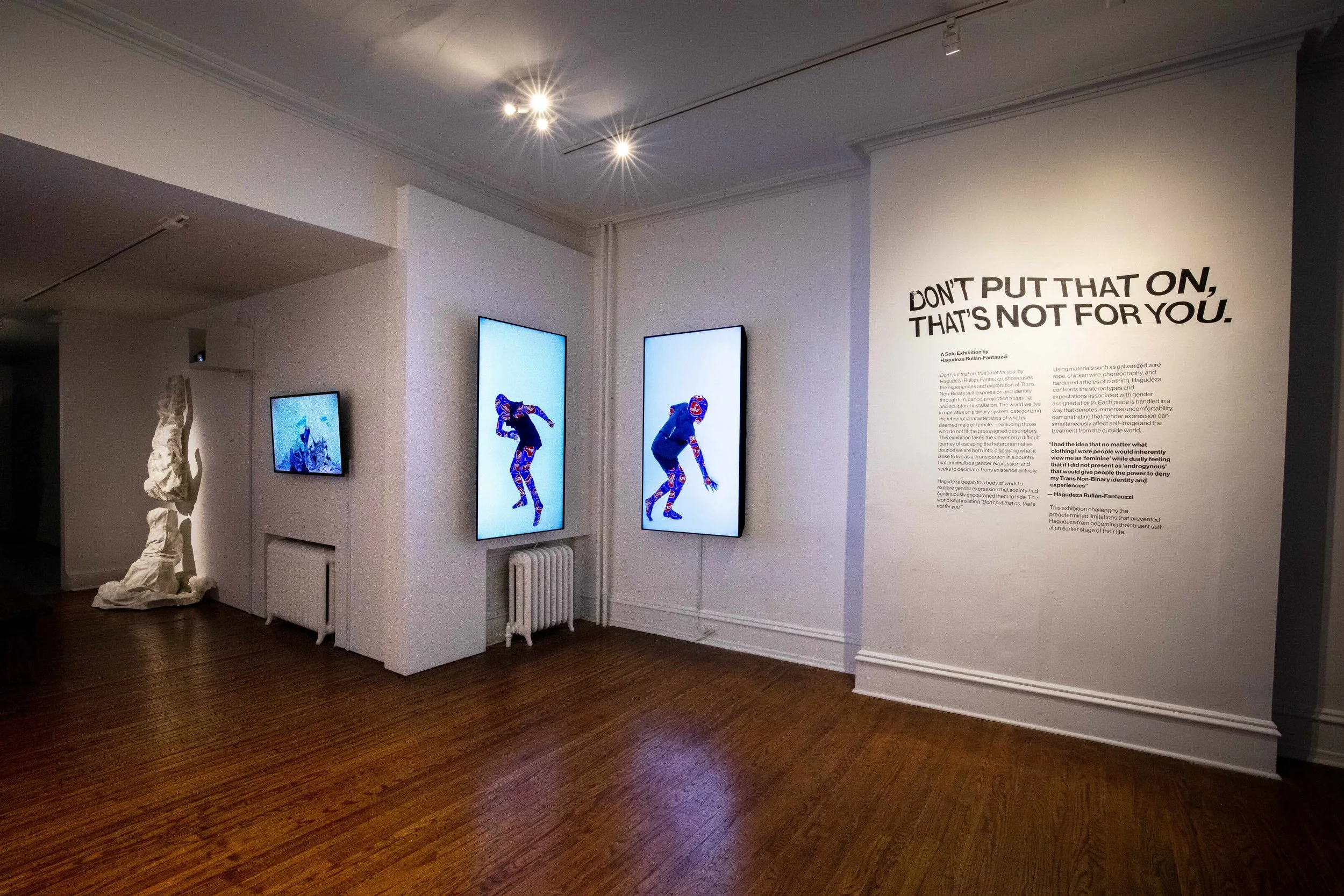
Hagudeza Rullán-Fantauzzi, Don’t put that on, that’s not for you, 2022. Installation shot by Alessandro Alex Failla for Da Vinci Art Alliance.
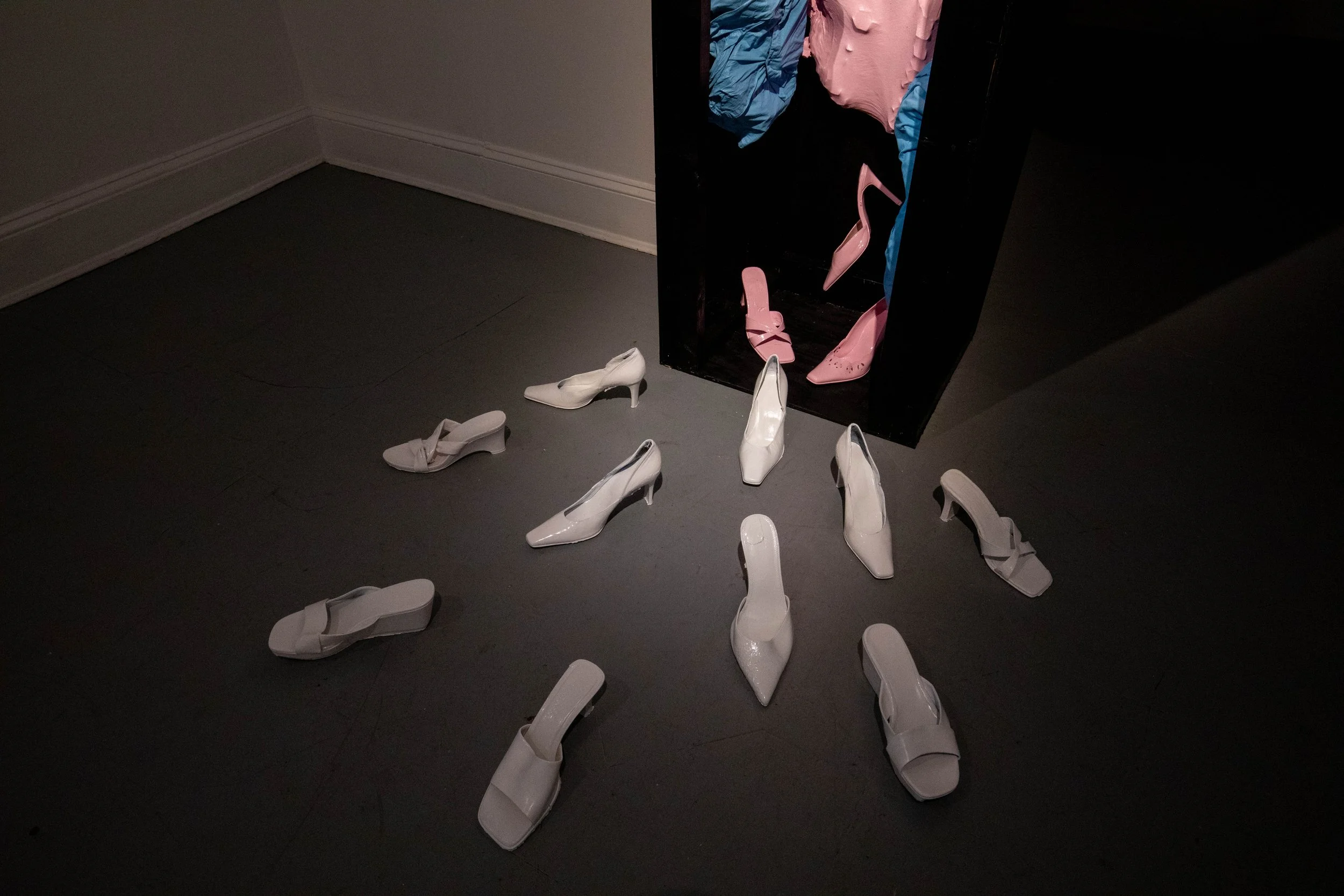
Hagudeza Rullán-Fantauzzi, Don’t put that on, that’s not for you, 2022. Installation shot by Alessandro Alex Failla for Da Vinci Art Alliance.
This early queer experience became the basis of her 2022 exhibition, Don’t put that on, that’s not for you, at Da Vinci Art Alliance in Philadelphia. Using an assortment of material from film, discarded clothes, chicken wire, and galvanized wire rope, Rullán-Fantauzzi transformed the gallery into a hub to confront conventional ideas of gender by challenging the stereotype of what clothes one should wear. For the artist, the exhibition provided a space to disrupt heteronormative mores that attempt to limit her from expressing herself.
By 10, Rullán-Fantauzzi and her family moved to the Kensington neighborhood of Philadelphia, where her uncle, a Santería practitioner, lived. Rullán-Fantauzzi would soon after become initiated into the practice after years of being at odds with societal expectations.
“As a child, I was meek and [kept] to myself because of my turmoil, because of my identity as a trans person,” she says. “Society made it clear that being that type of way was wrong, so I think, for me, I was attentive to movement and not just in performance but in everyday life. In Santería . . . the rituals, the clothing, the bangles and those things played in my head . . . the signs on the floor, the gowns, the altars everything involved movement.”
In those worlds, the spiritual transcends the physical, providing an opportunity of respite for her. Rullán-Fantauzzi would also come to participate in her Pentecostal church praise dance team and actively assemble performances. Through her continuous involvement in developing elaborate choreographic work, she became her church’s leading choreographer. Unfortunately, she did face hostility and scrutiny by her fellow congregation who questioned her queerness.
“At 13 or 14, I started choreographing at the Pentecostal church,” she says. “And literally, I was this kid with red, long hair, and all of them were hating on me. All of them literally did not want me to be up in that altar dancing, and somehow, I was up there leading a group.”
Yet, despite the objections, the choreographed performances gave Rullán-Fantauzzi the platform to speak visually at a time when her detractors tried to silence her. Remnants of what she learned leading performances at her church and her experience navigating its conflicting views are present in her film installation A Machete From Our Altar Kept Me Safe (2023). In this work, she plays with movement and the dualities of her spiritual and personal memory.
Growing up in Kensington, where there is a high incidence of crime driven by systematic legislative failures and policy driven marginalization, proved to be a complex time of survival for Rullán-Fantauzzi. At night, she found solace in placing a machete from her family's Santería altar under her pillow as a form of protection.
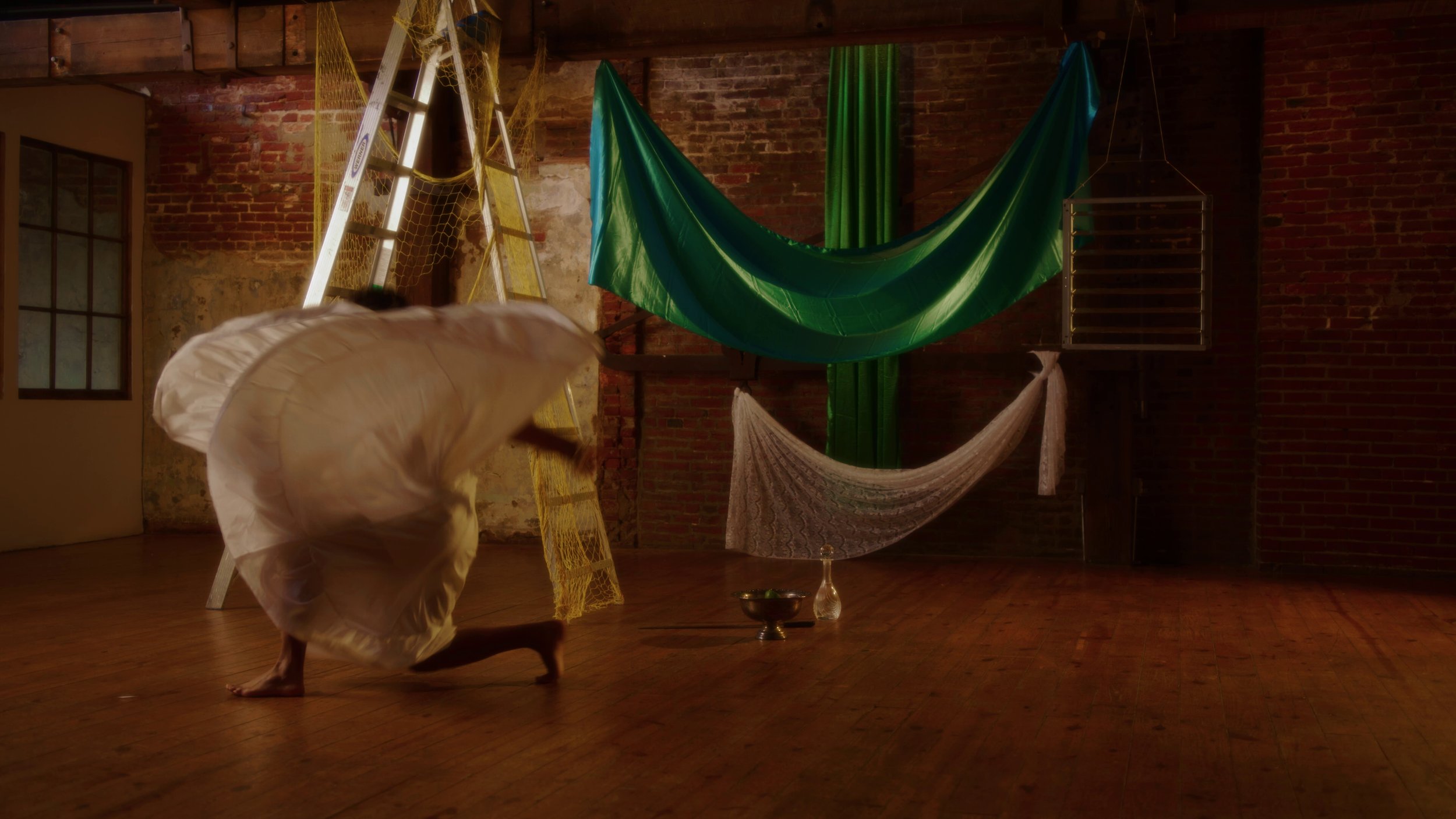
Hagudeza Rullán-Fantauzzi, film still from El Castigo de Dios, 2023.
In her installation A Machete From Our Altar Kept Me Safe, Rullán-Fantauzzi creates a makeshift altar consisting of two draping white sheets, a white pillow, and four machetes sitting on hay. The film El Castigo de Dios is projected onto a small screen positioned on a wooden plank. The entire layout is enclosed by a two-sided triangular structure made of chicken wire. Chickens hold a particular significance in Santería rituals. The machete—an object that for Puerto Ricans, historically symbolizes resistance against colonialist powers—is a form of spiritual protection in this case. Since her “art practice has sort of become [her] religious practice,” the nuances of the rituals found in Santería and Pentecostalism have become channels for the artist to process trauma, reclaim identity, shape their conceptual lens, and navigate aspects of herself. The installation A Machete From Our Altar Kept Me Safe combines these elements so resonantly it creates a numinous and ethereal sensation.
Wanting a more formal approach to dancing, Rullán-Fantauzzi began calling multiple ballet studios at 15 until she stumbled onto the Philadelphia Dance Theater, which offered a free dance program. Up until that time, she practiced ballet dancing through YouTube videos. With the help of the organization, she developed an experimental choreographic practice that enabled her to create transformative solo and group performances. At 19, she choreographed her first contracted piece for Ballet Rhode Island.
After a series of performances in various professional ballet companies, Rullán-Fantauzzi returned to Philadelphia where she explored other mediums such as textile work, photography and film—largely self taught. She became active in the art scene and met and connected with other Philadelphian artists, including Nick Vicente, who invited her to her first group exhibition. In 2021, Rullán-Fantauzzi debuted her projection mapping piece Rompiendo (2021) at the W Philadelphia hotel. The work served as part of a group exhibition on BIPOC artists presented by DesignPhiladelphia. That same year, Rullán-Fantauzzi created and showcased her installation work They Say They Knew at Vox Populi Gallery. The exhibition included a directed and choreographed film to Julius Eastman’s “Gay Guerrilla” and a projection mapping piece. The installation critiques the “we know” rhetoric, a familiar phrase to queer people hear when they come out. While it may seem like a harmless statement, it can remove the individual's agency in revealing their sexual and gender identity.
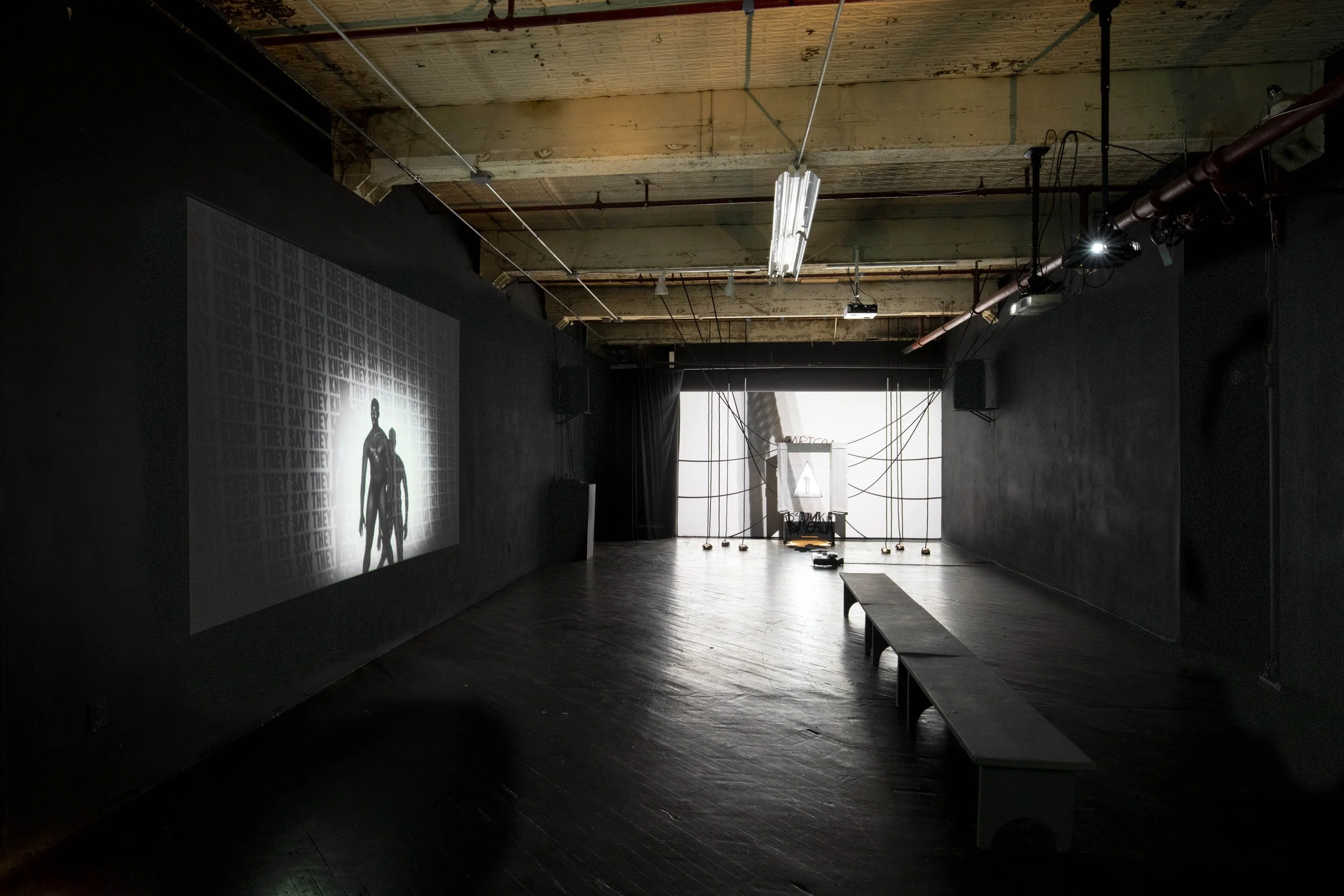
Hagudeza Rullán-Fantauzzi, They Say They Knew, 2021. Installation shot by Alessandro Alex Failla for Vox Populi.
In 2023, Rullán-Fantauzzi began her medical transition journey and artistically explored this new stage in her life through El Castigo de Dios—first showcased in their installation piece A Machete From Our Altar Kept Me Safe. In the 17-minute film, she acted as director, filmmaker, choreographer, and performer. The short features Rullán-Fantauzzi wearing white robes adorned with cowrie shells as she prances whimsically in front of an altar as though a spirit has overtaken her—similar to praise dancing or the mounting of the spirit. The work abstractly explores various layers: her queer experience, her spiritual connection, and her physical newfound self in her trans woman journey, which also creates a source of confidence for Rullán-Fantauzzi. Wanting to explore other mediums, she applied for grants that enabled her to express other aspects of herself. In 2025, she became the recipient of the Revealed Emerging Artist award at The Sculpture Center in Cleveland, Ohio, that led to her solo exhibition Mi Isla y Yo, which first presented at The Sculpture Center and showcased in early 2026 at Taller Puertorriqueño in Philadelphia.
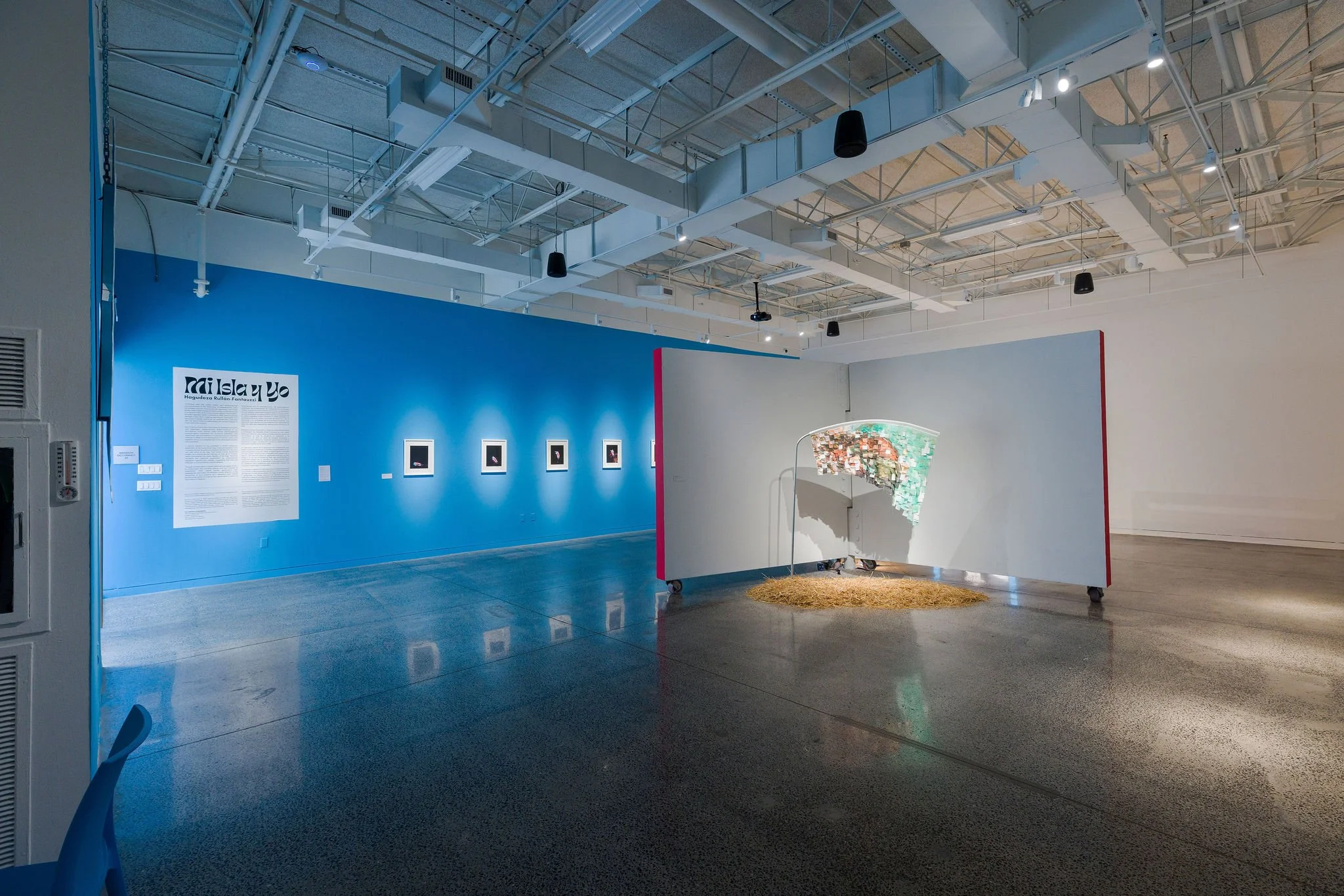
Colibri Workshop, Mi Isla y Yo, 2026, installation shot courtesy of Taller Puertorriqueño.
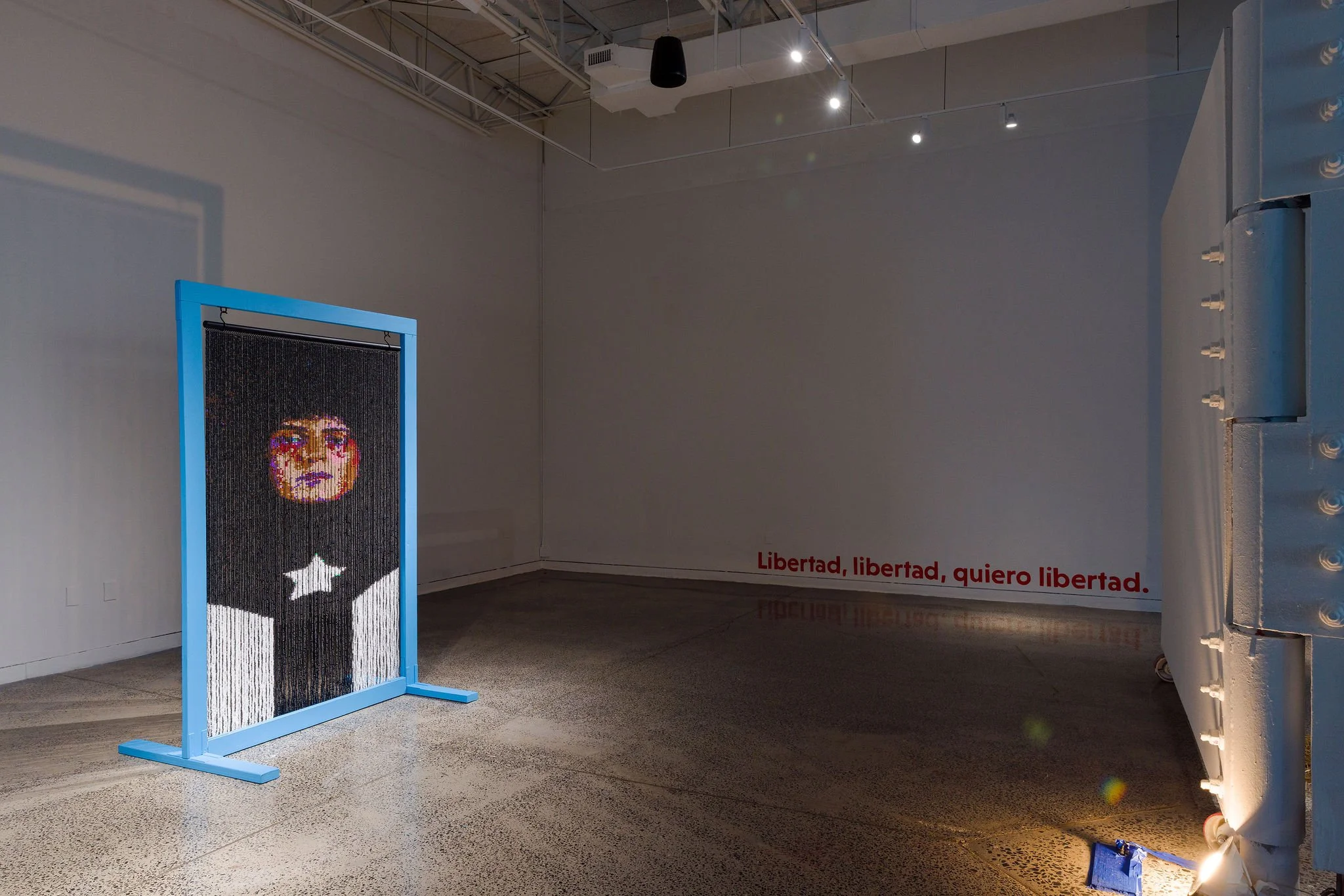
Colibri Workshop, Mi Isla y Yo, 2026, installation shot courtesy of Taller Puertorriqueño.
In Mi Isla y Yo, Rullán-Fantauzzi returns her attention to Puerto Rico, where she traces a string of connections between body and land—energies that are in a constant struggle with exploitative laws written by a government that wants to seize control of them. The installation consists of various mediums, including sculptural beaded work, film, and a set of photographs of the artist leaping up with the Puerto Rican flag—once banned on the island—painted on her body. The Philadelphian presentation holds a particular significance for Rullán-Fantauzzi. Taller Puertorriqueño is only a block away from the middle school and Pentecostal church she attended. The opening felt like a full circle moment. “My art is very raw,” she says. “Here I am. Here is my story, and it's scary to be vulnerable but the support I received from my community is just powerful.”
Whether through solo performances like El Castigo de Dios or directed performances like They Say They Knew, Rullán-Fantauzzi is in the careful thread of Philadelphia life. Despite growing up with limited resources and set against a society that condemned her identity, Rullán-Fantauzzi remains resilient by expressing herself through art and connecting with her community.
“I think at the core of it all, if we go back to the beginning to Indigenous culture . . . I would be described as a storyteller, no other fancy words,” she says.
Rullán-Fantauzzi experimental work is a testimony of who she is and what she wants to become. Only time will tell where the emerging artist’s voice will be.