
Writing as Necessity: A Conversation With Jasminne Mendez
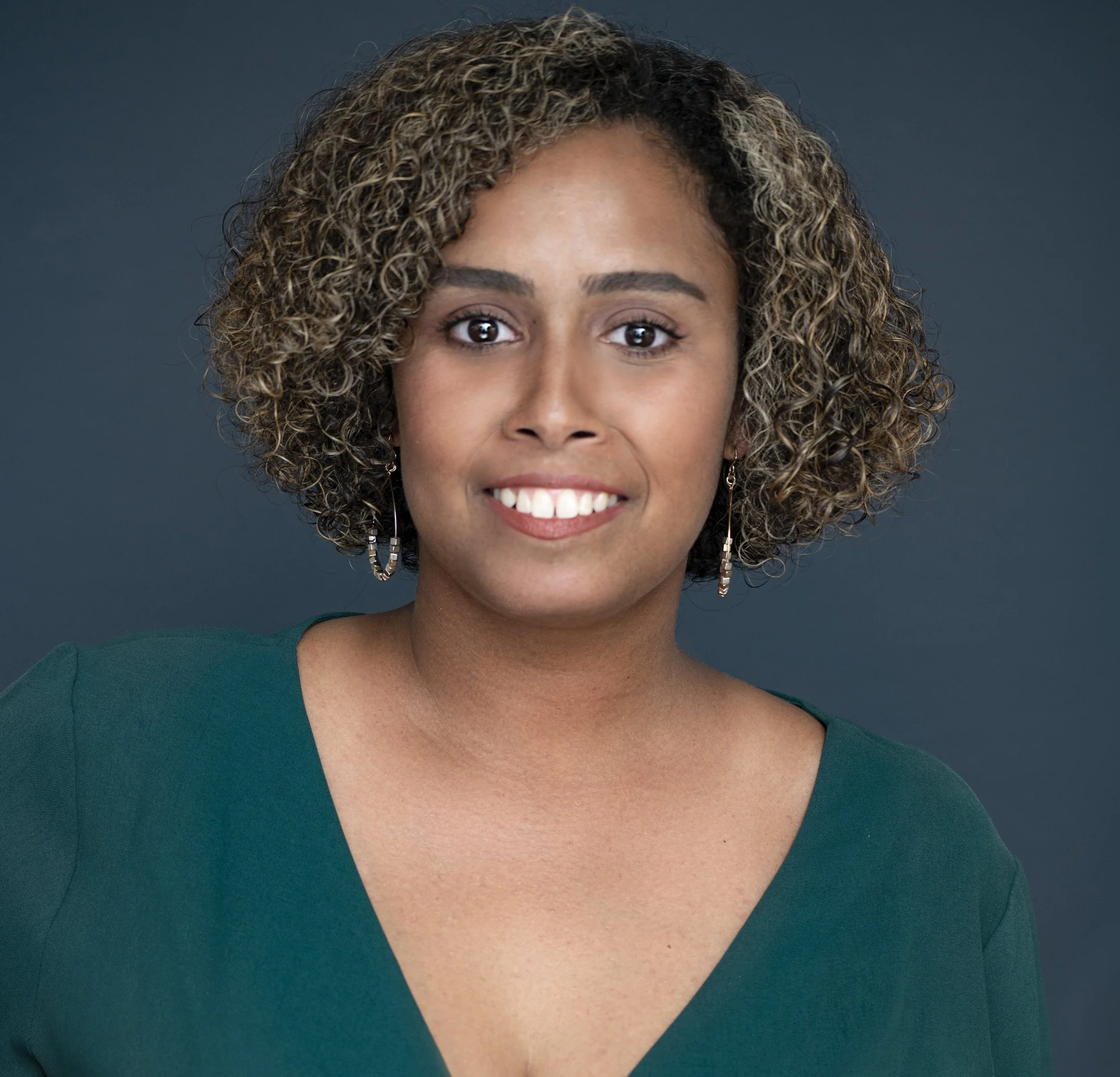
Jasminne Mendez. Photo by Tasha Gorel.
Pura Belpré Honor Award recipient Jasminne Mendez is a poet, author, and playwright. In this interview, Mendez discusses exploring disability in her work, diasporic placemaking, and working across different genres.
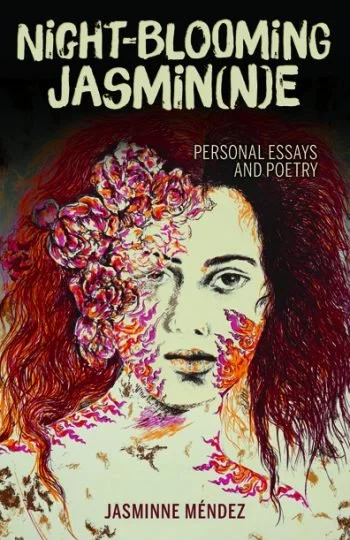
Your first book, Night-Blooming Jasmin(n)e: Personal Essays and Poetry, was celebrated for its exploration of disability from a Black Dominicana, migrant perspective. How did that book come to be? And how does it tie into a broader exploration of disability in your work?
Night-Blooming Jasmin(n)e looks at the first 10 years of me living with chronic illness. I was diagnosed with an autoimmune disease at 22, right after graduating college. I got a lupus diagnosis from my then doctor. And then my symptoms progressed, and we realized it was actually scleroderma, which is another autoimmune disease similar to lupus in how it affects internal organs and the skin. It causes fatigue, joint pain, and internal organ issues.
I spent over five years trying to fight my body back into health, saying, “You're not going to stop me. I'm going to keep doing all the things that I wanted to do.” And then every summer when I was teaching, I’d end up in the hospital. I would just push and push and push and push and push and push my body.
As I was sort of dealing with this, I was blogging. I needed a way to vent, to share what was happening to my body and what was happening when I walked into a doctor's office, and whether I was listened to or ignored.
I am an avid reader and I always turn to books, but the more I looked for books by women of color about chronic illness, the more I realized they didn’t exist. I knew I wasn’t the only woman, the only Black woman, the only Latina woman living with a chronic illness. And it's such a silenced thing in our cultures. We don't talk about illness. We don't talk about disability. And if we do, it's some sort of moral failing: “Well, God is punishing you” or “What did you do wrong to deserve this?” And for a long time, I overanalyzed every decision I had ever made, every lie I had ever told because I thought somehow I did something to cause this to deserve this illness.
And I think one of the things that strikes me about that book is your reflection on a lot of those questions as a child of migrants but also in the context of Texas, which seems to me very atypical within Latinx literature, which is an atypical landscape within Latinx literature for the depiction of the Dominican-American experience. Can you speak more on diasporic placemaking, your relationship with your parents, and living in Texas in the context of that book and your work more generally?
It's an interesting space to be in as someone who holds these varied identities. Being a daughter of immigrants, and then being diagnosed with this illness, I know it’s not my fault and I’ve come to a place of acceptance with all of this, but you do feel bad in some ways like you somehow did fail your parents.
Why can't I have this wonderful full-time job with all these benefits and have myself set up for retirement as my parents envisioned? Because I have this chronic illness that doesn't let me work full time. If I have a stressful job, it will land me in the hospital. As Erika Sánchez says, “I'm not your perfect Mexican daughter.” Well, I'm not your perfect Dominican daughter, but I strived to be for a long time.
And then you layer on top of that the geography of where we are. If I had to do twice as much to prove myself as a Black Latina woman, now that I've got this chronic illness and disability and live in Texas, I really gotta do three times as much to show people that I can do it because they're going to underestimate me.
I'm expected to be even stronger. People say, “Well, you're so strong,” and it's like, what choice did I have? I wasn't just gonna roll over and let this disease consume me. I had to be more because in this space, in Texas, where there is so just so much anti everything—Blackness, racism, etc.—I will be either not taken seriously or have to prove myself even more so. There's a lot of ableism that exists in society in general, not just in our own BIPOC communities. There are so many layers, so many intersections that other me more and more and more, especially right living in Texas.
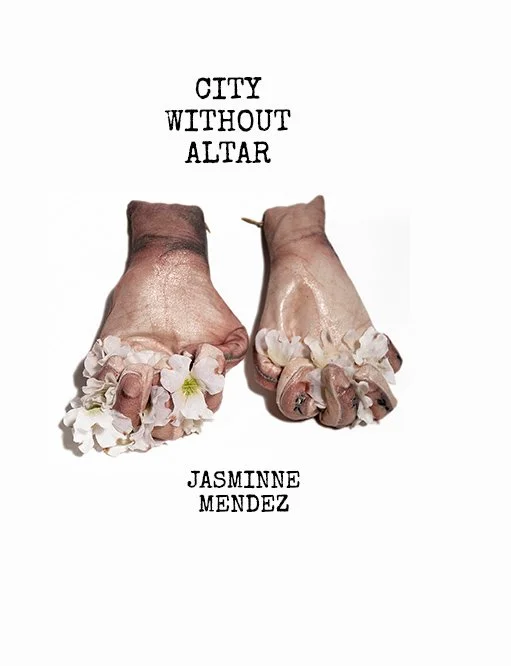
City Without Altar engages questions of disability and connects them to the infamous Parsley Massacre and, more generally, the era of Trujillo. It thinks about violence against Black bodies and border bodies and migrant bodies in ways that I think are unparalleled in Dominican American literature, especially from a disability perspective. What was the genesis of that book?
City Without Altar came from the question of: Where did my internalized anti-Blackness come from? Where and why did it permeate on the island for so long? Why do we still carry it so much? Why does our culture still carry this anti-Blackness within us? So much so that it's memes. And jokes. And people saying that Dominicans don't think they're Black and coming to terms with and reconciling my own internalized anti-Blackness.
In thinking about that question and then, looking at the history, there's the Trujillo era. I know from talks in my family over the years that he kind of rewrote the history books, and made it seem like we were more Spanish and Taíno than African. Why was that? Where did this come from?
In my research of Dominican history, I came across this moment in time: the Parsley Massacre, the Haitian massacre of 1937, where Trujillo ordered the mass killings of Haitians along the Dominican–Haitian border.
In thinking about my own chronic illness and disability, and the ways in which my body has experienced violence at the hands of the medical establishment, the disregard for my pain, as a Black woman, as a Black Latina woman, I found ways to intersect my personal histories and stories with what happened during the Trujillo era.
One of the things for me was about identifying—metaphorically and literally—some of the ways in which the Black body has been cut off from our geographical lands as we were enslaved and cut off from our ancestral or native homelands; the ways in which my own parents were cut off from the DR when they chose to migrate to the United States. I use “choose” loosely because they were in poverty. Do you really have a choice if you want a better life? Is it really fully your choice to leave? So I'm leaving because I'm choosing a better life, but at the same time, why do so many live in poverty? What creates those systems to where so many are wanting to leave their country of origin?
Trujillo ordered the massacre, and he asked his military men to use machetes, so he could kind of deny culpability and say it was warring farm workers who were attacking each other. For a while, he tried to deny that he ordered the massacre, but it eventually all came to light. Thinking about my disability and my chronic illness, one of the things that I've had to undergo is whole fingertip amputation surgeries.
Again, it got me thinking about the ways the Black body has been cut—whether cut off from land physically, cut with machetes, or with scalpels. That idea of being severed and that loss we have as individuals, as Black people from the diaspora, as Latin American immigrants, we have so much loss.
So much of what this book is about is losing ourselves, our identities, our homelands, our language, our culture as we move across, as we're forcibly moved from spaces and places, or if we choose to leave. There's always that sense of loss and grief.
One of the things that's most striking about City Without Altar is that as a non-Haitian person, you find this way of connecting your disability journey and your experience living in a Black body and mind to this difficult historical moment.
But I think you do so with a lot of care, and I know that research and collaboration have been a big part of giving yourself permission to build those bridges and to do so with the care they deserve. Could you talk more about research and collaboration in that project and your work generally?
Research plays a big part in so much of what I've done, not just with my own personal histories—where I research by asking, talking to family members, doing interviews, looking at old family photos and things like that—but also going into internet archives, talking to directly to Dominican scholars who have worked with Dominican histories. In particular, the Trujillo era. Edward Paulino has been hugely instrumental. He's been a big collaborator of mine. I'm a very big supporter of his work. He's a supporter of mine, and he's done a lot of scholarly work around the 1937 Haitian massacre as well, and so I definitely consult his work.
I've worked with a lot of academics and scholars who are looking at Dominican history, who helped me shape this book in particular, but that continue to inspire my current work.
In the book, I also sprinkle in some Haitian Creole in there, and it's not one of my native languages. I reached out to some Haitian friends and colleagues and acquaintances that were able to help me make sure I was using the language appropriately and authentically in a voice that made sense with the structure of the rest of the sentence. Because I've never mixed English and Haitian Creole. I mix English and Spanish in my work all the time, and that's sort of just how I think. It flows more naturally when I include Spanish in my work, but obviously, not being a native speaker of Haitian Creole, I had reservations about it. I wanted to be sure I was accurately portraying that experience.
I'm very grateful to have those connections and community, because this book took many years, and it was a labor of love. And there were a lot of times when I was like, “Am I the right person to tell this story?” I feel that whole imposter syndrome thing and was worried that I was going to be judged because I'm Dominican American and not Haitian.
There's a fascinating question also about documentation. For example, the ways in which City Without Altar incorporates CT scans or medical records that reflect your experience, but also Trujillo state documentation. Could you reflect on the question of documentation?
There's so much that has been lost or that wasn't recorded that it's hard to access. Even in writing this book and wanting to find my records, I had to call so many places just to find my own CT Scans. For some, they said, “Oh, they’re archived.” And they said that archived means we can’t access them.
But doesn't archived mean you can find them? That they've been stored somewhere. Apparently it means they've been lost, erased, or put in a vault so far away that nobody can find them.
I'm already dealing with a history that has been erased and silenced. With the Haitian massacre, I looked for registries of the survivors, the Haitian survivors who crossed the border and tried to escape the massacre. So many of them ended up going to the Catholic churches as refugees, and some of the priests did write down in their ledgers names of the refugees that came in, but so many did not. It's just not an accurate representation of the numbers of Haitian refugees who fled, survived, or were killed.
We don't have enough documentation that tells these stories, and the ones we do have are either not fully complete or only share a slice of something or a snippet of someone's life. Oftentimes, some of the journal and newspaper articles I read interviewed Trujillo’s military men. Very few interviewed actual survivors, victims, women, or children. None of their stories were recorded or part of the record.
The book opens with my birth certificate, a blacked-out version of my birth certificate, whereby I talk about how in the race ethnic origin box, I'm listed as Hispanic. So from the moment I'm born, the assumption is, there's no Blackness. I am blacked out like my Black racial identity is erased from the moment that I'm born.
Then looking at the DR, at what moment are we blacked out? Is our Blackness erased? And we look at the Trujillo era. Obviously, it was probably before then because of the Spanish and colonization, but where it came into play was during the Trujillo era, and specifically this moment in time with the Parsley Massacre. Paralleling those two journeys and experiences, both historically and personally, both the island and I have experienced a sense of blacking out.
You also write stories for girls and young women as an author of children’s and children’s and young adult books. How did that shift from being known as a poet to a children’s/YA author happen? Were you always thinking about children’s/YA books? Or was that something that came about at a later moment?
I think it's something I was eventually going to fall into because of my work with young people, having taught middle school and high school, but really, it was spurred on after I became a mom and was looking more and more for books by and about Dominicans, reflecting Dominican culture and experiences, and featuring Dominican girls. I wanted to create and tell those stories because they didn't exist when I was growing up.
During the pandemic lockdown, I had a spark of an idea: What if you wrote a novel in verse about a young Afro Latina who's diagnosed with a chronic illness?
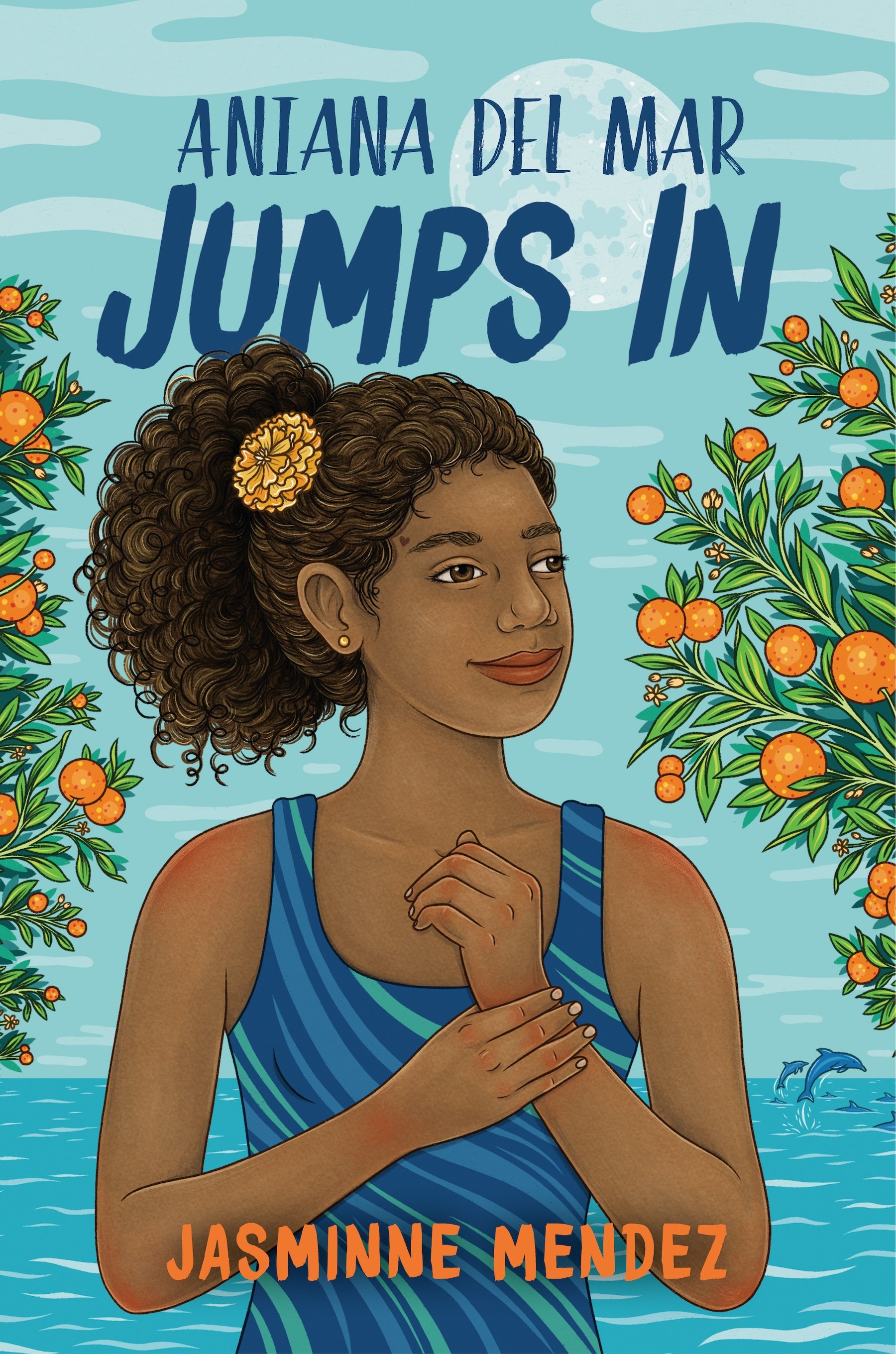
It’s very similar to my life, but rather than it being an older person, like a 20-year-old, it’s a young 12-year-old. Aniana del Mar Jumps In is about a young girl who's diagnosed with juvenile, idiopathic arthritis. That was received very well, thankfully, because there aren't a lot of stories featuring Black and brown kids with chronic illness or with disabilities. My whole thing is, if there's a book you want to read that hasn't been written, then you must write it. The switch really started happening there at that moment.
My next book is about a young Afro Latina, a young Black girl, who is a theater student. She uses guerrilla theater practices to fight book bans on campus. It’s this young woman finding her voice. There's always that element to most of my fiction books. These young girls who are silenced is at the core of everything I write.
I'm always—whether I'm writing for adults or children—thinking about what story did 15-year-old Jasminne need that she didn't get? What story did 25-year-old Jasminne need? These are stories that inspire me and keep me coming back to the page, because if I needed them then I know someone else probably needed them, too.