
Arrow of Prosperity: Território Vivo by Sertão Negro
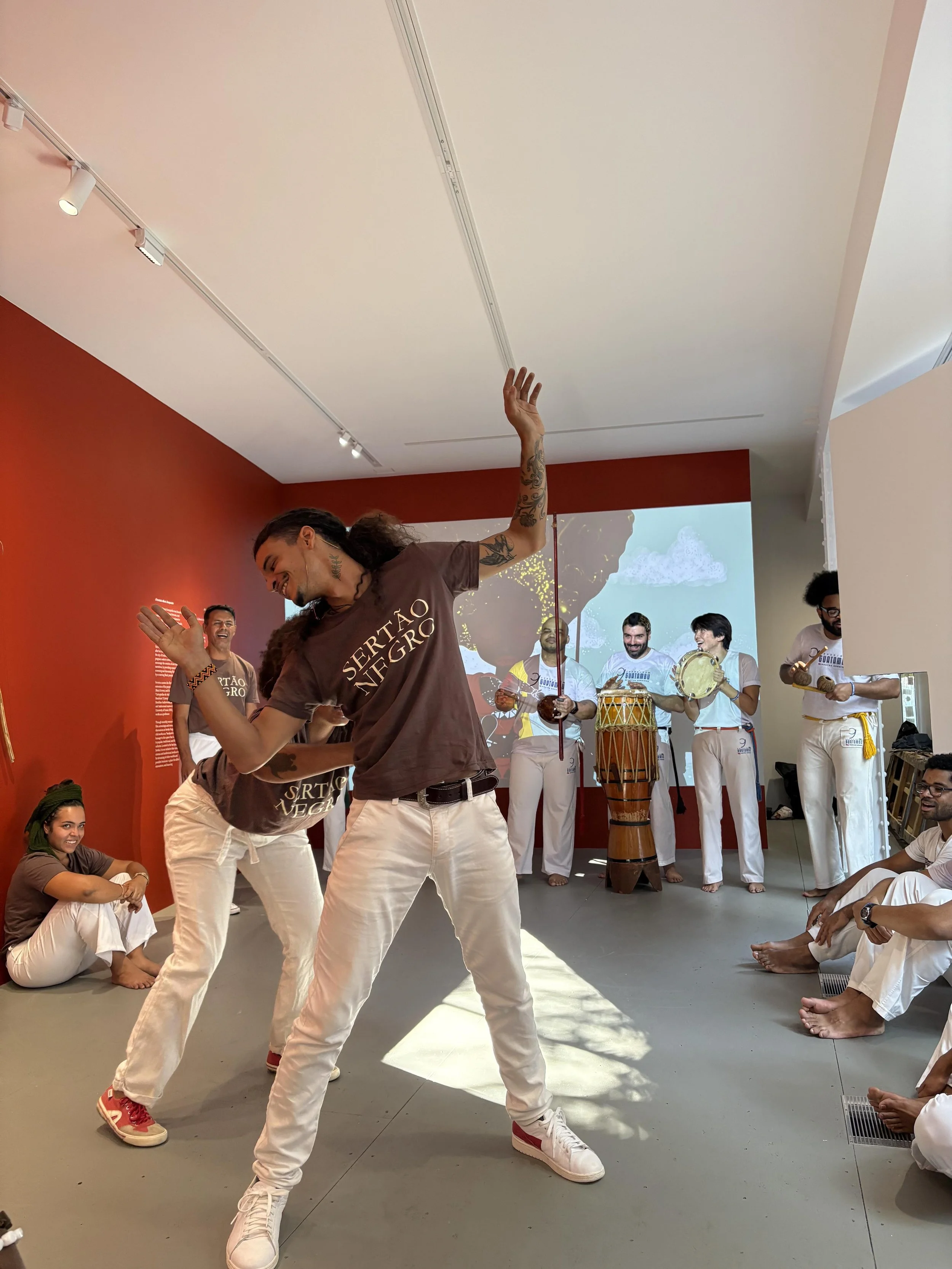
Capoeira roda during the opening of the exhibition Sertão Negro: Território Vivo at Storefront for Art and Architecture. Photo by Giovanna Querido.
In Brazil, there is a popular game where players take a shot every time they hear someone repeat the same buzzword. The result is a group of people drunk from the endless repetition of words like “crisis,” “community,” “care,” and “inclusivity,” and from debates about what an exhibition should be and what a curator should or shouldn't do. This is a constant political exercise of emptying words until they lose their meaning, making it easy to mold and frame them to fit institutional discourses that end up reinforcing the very structures they claim to challenge.
The exhibition Sertão Negro: Território Vivo at Storefront for Art and Architecture does the opposite: It restores meaning. Instead of relying on exhausted rhetoric, it grounds these terms in lived histories, local knowledge, and embodied practices that resist institutional flattening. Located in a quilombo, a historic settlement founded by descendants of escaped enslaved Africans, Sertão Negro is an atelier and art school conceived and founded by artist Dalton Paula and scholar Ceiça Ferreira in Goiânia, Brazil, in 2021. At Storefront for Art and Architecture, the institution plays with its own notion of the “storefront” display to present an exhibition that feels like a window into futurity, a glimpse of what becomes possible when a space is created in deep relation to Black cultural traditions.
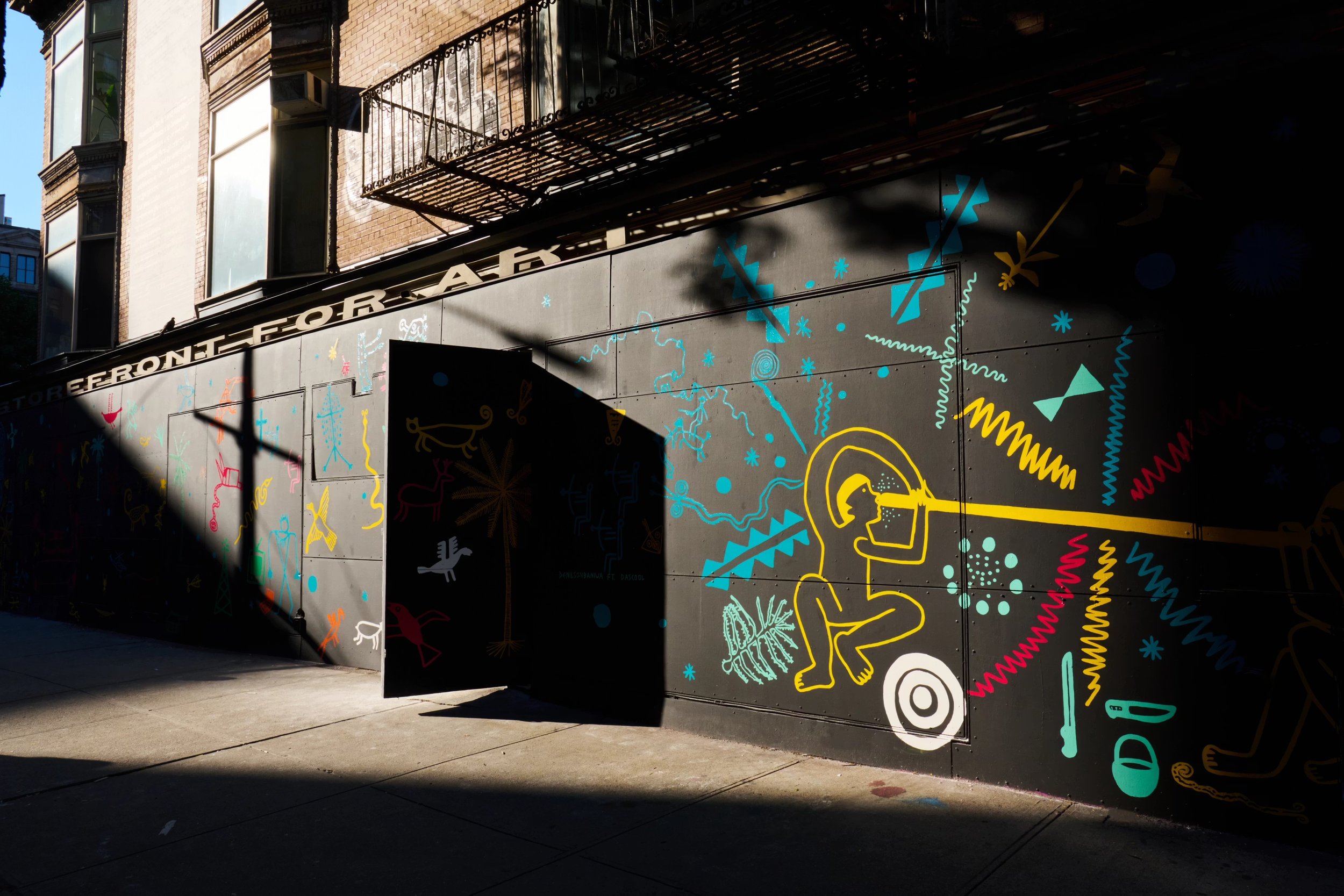
Storefront entrance. Photo by PJ Rountree. Courtesy of Storefront for Art and Architecture.
At the opening, the visitors could join a capoeira roda, a traditional circle of music, movement, and communal gathering. Mestres Guaraná and Gordinho of Capoeira Guatambu, master teachers in the capoeira lineage, led the celebration. Within the circle, capoeira unfolds through constant motion: Its foundation is the ginga, a rhythmic, triangular sway of the body that keeps practitioners in perpetual readiness. Around, it develops a vocabulary of low, inverted, and spiraling movements—dodges, kicks, feints, and acrobatic turns—that blur the line between fight and dance. The fluidity of these gestures reflects capoeira’s philosophy: Nothing is fixed, roles shift, and meaning emerges through improvisation and exchange.
The roda de capoeira is a place where participants absorb knowledge and learn skills through observation and imitation. The roda is a space that affirms mutual respect among communities, groups, and individuals, acknowledging their ancestral resistance across past, present, and future. At the exhibition's opening, this same ambiguity reveals a lesson about the temptation to take shortcuts in defining art and culture today. It is the movement of the body itself: contorting, giving a quick squeeze, shifting a leg with both slowness and sudden speed, holding hands, thanking your partner in the roda, and bowing in gratitude to the floor beneath your feet. Each gesture carries a memory, a rhythm, a listening that cannot be rushed, an invitation to inhabit things differently. To think about art differently.
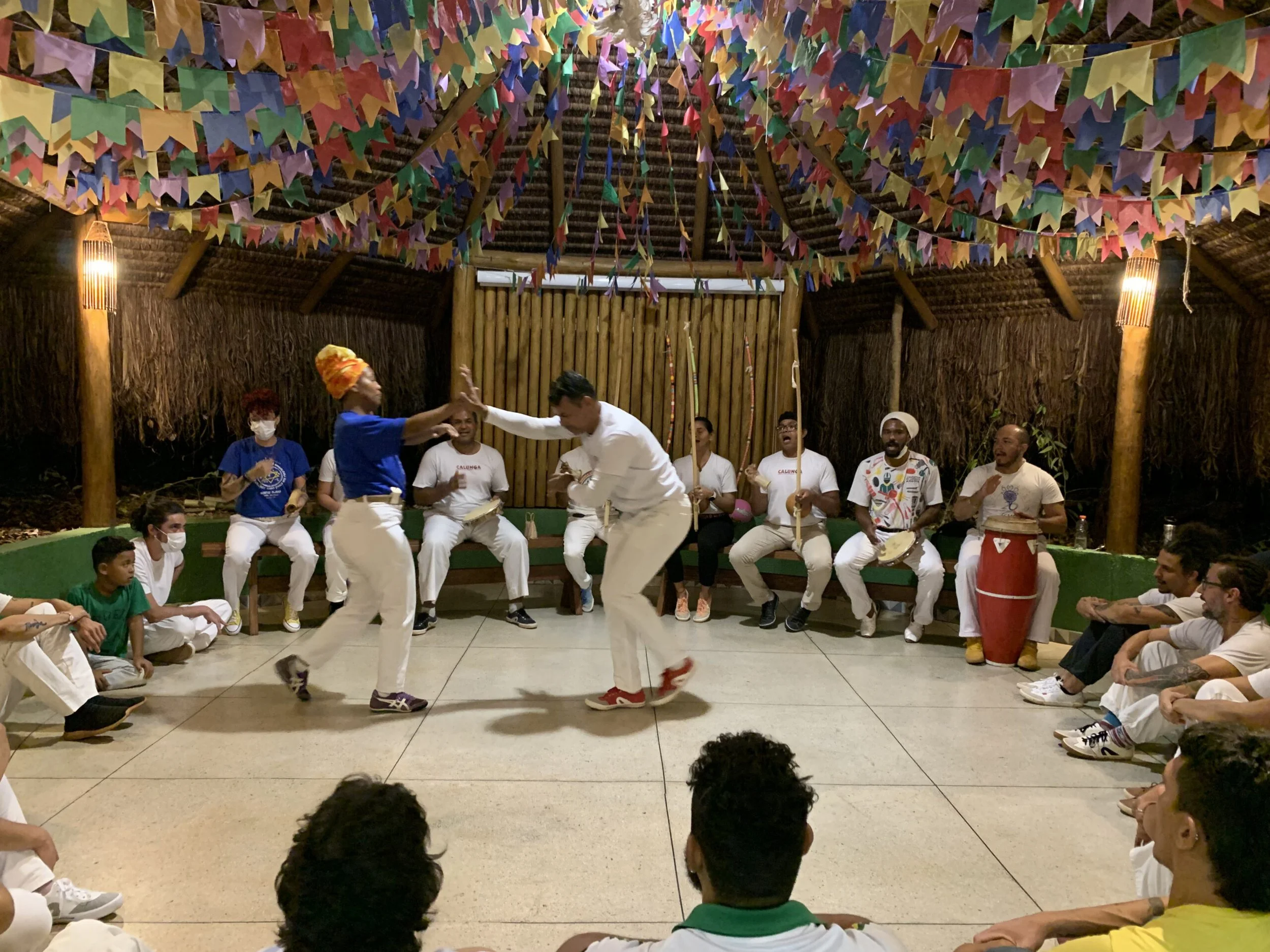
Capoeira Angola round of the Sertão Negro. Photo: Manuela Costa Silva.
Brazilian artist Paula describes art as coming to him almost like a trap, something so overpowering that it was inevitable. He had to learn only how to move and squib within it. His mother was a public servant in Brasília, the Brazilian capital designed by Oscar Niemeyer. She often sold Paula's early paintings at her work so she could buy more painting materials for her son. Now regarded as one of the most prestigious artists in Brazil and the recipient of the Chanel Next Prize in 2024, Paula rarely speaks about himself. Early on, he understood that art was not about individual fame. In 2017, Dalton acquired more than 10,300 square feet of land about 7.5 miles from downtown Goiânia. Four years later, he and scholar Ferreira founded Sertão Negro. Initially, it was an exercise in imagination: They had purchased a piece of land to live and work on, but above all to envision a place that could serve as an artist residency and a home for others.
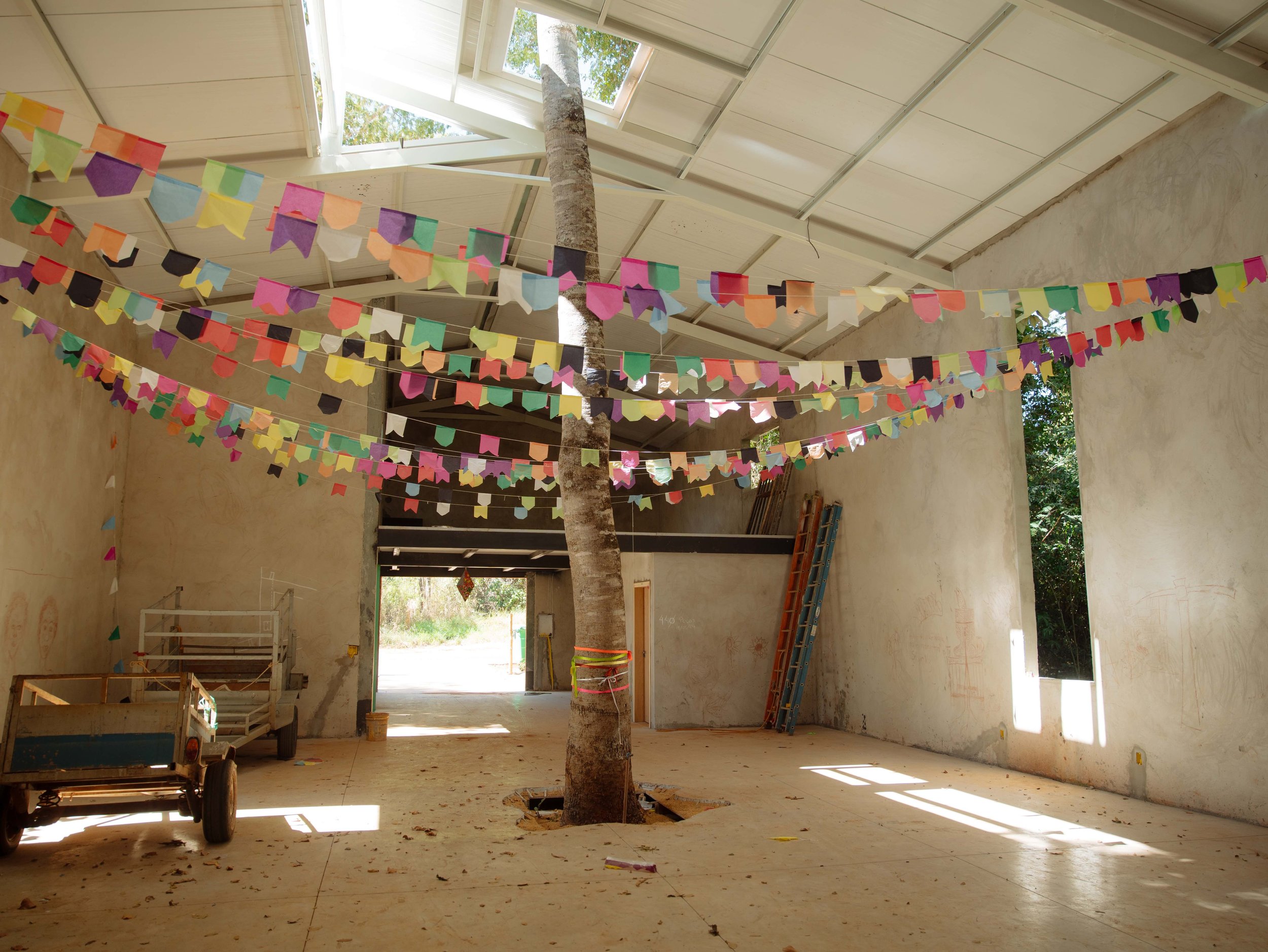
Sertão Negro in Goiânia. Photo by Paulo Rezende.
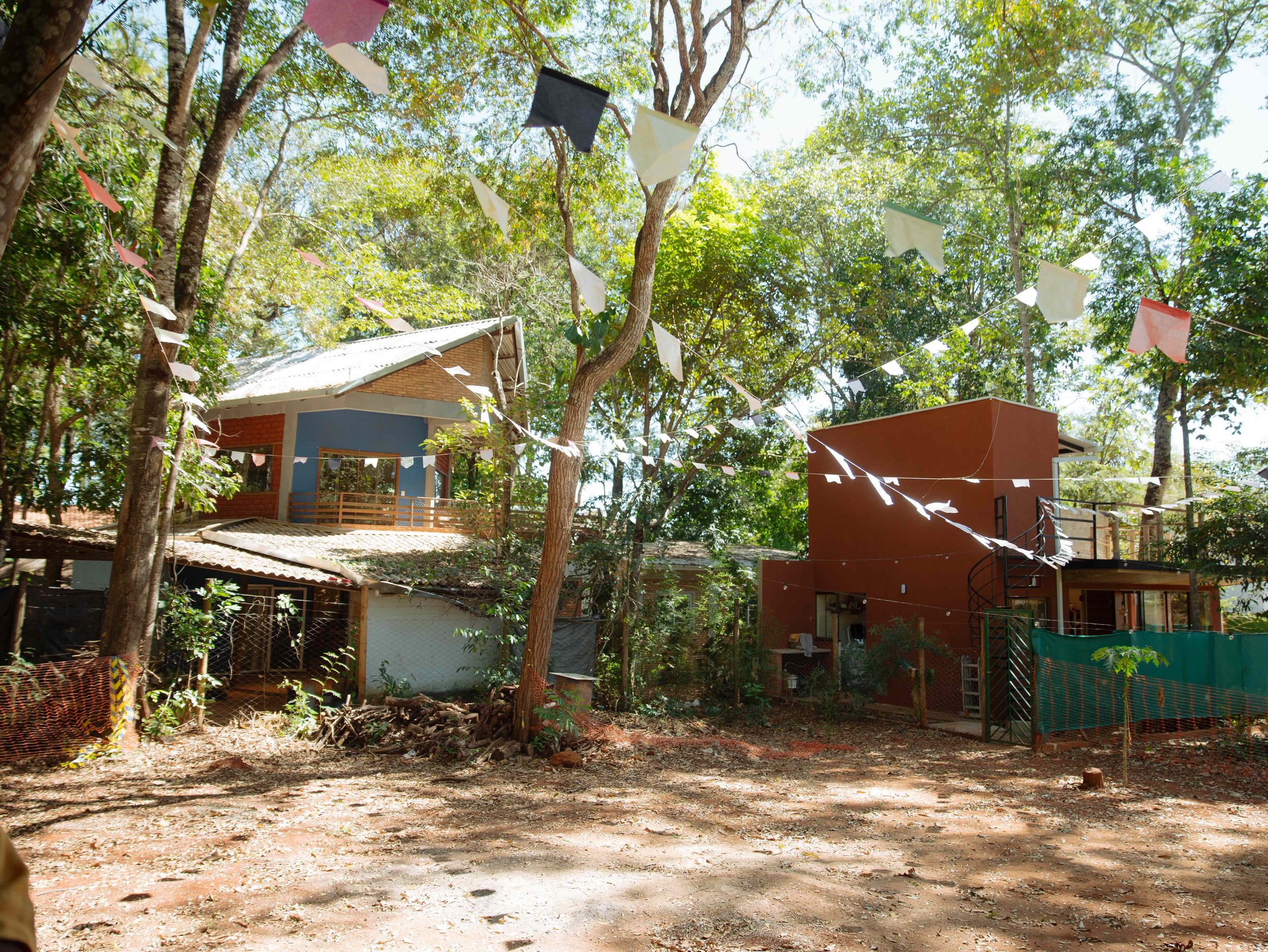
Sertão Negro in Goiânia. Photo by Paulo Rezende.
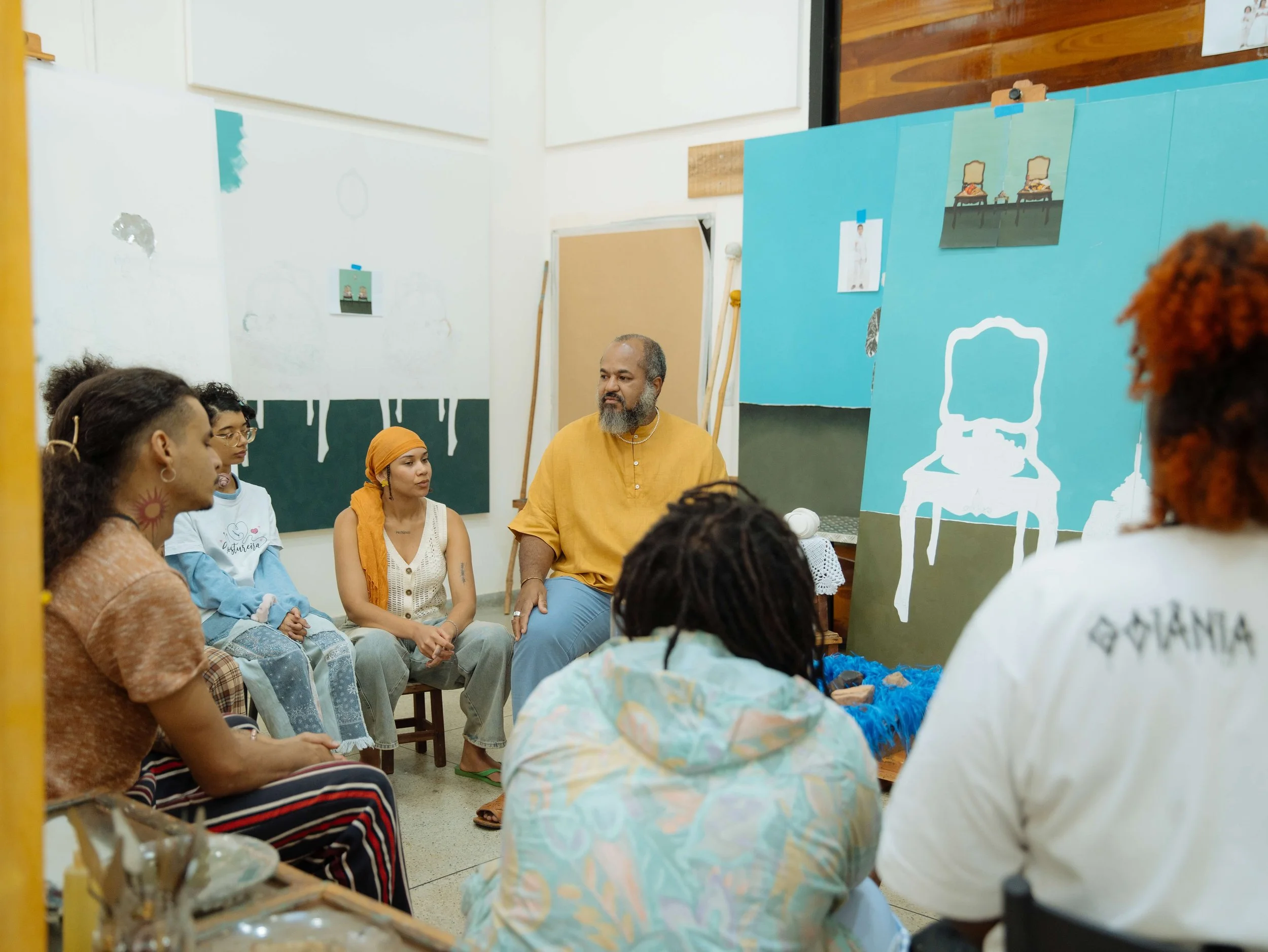
Sertão Negro in Goiânia. Photo by Paulo Rezende.
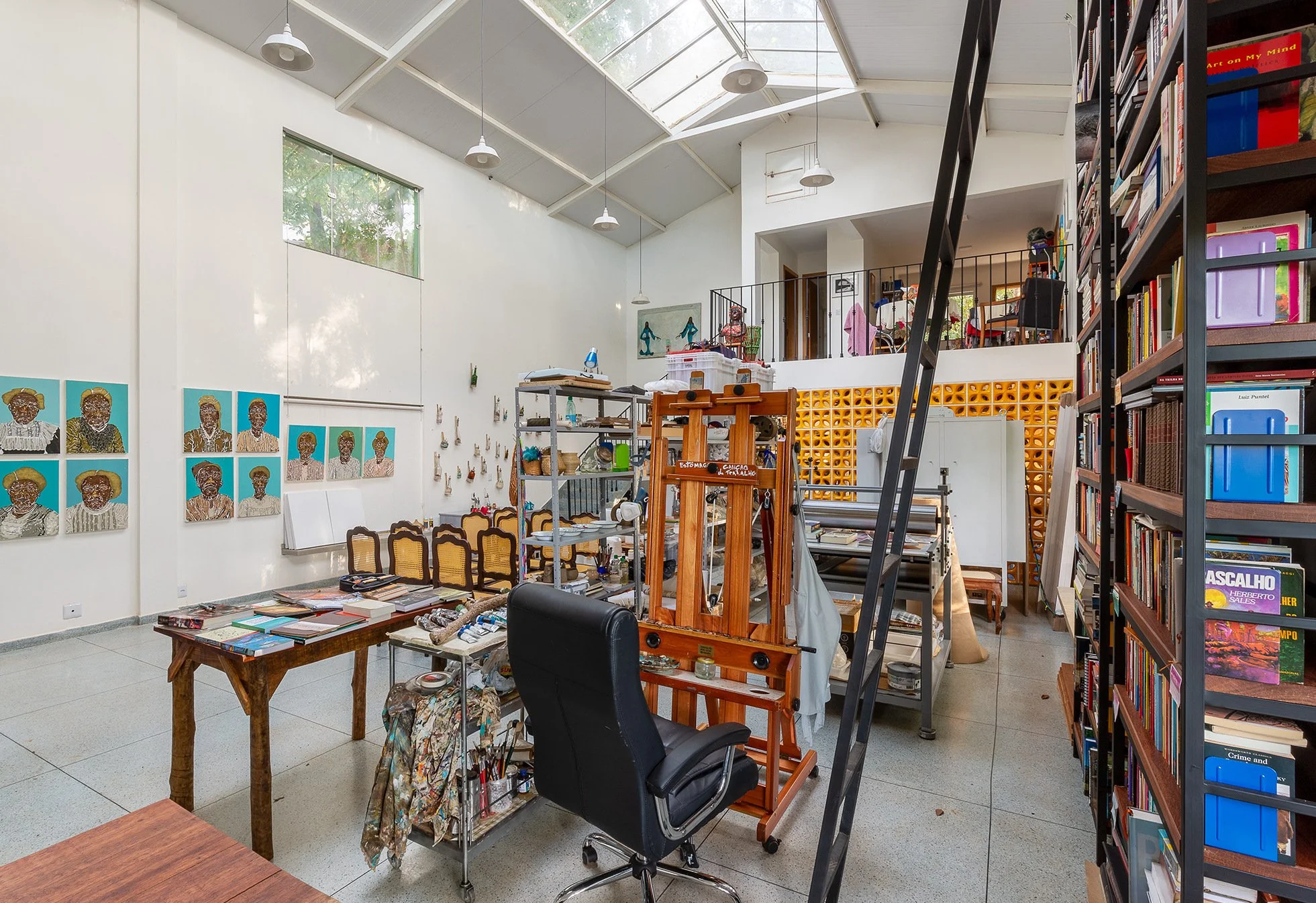
Sertão Negro in Goiânia. Photo by Paulo Rezende.

Sertão Negro in Goiânia. Photo by Paulo Rezende.
The exhibition, then, is a small time capsule that captures the spirit of Sertão Negro. In Goiânia, more than 4,000 miles from NYC, a blue door opens onto a studio and artist residency that welcomes creators from across Brazil and abroad. The site also hosts a cineclub, a capoeira group, an active kitchen, gardens, and nurseries. In the exhibition, there are several images of seeds that reference Sertão Verde, the project through which the community grows and consumes all the food produced on the property.
The show also highlights Cine Maria Grampinho, the film program Ferreira founded in Goiânia to amplify Black voices and foster new narratives through cinema. For the New York presentation, Ferreira has curated and screened a selection of films from the program featuring Black filmmakers. Discussions followed the movie, recreating a space for dialogue, reflection, and connection.
The Sertão Negro way of knowing, making, and thinking about art deeply intertwines with quilombola and terreiro practices. Each plant species in the Sertão Negro garden symbolizes the complex nature of being both healing and toxic, such as espadas-de-são-jorge, paus-d’água, and comigo-ninguem-pode. References to Candomblé and Afro-religious practices are also visible in the exhibition space, such as the milho (corn), knife, and flower offering dedicated to São Sebastião. This act of devotion reflects the faith so evident in Dalton’s works, as he is a devotee of saints Cosme and Damião, a duality often visible in his paintings.
Sertão Negro is within Quilombo Kalunga, which makes understanding the community’s history essential to grasping the significance of the project. A central highlight of the exhibition is a series of archival photographs from Kalunga, which trace its past and present. Northern Goiás, where Kalunga is located, has a violent colonial history. In 1736, the discovery of deep gold veins near the Lava Pés stream in the Serra da Cavalhada led Portuguese settlers to forcibly bring and exploit thousands of enslaved Africans in the region’s mines. For over a century, the Kalunga people lived in near seclusion until the government officially recognized the group as a quilombo in 1996. Today, around 1,600 families live across 261,999 hectares, spread over 39 communities. The Kalunga built a way of life centered on sustainability, learned through living alongside Indigenous groups in the semi-arid cerrado. In Banto, an African language, “Kalunga” means sacred space, a place of protection.
In the work of Paula and Sertão Negro, the quilombo is inseparable from the very existence of the art school itself. A quilombo holds its own knowledge systems, a belief called quilombismo: a vital force expressed through collective practices and reflected in ways of life, cultural production, and political imagination. Quilombos are more than ideas or actions. They are a condition, a way of being, and a collective practice: aquilombamento. They serve as radical formations that challenge the dominance of colonialism, slavery, and modernity itself. The quilombo is not just a historical fact; it is an ongoing movement toward broader ideas of freedom, humanity, and justice. It is through the understanding of this duality, the act of escape, and the resistance and subversion of hegemonic art spaces and dynamics that Sertão Negro consolidates itself as a laboratory for the fabulation of dreams and the imagining of new futures.
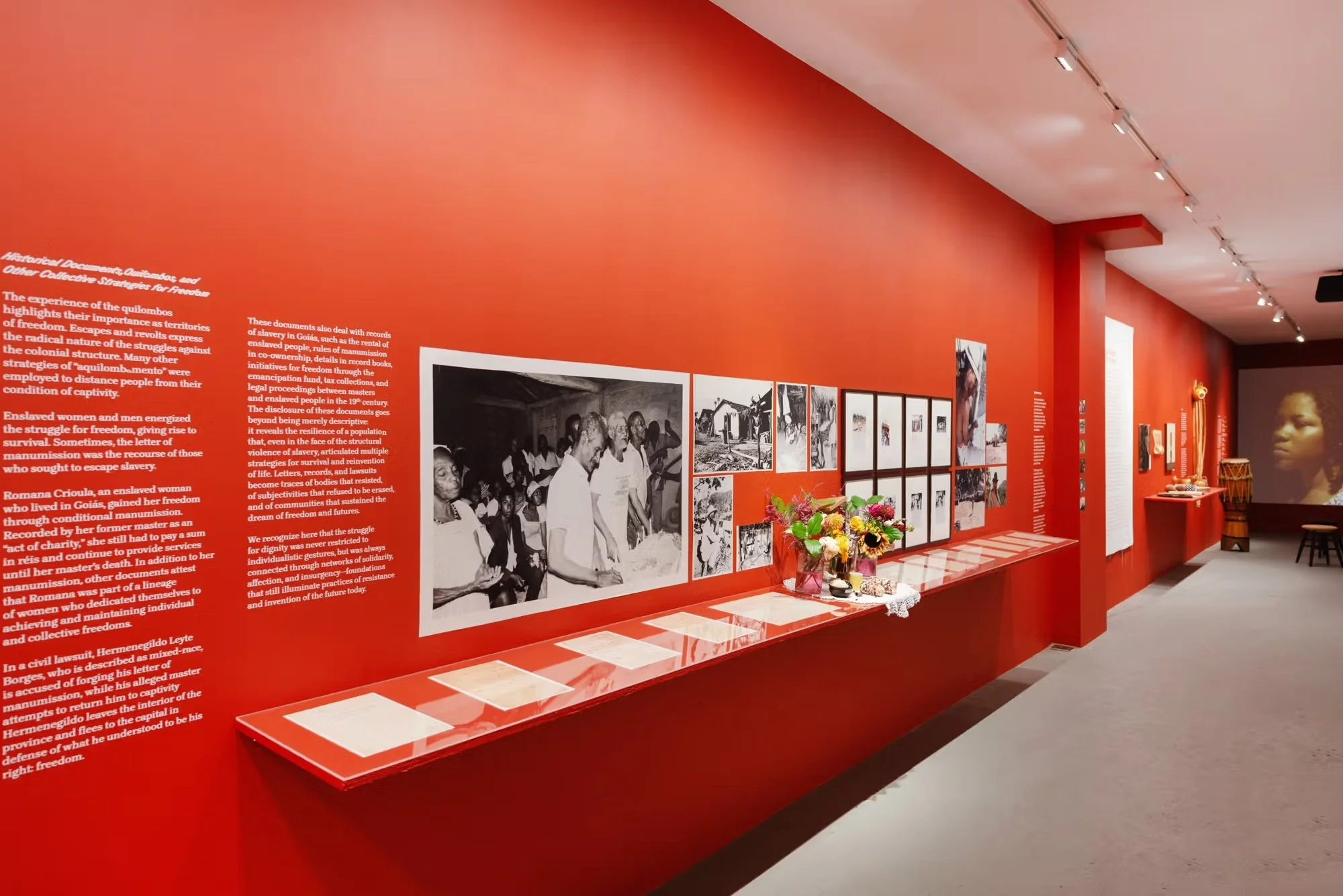
Photo by PJ Rountree. Courtesy of Storefront for Art and Architecture.
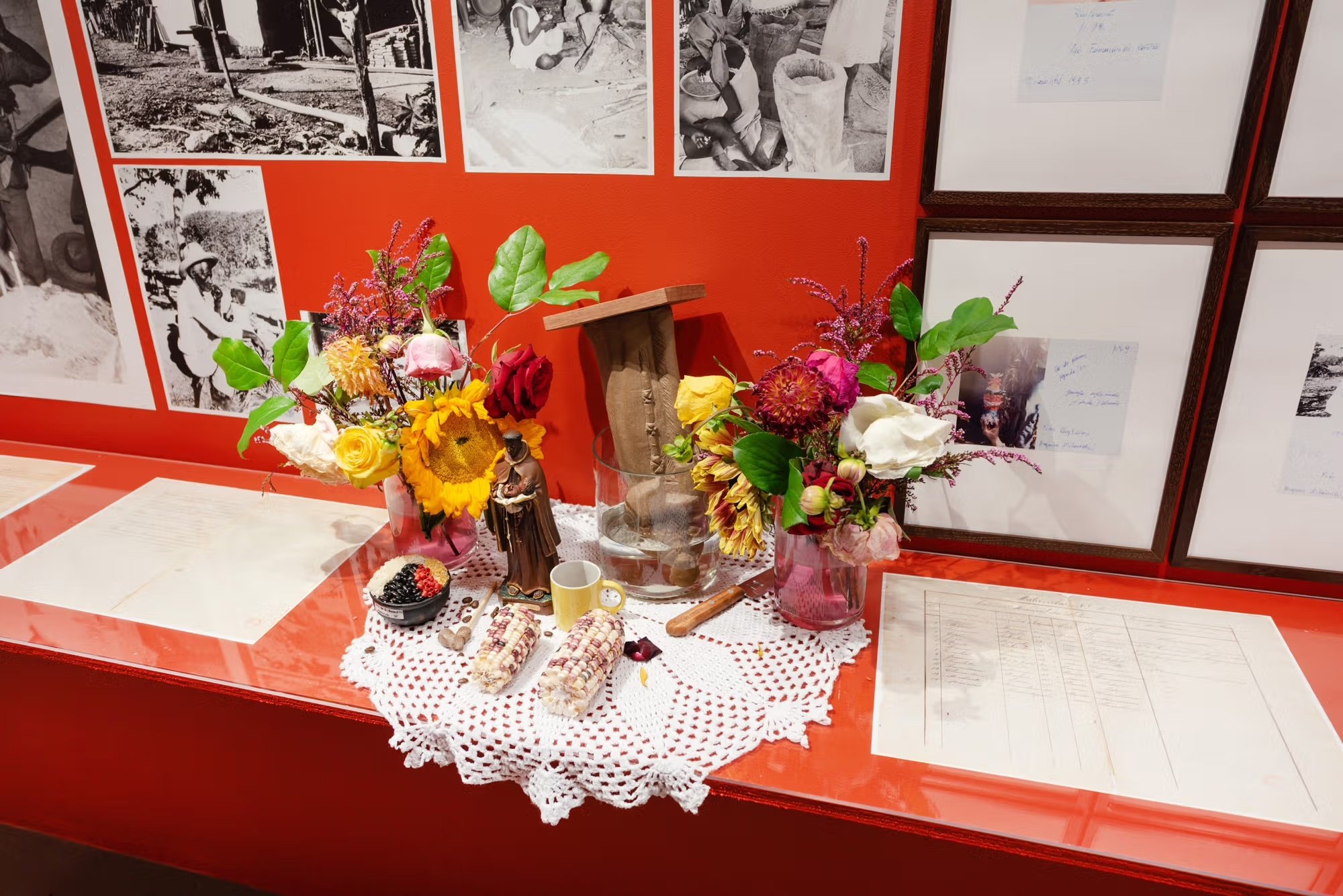
Photo by PJ Rountree. Courtesy of Storefront for Art and Architecture.
The exhibition showcases resident artists Dara, Genor Sales, Hortência Eduarda, Òkun, Rebeca Miguel, Tor Teixeira, William Maia, and Xica, highlighting the complete range of programming curated by Sertão Negro. During the exhibition, facilitators hosted the biweekly Cineclube and sessions on topics such as Seeding Sovereignty, Clay and Memory, and printmaking.
In the heart of SoHo, where gentrification has long smoothed out any sense of surprise, the streets often feel as if you’ve stepped inside a perpetually looping TikTok trend: sanitized, staged, and indistinguishably bland. Yet, Storefront resists that logic. Its doors are slightly hidden and the threshold is so uncertain that it’s not surprising if someone questions whether to enter. That hesitation, that doubt, becomes part of the knowledge the space produces. Since opening in 1982 with Performance A–Z, 26 nights of free performances, Storefront has operated as a site of experimental encounter. Curator José Esparza Chong Cuy continues this legacy, exploring forms that challenge conventional ideas of exhibition-making.
Sometimes, these arrows of prosperity appear, carrying the weight and meaning of words that are vital to the work of writers, artists, and cultural workers. The exhibition Território Vivo: Sertão Negro gave the word community deeper resonance and layers of meaning. As the exhibition’s title suggests, it brought freedom (livre) to the forefront of the Storefront programming. Seeing these fragments of hope within the heart of NYC serves as a living testament to the possibilities of living the unimaginable, dreaming, and witnessing a poetic liberation that continues to transform many lives. Paula understands the praxis of Sertão Negro as a way of reimagining what family can be. As in the terreiros, quilombos, capoeira rodas, and samba circles, this space joins a lineage of Black collectives that have endured through care, ritual, and shared memory. It is within these constellations of kinship, woven from knowledge, lore, and ancestrality, that another sense of existence continues to be safeguarded and renewed.
