
Roberto Parrilla’s Diasporic Ambient Art
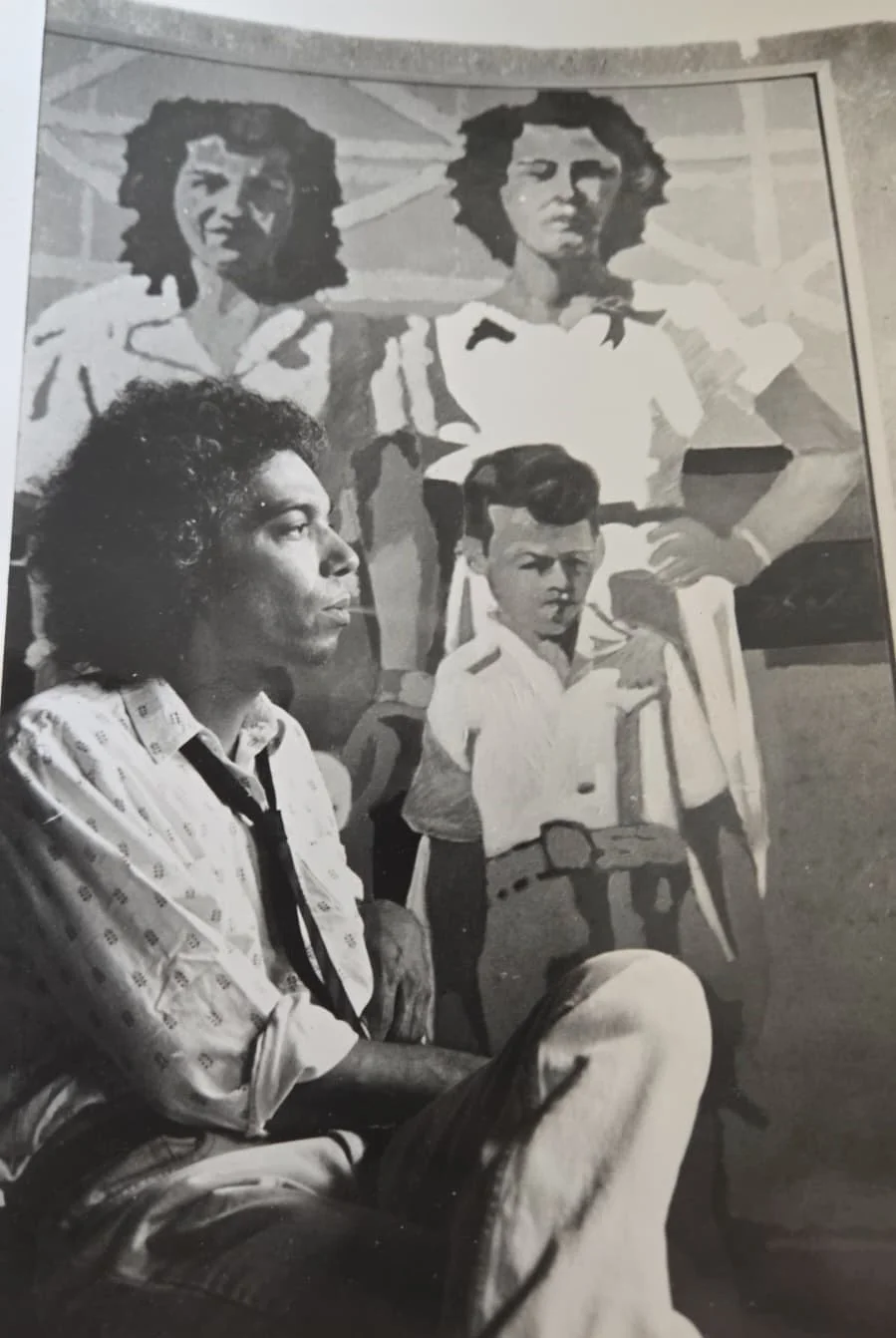
Roberto Parrilla.
Roberto Parrilla belongs to a generation of Puerto Rican artists who flourished between the 1980s and 1990s. A generation that settled in a semi-dilapidated Old San Juan for its bohemia, low rents, galleries, the Instituto de Cultura Puertorriqueña, and fine arts learning institutions. As part of this burgeoning art scene, Parrilla exhibited with young peers who became the canon of Puerto Rican art, like Rafael Trelles and Nick Quijano, or well-established figures of the 1950s like Lorenzo Homar. Yet, his name is absent in art histories, and his work is but an elusive echo, a rumor reverberating between those who haphazardly encounter his canvases.
His repertoire consisted of post-impressionistic explorations of historical pictures or intimate family portraits, nostalgic tropical landscapes or light studies of Old San Juan architecture, Pop Art artifacts that awaken memories, and nudes that oscillate between pleasure and desolation. Parrilla’s art has a ghostliness and timelessness that immerses the viewer that can only be described as a diasporic ambient art. This ambient is a strategy to overcome the trauma caused by the uprooting of his life during intermittent migrations between New York and Puerto Rico. His art is also connected to the life of Old San Juan that nurtured the arts and that has largely vanished in the early 21st century.
Parrilla was born in Manhattan on March 10, 1954, the son of Alice Pino, born in Cuba, and Ralph Parrilla, a Nuyorican. While his mother worked as a bookkeeper for the advertisement firm J. Walter Thompson (JWT), he was cared by his grandmothers Gloria and Eloina. Alice was a pioneer on many fronts: she divorced Ralph and coordinated the opening of a JWT branch in San Juan. In 1962, 8-year-old Parrilla and his mother arrived to a Puerto Rico engineered by the so-called “peaceful revolution” of the constitution of the Estado Libre Asociado (1952) to serve as a cultural “bridge” between the United States and Latin America, and as a “showcase” of American progress and democracy to counteract Fidel Castro’s Cuba and the commie-curious.¹ In this “showcase” the modern coexisted with the agrarian; the international-styled Caribe Hilton’s (1950) with dirt roads of the sugarcane industry that led to workers’ shacks on the coastal plains and the mountainous interior.
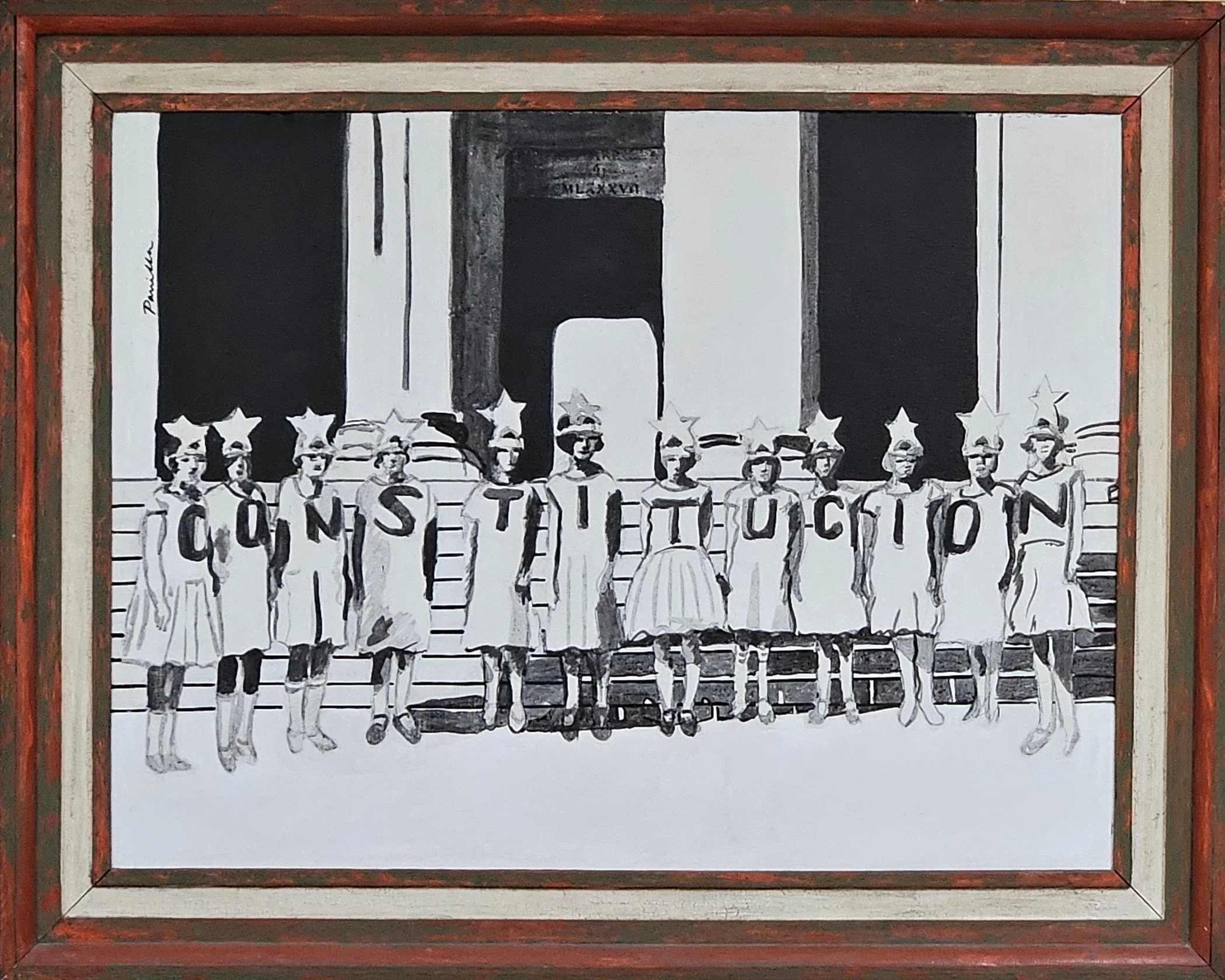
Roberto Parrilla, Constitución, part of Liga de Arte’s Permanent Collection.
Situated in JWT’s San Juan office, Pino formed friendships with U.S. expats involved in media and art, and with Puerto Rican artists of the 1950s generation. Although it is common to frame PR’s 20-century history as a struggle for cultural affirmation vis-à-vis Anglo-Americanization, at Pino’s house on Calle Cerra, Santurce, these opposing cultural spheres coalesced, creating a unique bandwidth for the sharing of ideas. In 1965, Pino married expat photographer Marvin Schwartz, who captured images of Homar, Rafael Tufiño, and Myrna Báez, alongside scenes and people from premodern Puerto Rico. After two years of marriage, they divorced; yet, Schwartz remained present in young Parrilla’s life, influencing the artist’s approach to historical portraiture.
Parrilla would admit as much as an adult in a 1993 interview. “[Schwartz] exposed me to the importance of the image…,” he told The San Juan Star Sunday Magazine. “[Through him,] I learned to see.”² Parrilla’s reimagined palm trees are undoubtedly Schwartz’s. Simultaneously, the youngster witnessed firsthand the art-making process of Carlos Raquel Rivera, Tufiño, Báez and John Balossi. He was also exposed to the world of advertising design, and during his summer stays with his father in Brooklyn, to exhibits of Paul Cézanne, Edward Steichen, and Claes Oldenburg.
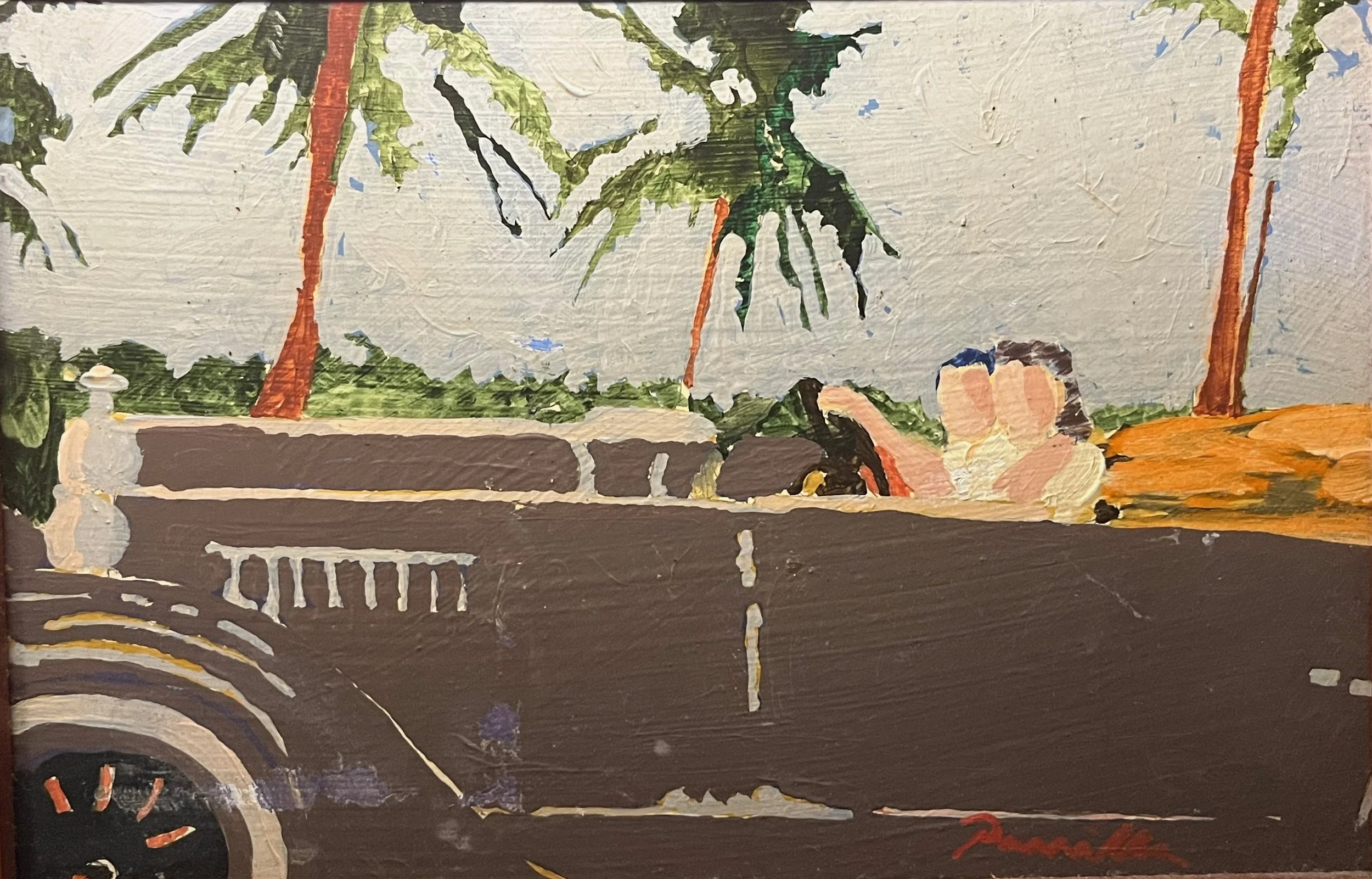
Roberto Parrilla, Pasadía (1989)
In 1963, at 13, he was cast as Marlon in the movie La chica del lunes (Monday’s Child) by Argentinian director Leopoldo Torre Nilson. Marlon serves as a virgil or guide for Peter Richardson, an executive at MacCord Enterprises who searches for one of his daughter’s dolls that was accidentally misplaced in a donation box for hurricane victims. Marlon guides Richardson through the poor, culturally chaotic, and dilapidated Old San Juan. Parrilla loved the movie-making experience and was offered a new film, but Pino rejected his further involvement in film. This remained a source of tension between the mother and the early adolescent.
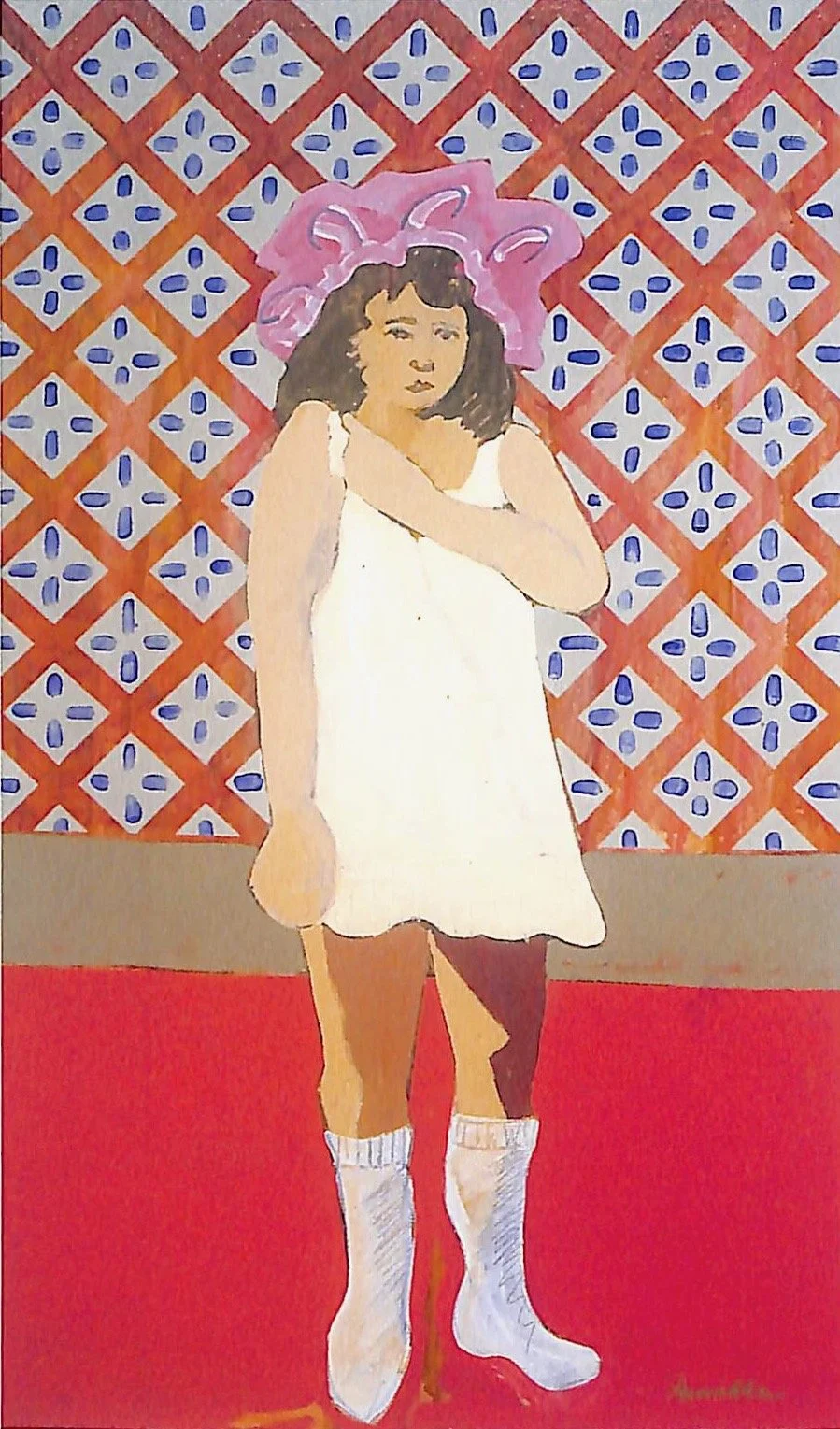
Roberto Parrilla, Olympia (1992). Ruiz de la Mata states about Olympia: “I had thought that Parrilla, seemingly so keen of doing things after some artist or other, might have gone after Edoard Manet’s luscious recumbent nude — but I didn’t remember seeing anything even faintly reminiscent. Well, there isn’t anything. God knows where this Olympia comes from. From somebody’s old photograph album, perhaps?”
While studying at Central School of Fine Arts in Santurce, Parrilla grew rebellious and was arrested twice. After the second incident, at 16, Pino relinquished custody of him to his father, who lived in Brooklyn. In NYC, he studied music and art, visited the Museum of Modern Art and the Metropolitan Museum of Art, carefully studied the intricacies of Pop Art, and became an admirer of Edward Hopper and Rembrandt. His uncle Ralph Pino took him to Europe where he toured with a rock band. After Europe, he returned to NYC to study art and take courses in early childhood education, eventually working in childcare.
In 1979, 25-year-old Parrilla returned to Old San Juan. He studied at the Escuela de Artes Plásticas and La Liga de Arte. From 1981, he started participating in various collective shows and art contests, such as that of the literary magazine Sin nombre (where his work was exhibited in 1982 and 1987). By 1985, Parrilla’s work was drawing attention from the press. In 1988, Parrilla was part of a collective exhibit at Galería Palomas that included works by Roberto Moya, Richard Pagán, Báez, and Homar. While he was featured in exhibits alongside well-established and emerging artists, Parilla would struggle with the critical reception to his style.
In 1990, art critic Ernesto J. Ruiz de la Mata labeled Parrilla an imitator of Moya.³ This criticism was rooted in the similarities between Moya's abstract expressionist portraits and those of Parrilla. Early on, Parrilla echoed Moya with his application of a thick impasto to his expressionistic brushstrokes in his portraits of subjects and his recreations of historical photos. This critique escalated by 1992 when Ruiz de la Matta labeled Parrilla an artiste manqué (failed artist), a bad copy of Moya that was “boring, uninteresting, and dull.” Regarding Parrilla post-impressionistic recreations of antique photographs, Ruiz de la Mata argued in a San Juan Star review that,“The composition is all right when he takes after old snapshots but, after all, it was the original photographer who posed the figure, chose the background and worked out the total compositional scheme, right?”⁴
Ruiz de la Mata unintentionally highlights what is enticing about Parrilla’s aesthetic approach to historical photos. Parrilla “curated” these beautiful photos to create sensations that transcend their original context of production. Parrilla would buy these photos in the antique stores; he would find them as objets trouvésin the trash in Old San Juan or by combing through the works of photographers like Marvin Schwartz. Nevertheless, at the time of this negative critique, Parrilla felt so humiliated that he physically assaulted Ruiz de la Mata. That same year, Parrilla and his wife, Sandra Szmulewicz, an Argentinian poet, jeweler and tarot reader, divorced.
In spite of these setbacks, Parrilla continued pursuing his artistic vision. In January 1993, Parrilla displayed nude works in a dual exhibition with artist Carlos Maestre that compelled Ruiz de la Matta to admit that the former’s work had shown significant improvement.⁵ The next month, Parrilla was afforded a full-page interview featuring one of his innovative pieces.
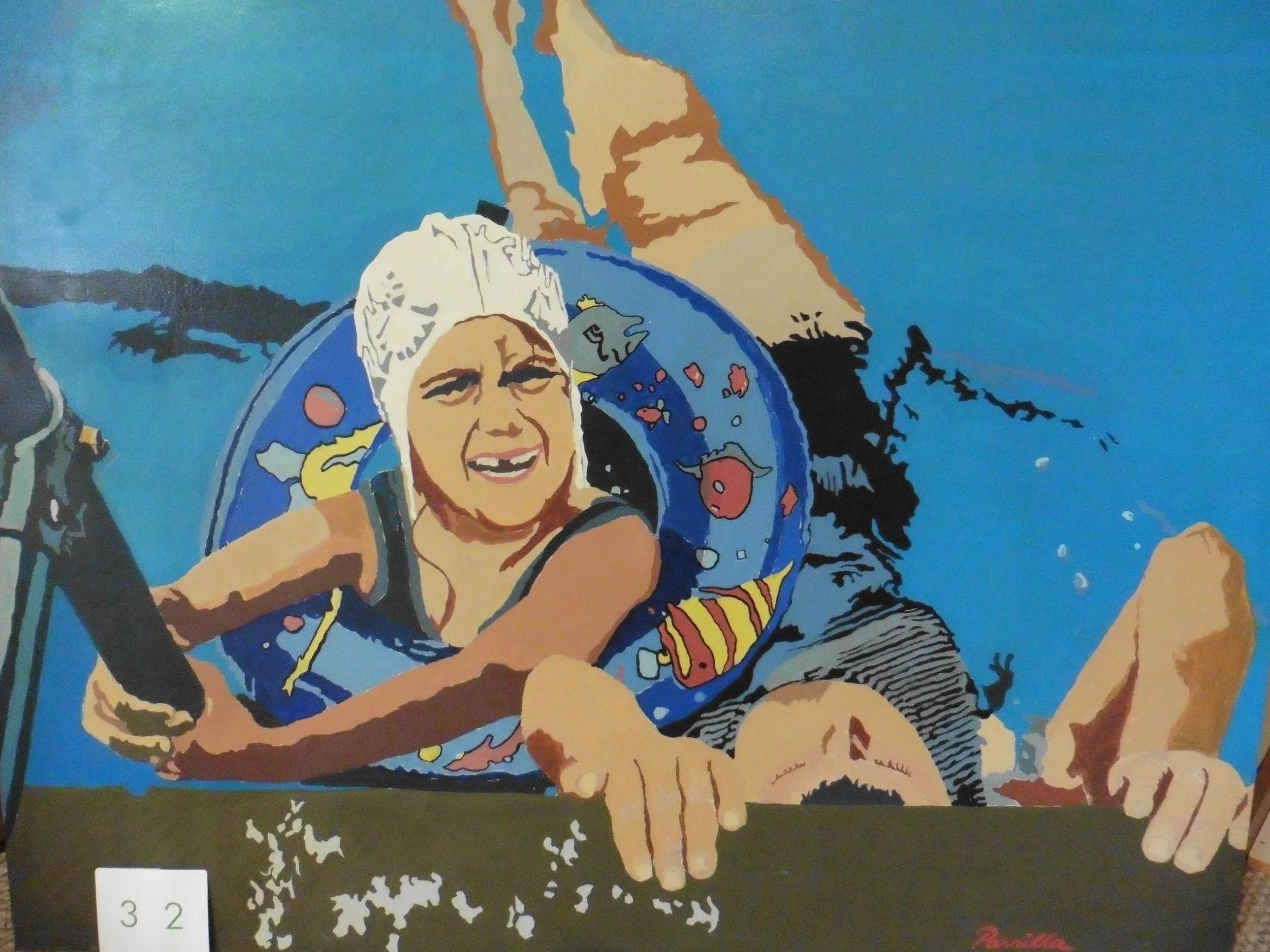
Roberto Parrilla, Rachel in the Pool (1993)
The top of the article displayed a photo of the painter with a desolate face, surrounded by fluttering pigeons, while holding a painting of a young pool swimmer in a pool. The painting is an aqueous memory of Parrilla’s younger sister, Rachel Schwartz floating next to Pino. The variations of shade and light in Schwartz’s and Pino’s skin have a watery quality. The blue chlorinated liquid subtly undulates and diffuses Pino’s swimsuit and legs. Schwartz’s expression is frozen on her face. It is not one of Parrilla’s brushed faces; it shows the proportion and roundness of a child’s face.
Both Schwartz’s portrait and the female nudes of the January 1993 show evidenced Parrilla mastery of figurative painting. The subjects have realistic proportions and outlined features. With Schwartz’s portrait, the piece stirs the observer toward a childhood memory of fear mixed with excitement. The colorful doughnut-shaped inflatable is the Pop object that invokes a ludic memory. In the case of the female nudes, the gaze is derailed as the subjects’ gestures entice intimacy. These works reflect the use of color field expressionism and display Parrilla's evolution of his ambient art style as they invoke or suggest sensations and memories. They are no longer Parrilla’s but those of the observer.
By July 1994, art critic Manuel Alvarez Lezama began to grasp Parrilla’s approach in a review of one of his solo shows. This time, Parrilla uses abstract expressionism and color field techniques to reapproach historical photos, inspired by the discarded photo album of a family named Valentín. “By not painting the faces of these people, and by purposely creating a timeless atmosphere, Parrilla has emptied their referent,” Alvarez Lezama remarked about the Valentín family paintings “This is quite disconcerting and can even cause terror. But it is then that the act of reconstruction begins: It is us in those photographs and they capture our lives.”⁶
Alvarez Lezama was the first critic to identify the referential or suggestive nature of Parrilla’s ambient art. Parrilla’s photo-based portraits are not meant to tell a story, but for the viewers to create their own. The childhood memory, the special occasion, the special object awakens the remembrance . From 1994 onward, reviews of Parrilla’s work continue to value his work.⁷
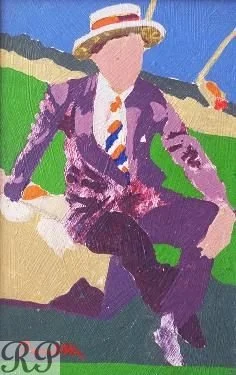
Roberto Parrilla, Valentín (1993).
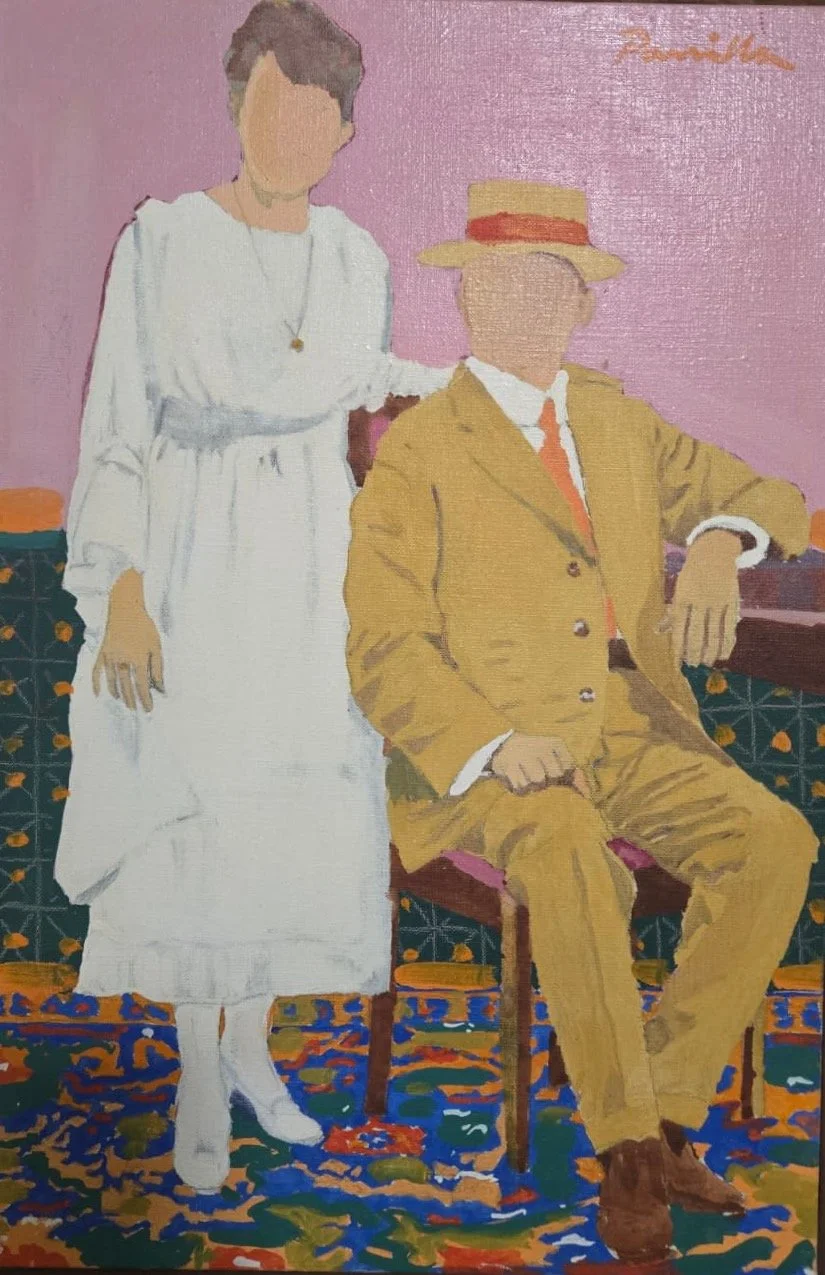
Roberto Parrilla, Title Unknown.
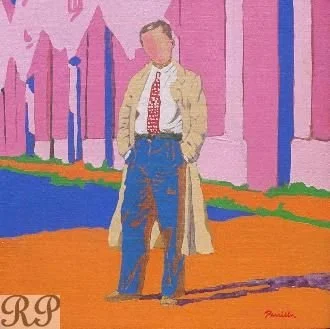
Roberto Parrilla, The Professor (1993)
In 1997, I was an undergrad history student working part-time for an arts and crafts store in Old San Juan. Parrilla offered my employer his new series of art cards—photos of his artwork glued to a blank card. The “art cards” sparked my interest. I was heavily into electronic forms of music, among them, ambient. As musician and producer Brian Eno explains, “an ambience is defined as an atmosphere, or a surrounding influence: a tint” (Music for Airports, 1978). Ambient compositions evoke place or emotional states, they can hint a memory, a historical or natural setting. I slowly realized that Parrilla was creating a form of ambient. He was evoking or suggesting emotional landscapes, historical and initiate memories.
During this time, Old San Juan was not so different from that of Parrilla’s childhood movie, or the one captured by many painters of the 1950s. Although by 1992 it was overrun with new monuments, sculptures and plazas for the 500th anniversary of the “discovery” of Puerto Rico, local residents such as Parrilla were left alone to live and create.
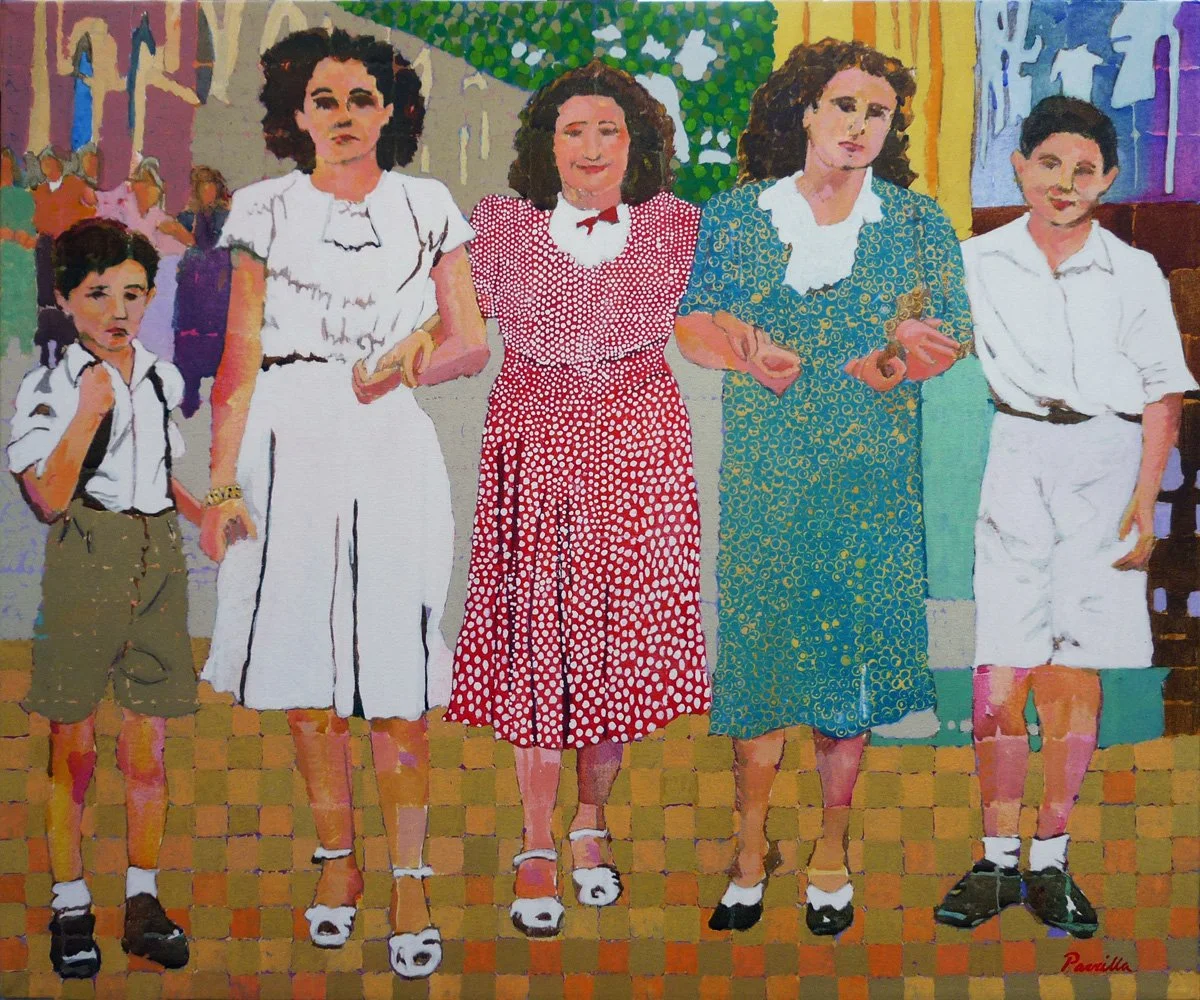
Roberto Parrilla, Lazos (2011)
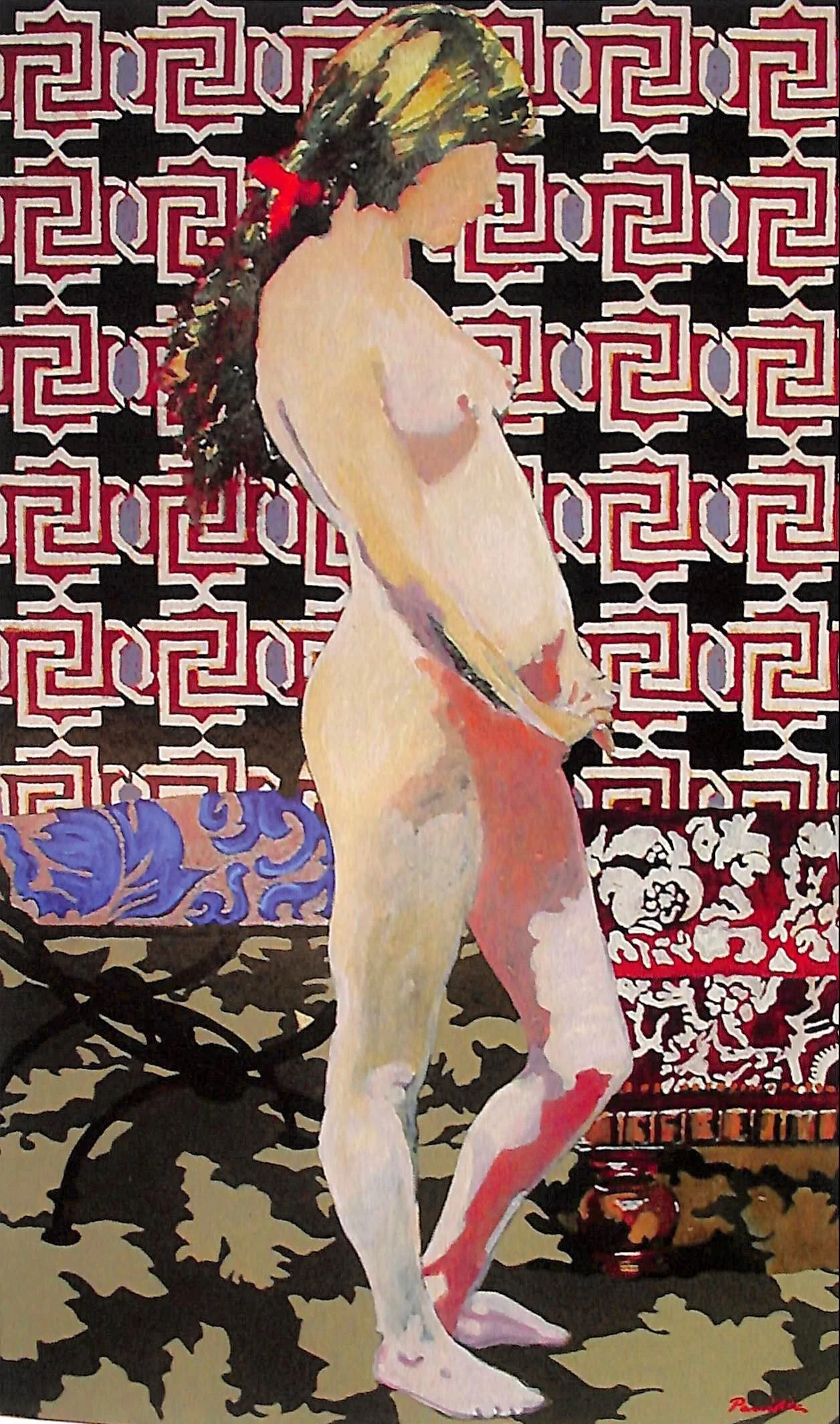
Roberto Parrilla, Desnudo en Interior Islámico
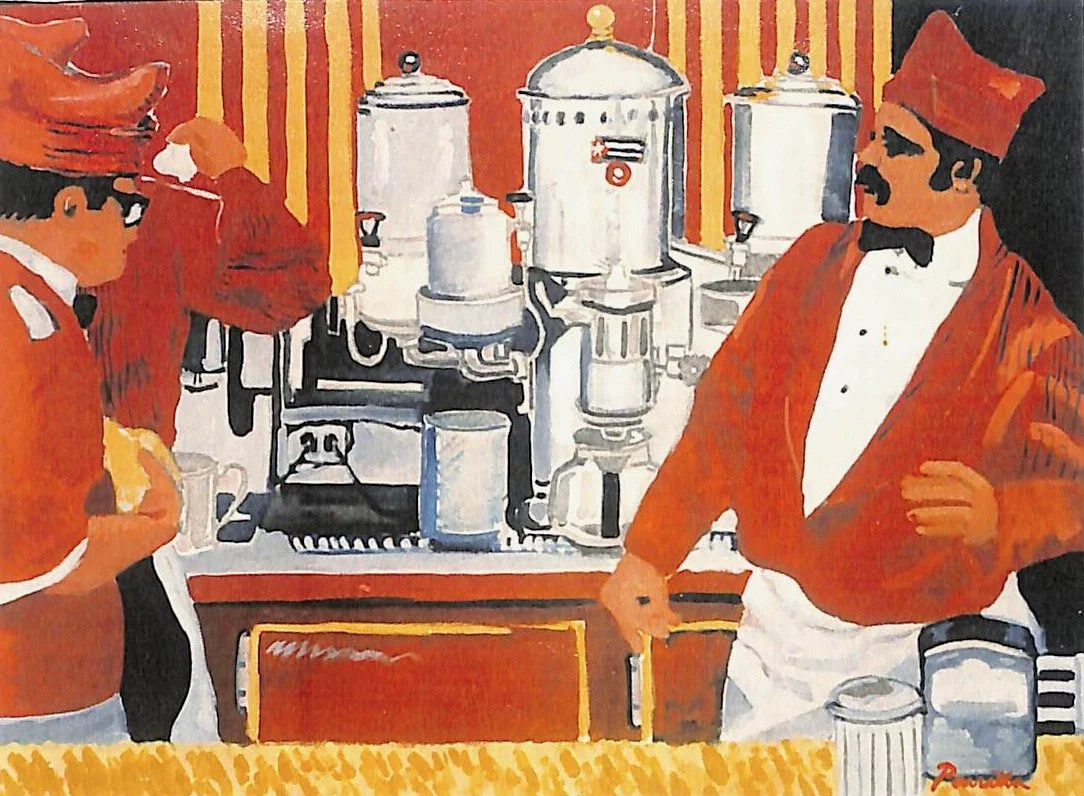
Roberto Parrilla, La Bombonera
In his dilapidated home studio on Calle Luna, we spent countless hours talking about art, while listening to Bob Parlocha on Radio Universidad, and drinking black americano coffee by the gallons. He was a recovered alcoholic that resorted to brewing coffee as a way to socialize. I was amazed by his quest for beauty in everyday occurrences, in everyday objects, in remembrances of quieter times. He really felt that “before” people had the time to listen and to be kinder to one another. I had an inkling that his art yearned warmth lost with every move from NYC to PR; that it invoked his grandmothers, Eloina and Gloria, or the “cross-cultural” parties at Pino’s home; that his nudes were a longing for love lost; that his painting of everyday objects cherished the beauty of what seems ordinary.
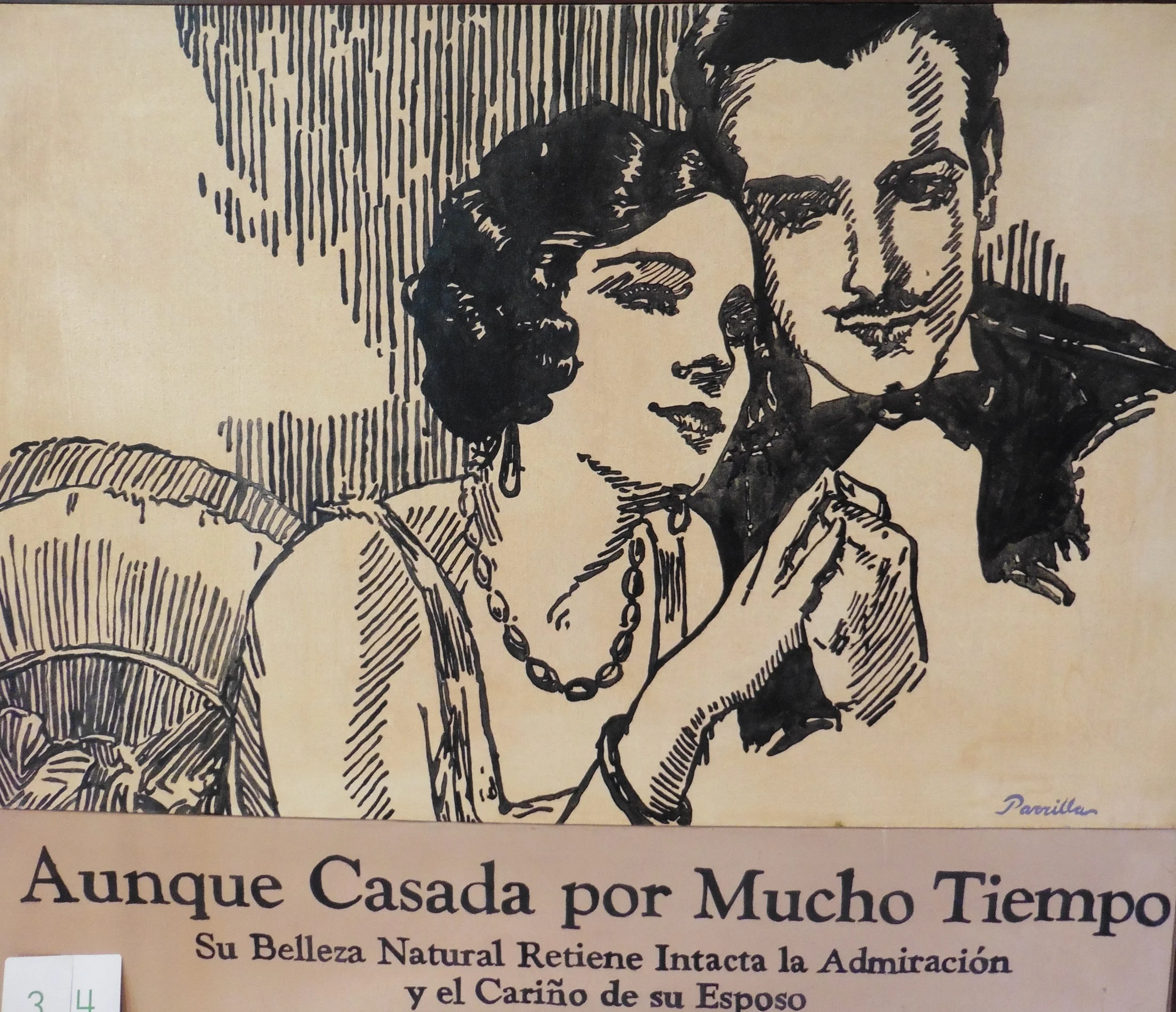
Roberto Parrilla, Title Unknown
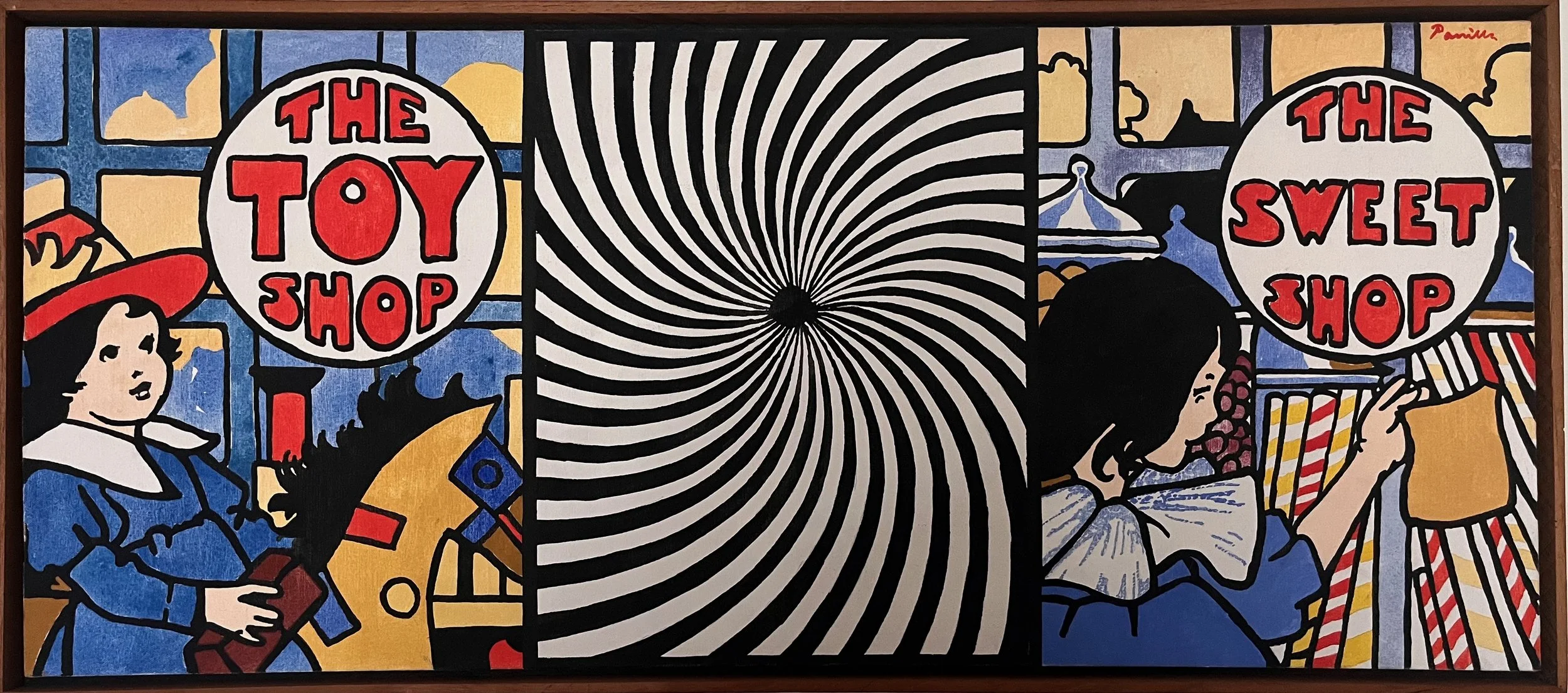
Roberto Parrilla, The Toy Shop, The Sweet Shop
His Pop Art was less about irony and more about appealing to sensations of childhood and older times. In 1998, he presented a collection of paintings of Old San Juan sites titled Obra sanjuanera. He gave me the privilege of writing the introductory essay, which he photocopied on cheap legal paper. My assessment was that, in this show, the main character was the sun, and that the pieces documented its intensity over architectural planes, surfaces and features. Unbeknownst to Parrilla, that show would be an homage to an Old San Juan destined to vanish.
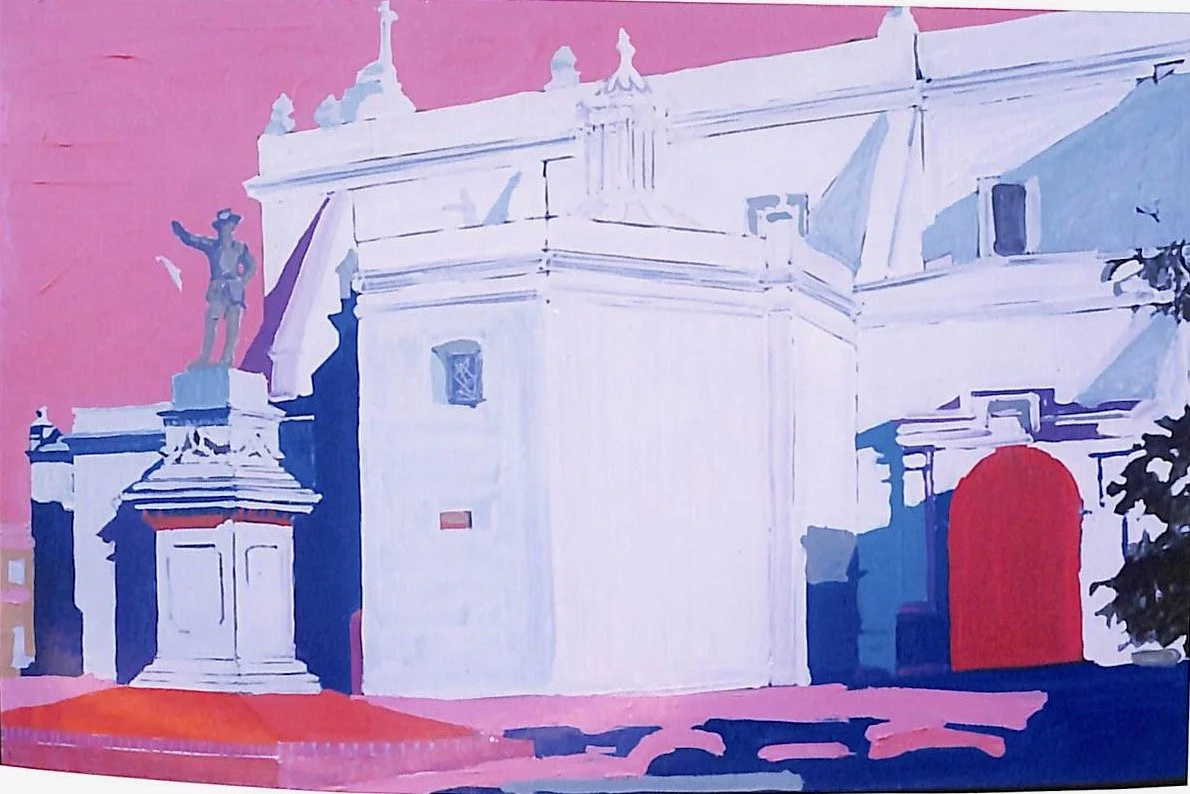
Roberto Parrilla, San José
By the early 2000s, Parrilla was meddling with historical pictures of Puerto Rican cane cutters. Like Andy Warhol’s “mass-produced” representations of Marilyn Monroe in different colors, in this work he reproduced one particular photo in different primary colors interjected with black. These works departed from the deified representations of sugar cane workers by suggesting the oppressive nature of the work, its high temperatures, and the subsuming nature of the cañaveral (sugarcane field). The viewer experiences an ambient sense of the overbearing nature of the cane cutter’s work.
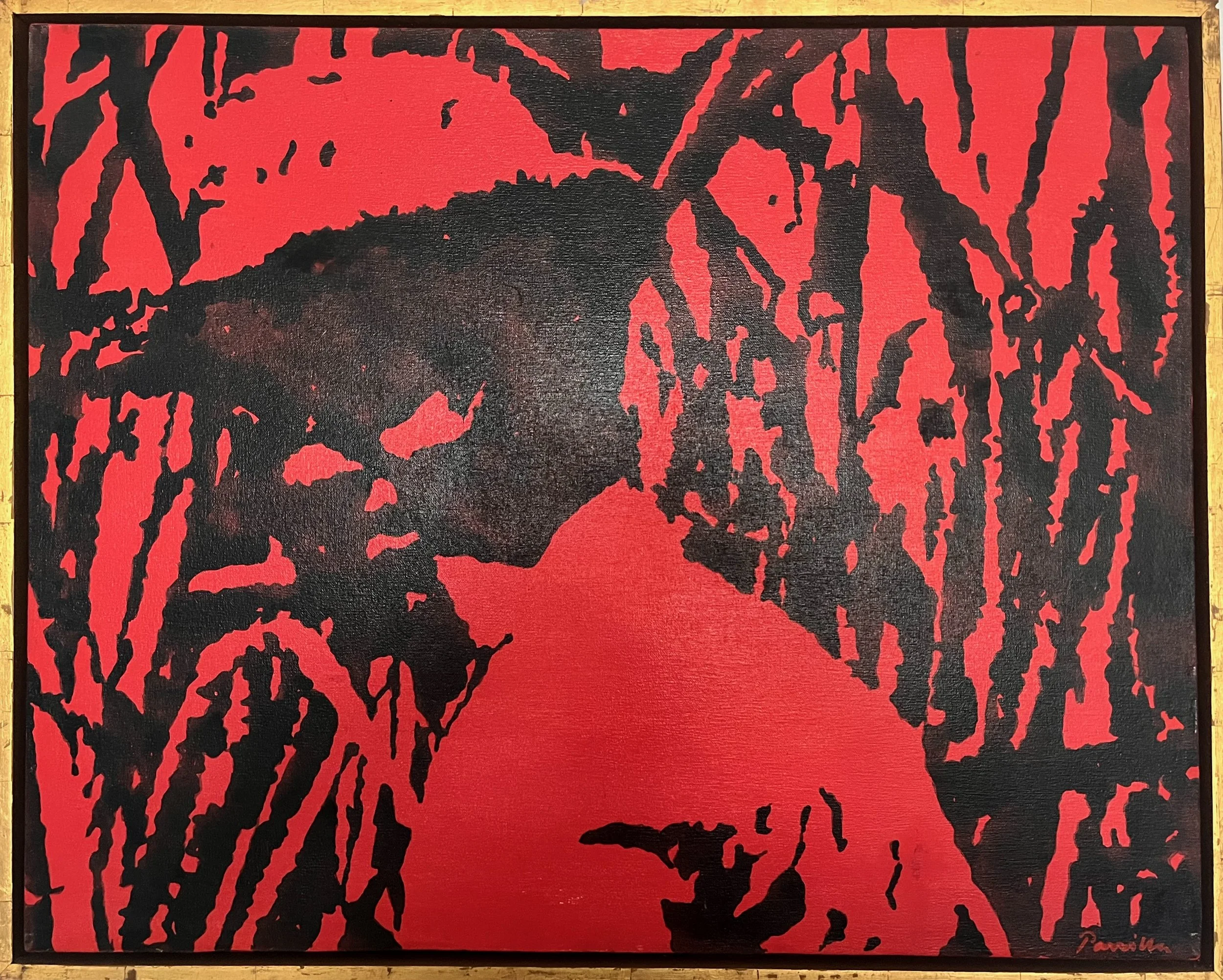
Roberto Parrilla, Canecutter
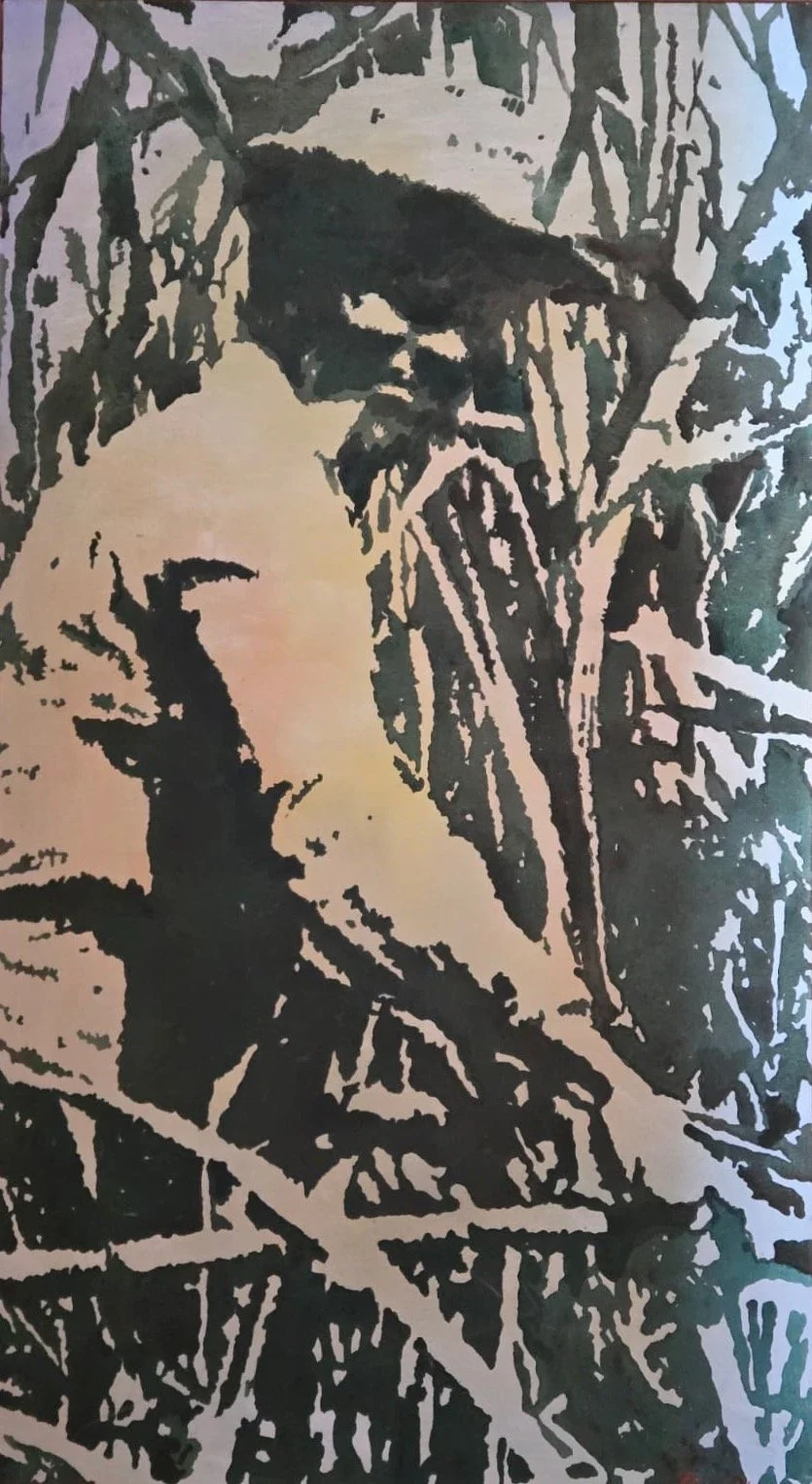
Roberto Parrilla, Canecutter
In the late 2000s, Parrilla’s home studio sold. A new wave of investors seeking fixer-uppers displaced artists and low-income residents alike. Parrilla did not do the proper networking or promotion of his art to attain international recognition, nor did he care about achieving such status. His artwork is part of institutional, corporate and individual collections, but did not reach the canonical status of some of his generational peers and certainly not of many of the elders who inspired him. He was economically insolvent and paid the monthly rent for his small apartment with his actual paintings. His landlord decorated a boutique hotel in Old San Juan with his creations. He passed unexpectedly of natural causes in 2012. The city that pushed him to the margins ultimately displaced itself through renovations, the appeal to new, wealthy residents, and most recently, short-term rentals. Parrilla’s diasporic ambient art remains as an echo of a city that once was. His sister Schwartz and his nephews maintain his legacy and continue to disseminate his art.
¹ Manuel Maldonado Denis, Puerto Rico: Una interpretación histórico-social. México: Siglo XXI, 1961, p. 203.
² “Roberto Parrilla,” The San Juan Star Sunday Magazine. San Juan, PR, February 7, 1993.
³ Ernesto J. Ruiz de la Mata, “A new collection at Galería Botello,” The San Juan Star Sunday Magazine. San Juan, PR, August 4, 1991, p. 10.
⁴ Ernesto J. Ruiz de la Mata, “Roberto Parrilla Show at Art Students League,” The San Juan Star Sunday Magazine. San Juan, PR, January 26, 1992, p. 10.
⁵ Ruiz de la Mata, “Double Bill at City Hall,” The San Juan Star. San Juan, PR, January 17, 1993.
⁶ Alvarez Lezama, “Recreating Moments of Joy Through Paintings,” The San Juan Star. San Juan, PR, July 3, 1994.
⁷ See Larissa Vázquez Zapata, “Escenas de familia”, El Nuevo Día, 7 de enero de 1998; Manuel Álvarez Lezama, “Artist Capture Beauty, Ills of PR Society,” The San Juan Star, November 19, 1998; “Painter Roberto Parrilla Wanders into Pop Past”, The San Juan Star, July 1, 2004.