
11 Academic Books on Display at La Feria 2026
On October 3, 2026, The Latinx Project will host La Feria: Print Media Fair, a spotlight on zines, media, and other works by Latinx creators. As part of the event, TLP will also showcase recent academic books on a range of topics, including anti-Blackness in Latinx expression, falsehoods about queer communities within court decisions, and dance’s role in the figuration of Latinx America.
Ahead of the event, we interviewed a few of the featured authors to learn more about what inspired their texts.
La Feria: Print Media Fair will take place on October 3, 2026, from 11 a.m. to 6 p.m. The event will close with a reception to celebrate the launch of Intervenxions Vol. 5. RSVP here.
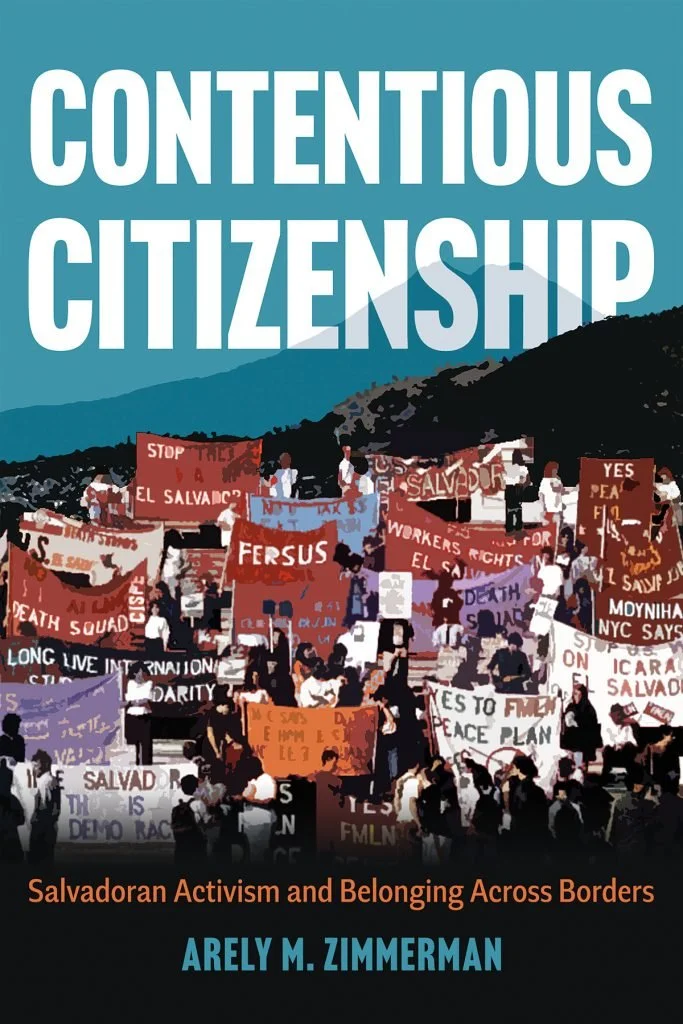
Courtesy of The University of Arizona Press
Contentious Citizenship: Salvadoran Activism and Belonging Across Borders by Arely M. Zimmerman
Publisher: The University of Arizona Press
Publish date: March 2026
Describe your book.
Contentious Citizenship captures how Salvadorans mobilize concepts of political belonging rooted in their transnational activism to challenge exclusionary legal regimes and forms of national membership. Drawing on extensive oral histories with Salvadoran civil war refugees, the book uncovers how Salvadorans leveraged their transnational identities and networks to mobilize politically in the United States and in El Salvador against neoliberalism, war, and illegality.
Why is your book relevant today?
With the emergence of authoritarianism in the United States and in El Salvador, the book has special relevance in accounting for how undocumented and legally precarious Salvadorans resisted, contested, and transformed relations of power within a context of extreme repression and violence.
2. Geographies of Relation: Diasporas and Borderlands in the Americas by Theresa Delgadillo
Courtesy of University of Michigan Press
Publish date: September 2024
Publisher: University of Michigan Press
Describe your book.
Geographies of Relation does two things at once: it examines anti-Blackness in Latinx and Latin American cultural expressions as it also joins the relational turn in Ethnic/American studies to examine how literary, cinematic, and performative texts reveal a long history of interrelationship and overlap among African diaspora and mestizx/borderlands subjects in this hemisphere.
Why is your book relevant today?
By examining both anti-Blackness and relationality, Geographies of Relation offers new insight on important cultural figures such as Toña La Negra in Mexico and renews the idea of critical mestizx consciousness in dialogue with African diaspora theory to consider alternative mappings of affiliation in the Americas as well as new alternative futures.
Courtesy of University of Texas Press
3. Queer in a Legal Sense: Brown Citizenship and Other Lawful Fictions by José A. de la Garza Valenzuela
Publish date: April 2026
Publisher: University of Texas Press
Describe your book.
My book, Queer in a Legal Sense, takes on the institutionalized fictions about Latinx, queer, and migrant communities embedded in court decisions and enforcement policies by reading them against novels by gay Chicano authors that illustrate how these legal fabrications are leveraged to write certain subjects into and others out of legal citizenship.
Analyzing works by John Rechy, Arturo Islas, Michael Nava, Rigoberto González, and Jaime Cortez against the grain of the law, I theorize what I term “lawful fictions” to trace the historical lies that underwrite the contemporary assault against queers, Latinxs, and migrants in the U.S. In doing so, Queer in a Legal Sense illuminates the literary, legal, and historical roots of the fictions that govern U.S. citizenship.
Why is your book relevant today?
Queer in a Legal Sense, a book on literature, sexuality, and migration, is at the crosshairs of the most consequential cultural debates today. At the very time that lies about migrants, queer people, and communities of color become the basis of federal and state exclusionary policies, the state is dismantling the very programs and departments that train students to closely read, analyze, and ask questions of not only literature and culture, but of the world around them.
My work insists on the importance of literary and cultural analysis in a present that requires us to carefully read through the lawful fictions that sustain the violence that defines contemporary U.S. civic life. I believe scholarship in Latinx, sexuality, and literary studies is and will be integral to developing the social and cultural infrastructures to consequentially engage the new grammars of U.S. citizenship.
Courtesy of University of Texas Press
4. Beyond the Moment: Connecting the Histories of Latinx Performance and Resistance by Irene Mata
Publish date: March 2026
Publisher: University of Texas Press
Describe your book.
Beyond the Moment is an interdisciplinary exploration of performance as a tool for resistance, community building, and radical pedagogy. Drawing on literature, cultural studies, theater, and education, the book frames performance not only as an artistic production but as a method of identity formation and political intervention.
Through close readings of diverse performance texts and events, I argue for performance as a means of archiving resistance and mentoring future generations. The works analyzed illustrate that performance, particularly when archived and contextualized, sustains community resistance far beyond the moment of enactment. With an emphasis on storytelling, archiving, and intersectional critique, Beyond the Moment positions performance as a radical form of cultural activism that documents, educates, and inspires across generations and movements.
Why is your book relevant today?
Given our current moment, the fostering of hope is more important than ever. The works and creators featured in my book inspire us to think creatively about art, activism, and pedagogy. They help us hold on to the hope for a more just future and make it possible for us to enter the classroom and the organizing space with a sense of optimism. They help us imagine a different world for our communities and future generations.
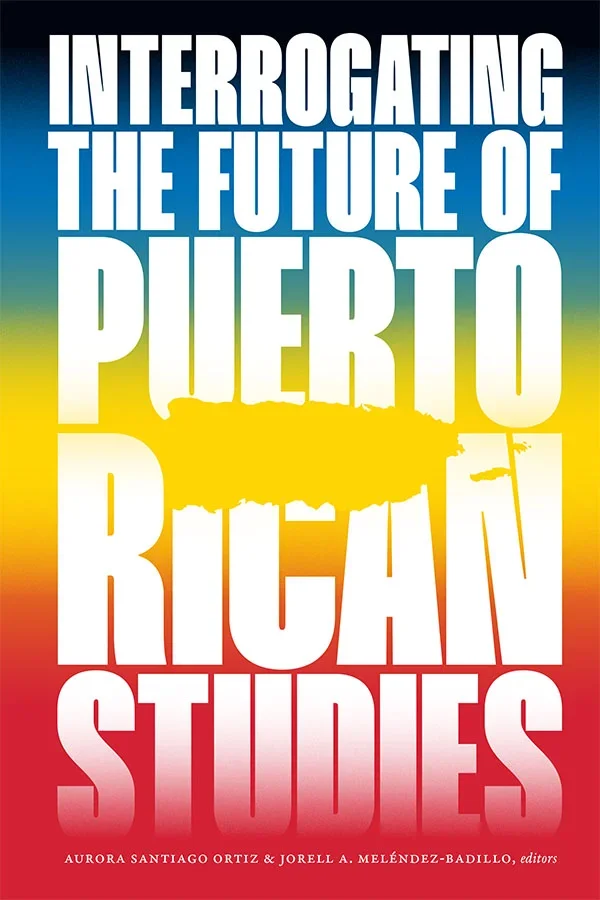
Courtesy of Duke Press
5. Interrogating the Future of Puerto Rican Studies, edited by Aurora Santiago Ortiz and Jorell A. Meléndez-Badillo
Publish date: April 2026
Publisher: Duke University Press
Describe your book.
Santiago Ortiz: Interrogating the Future of Puerto Rican Studies brings together 22 scholars at various intersections of Puerto Rican Studies. The anthology situates the latest scholarly debates while honoring the scholarship that helped shaped the field.
Why is your book relevant today?
Santiago Ortiz: The book’s relevance is grounded in its interdisciplinarity and functions as a snapshot or archive of the most pressing concerns for the book’s contributors. These include: Blackness, Disability Studies, Activism, Politics and Legal Studies, History, Queer Studies, and Disaster and Environmental Studies, among other fields and topics.
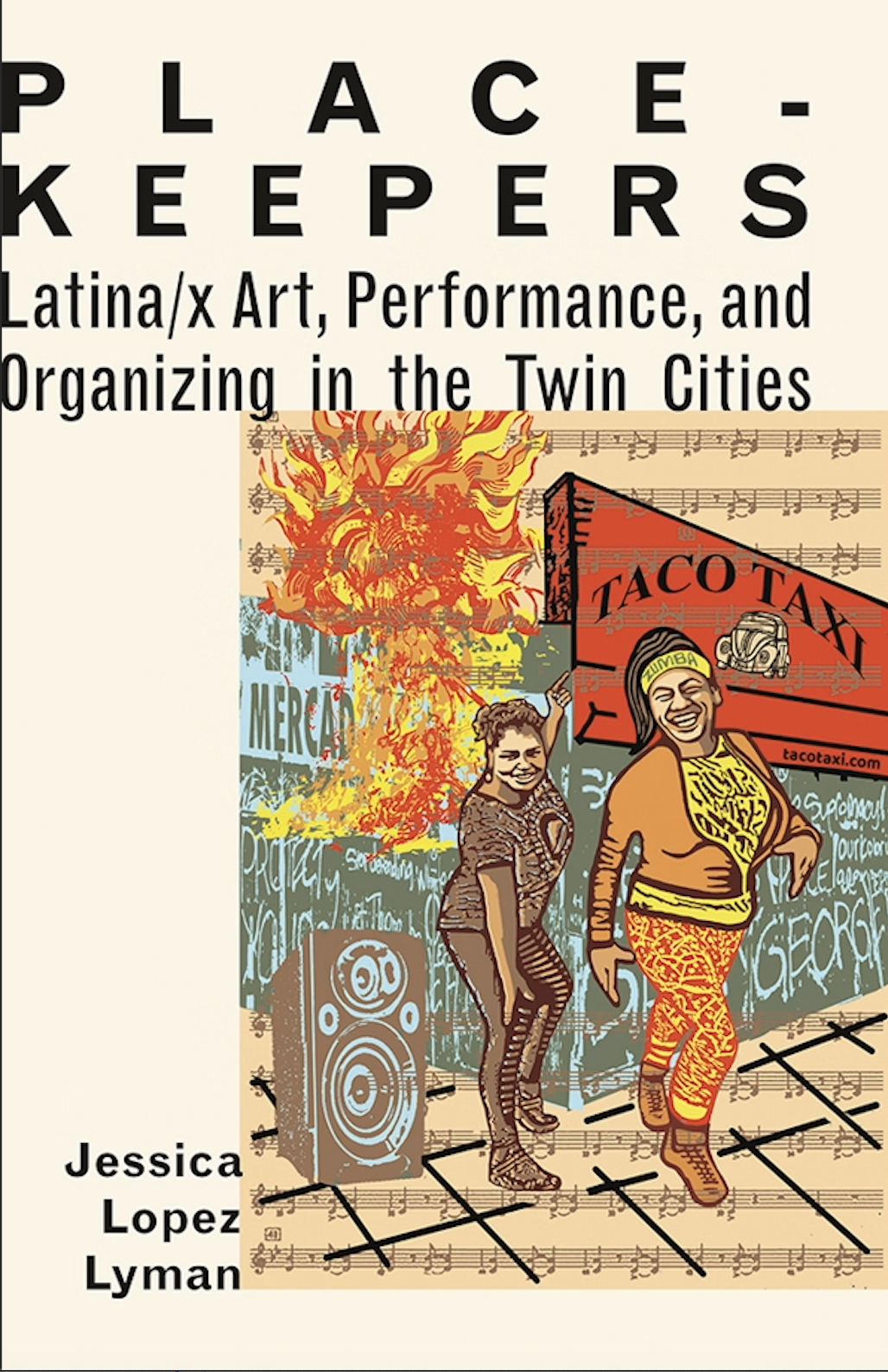
Courtesy of University of Minnesota Press
6. Place-Keepers Latina/x Art, Performance, and Organizing in the Twin Cities by Jessica Lopez Lyman
Publish date: November 2025
Publisher: University of Minnesota Press
Describe your book.
In Place-Keepers, I write about how Latina/x artists in the Twin Cities challenge the region’s long history of racial injustice through “Inter-Latina movidas,” strategic actions that build solidarity, advocate for justice, and reclaim space through both artistic expression and organizing.
I focus on Latina/x women and gender-nonconforming artists from Chicana/Mexicana, U.S. Central American, and Caribbean backgrounds, to highlight how these artists resist gentrification, environmental destruction, and police violence while challenging simplified understandings of Latinidad. As “place-keepers” these artists use creativity and community organizing to build movements, redistribute resources, and influence policy.
Why is your book relevant today?
Since the murder of George Floyd by Minneapolis police in May 2020, Minnesota has been in the international spotlight, drawing widespread attention to issues of racial injustice and state violence. In 2026, Operation Metro, Surge which brought over 3,000 Department of Homeland Security and Immigration and Customs Enforcement agents to the state, further proliferated the attention on Minnesota as residents, both citizen and undocumented, experienced horrendous violence by the federal government.
Place-Keepers is a critical text that is relevant to these contemporary issues because it traces how Latina/x artists and local residents strategically organized to navigate, challenge, and transform Minnesota’s racial and gender injustices prior to 2020. The book offers an opportunity for readers, both academic and in the community, to understand the nuances and rich history of resistance in the Twin Cities.
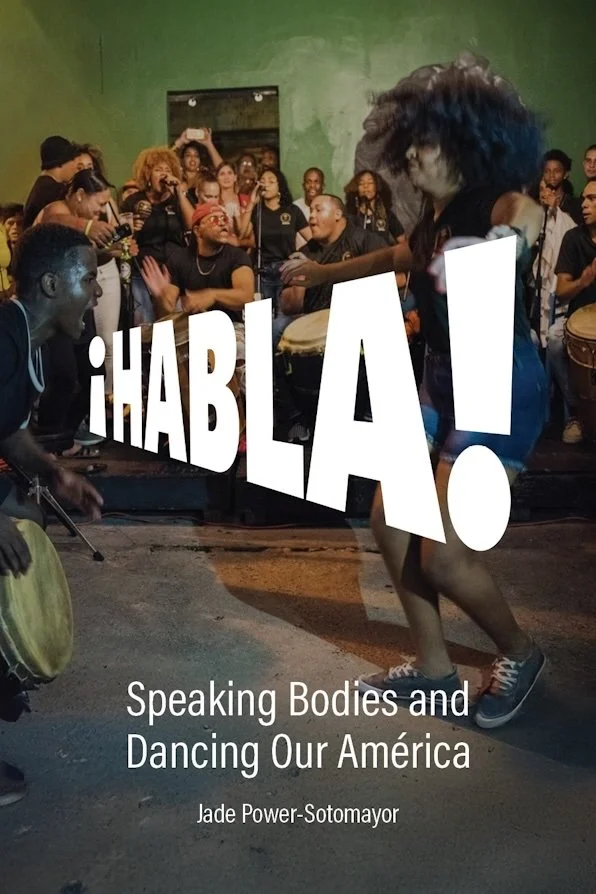
Courtesy of NYU Press
7. Habla! Speaking Bodies and Dancing Our América by Jade Power-Sotomayor
Publish date: August 2026
Publisher: NYU Press
Describe your book.
My book uses Afro-Puerto Rican bomba as an entry-point for thinking through how dancing has for centuries cultivated and transmitted practices for “talking back” to colonial modernity, and as such serves as a rich repository for guiding our thinking beyond Enlightenment ideals of the liberal individual.
I also turn to Mexican son jarocho at the US-Mexico border, and the recent popularity of perreo dancing across Latinx América to further thread how these same contestatory logics manifest across geographies and through distinct but interrelated practices. I draw on two decades of experience as a bombera alongside archival research, ethnographic encounters, the work of critical theorists, and movement analysis, to think through how these bodies “speak” in peri-linguistic registers that route other possible worlds that we can today continue to turn toward in the co-construction of Our América.
Why is your book relevant today?
Dancing has played a central role in the figuration of Latinx América—the lands of Abya Yala, its archipelagic companions, and the people who make life in and move across and beyond them. As such, it is a critical site for engaging with how moving bodies negotiate power in terms of race, gender, class and citizenship. In other words, who gets to/has to move where, when and how and to what end?
Even so, dancing can elude in-depth understanding beyond the study of technique or the ascertaining of stereotype, precisely because it exceeds narrative/text and because it moves beyond the individual and is carried through multiple bodies. Furthermore, dancing is often subsumed by analysis of the musical forms by which it is co-constituted, making it even more difficult to engage with movement in direct relationship to sonicity. By situating itself within the precision of the claims for survival and world-building made by these dancing, sounding bodies, this book insists that this dancing theorizes important ways for being in relation to history, land, and to the communities with whom we will create our collective futures.
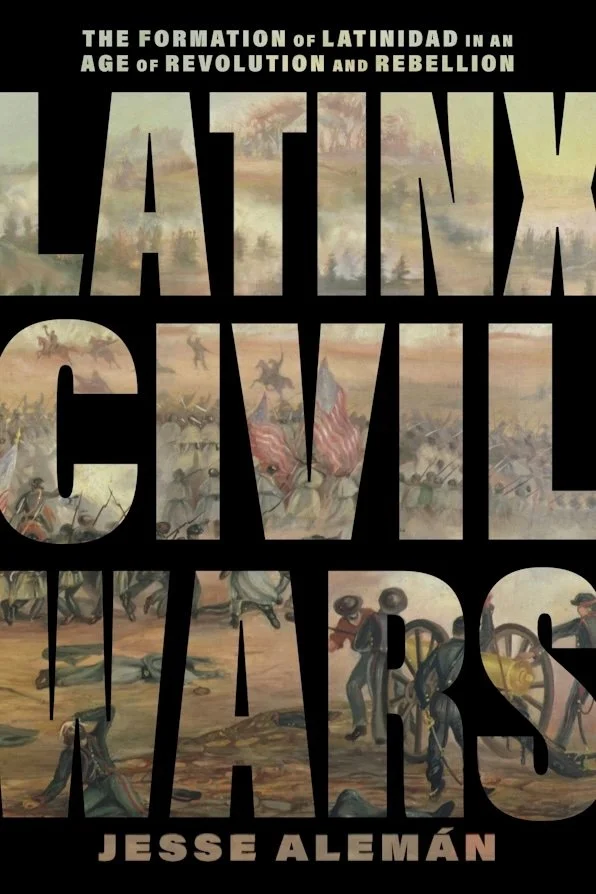
Courtesy of NYU Press
8. Latinx Civil Wars The Formation of Latinidad in an Age of Revolution and Rebellion by Jesse Alemán
Publish date: February 2026
Publisher: NYU Press
Describe your book.
Latinx Civil Wars is the first book-length study of U.S. Latinx writings about the Civil War by Mexican American and Cuban American Union and Confederate combatants and sympathizers whose sense of Latinidad emerged from a theater of civil wars over race, slavery, and governance raging across the United States, Mexico, and Cuba. Set against the backdrop of the U.S.–Mexico War, the Cuban wars of independence, and the American Civil War, the book argues that U.S. Latinx Civil War writings are embattled texts of racial formation, cultural assimilation, and linguistic transformation that show Latinx identity to be at civil war with itself during the long Civil War years.
Drawing on a rich archive of unpublished personal letters and manuscripts in Spanish and English, official Union and Confederate records and dispatches, and published essays, poems, manifestos, news articles, memoirs, autobiographies, and novels, Latinx Civil Wars demonstrates how the formation of nineteenth-century Latinx identity was entangled with slavery, independence, racialization, and rebellion, and that the archive of Latinidad itself is fraught with the fissures and fractures of civil war.
Why is your book relevant today?
I didn’t want my book to be relevant today because it would mean that the conditions of the past persisted, that the embattled sense of Latinidad I mapped during the long Civil War years continued to rage, and that the legacy of Latinx investment in whiteness, assimilation, anti-Blackness, and anti-indigeneity lingered. I wanted the past to stay past, but the more I dug into our archive, the more I found the ghost of our present moment, a kind of Latinx Lost Cause that, in its own way, sheds light on how Latinx people can vote against their own interests, align with power structures that would see us disappeared, and struggle to suture the divisions of wanting to belong in a nation divided. My book is relevant today because we are as war-torn now as we were when we were at Civil War.
Courtesy of Fordham University Press
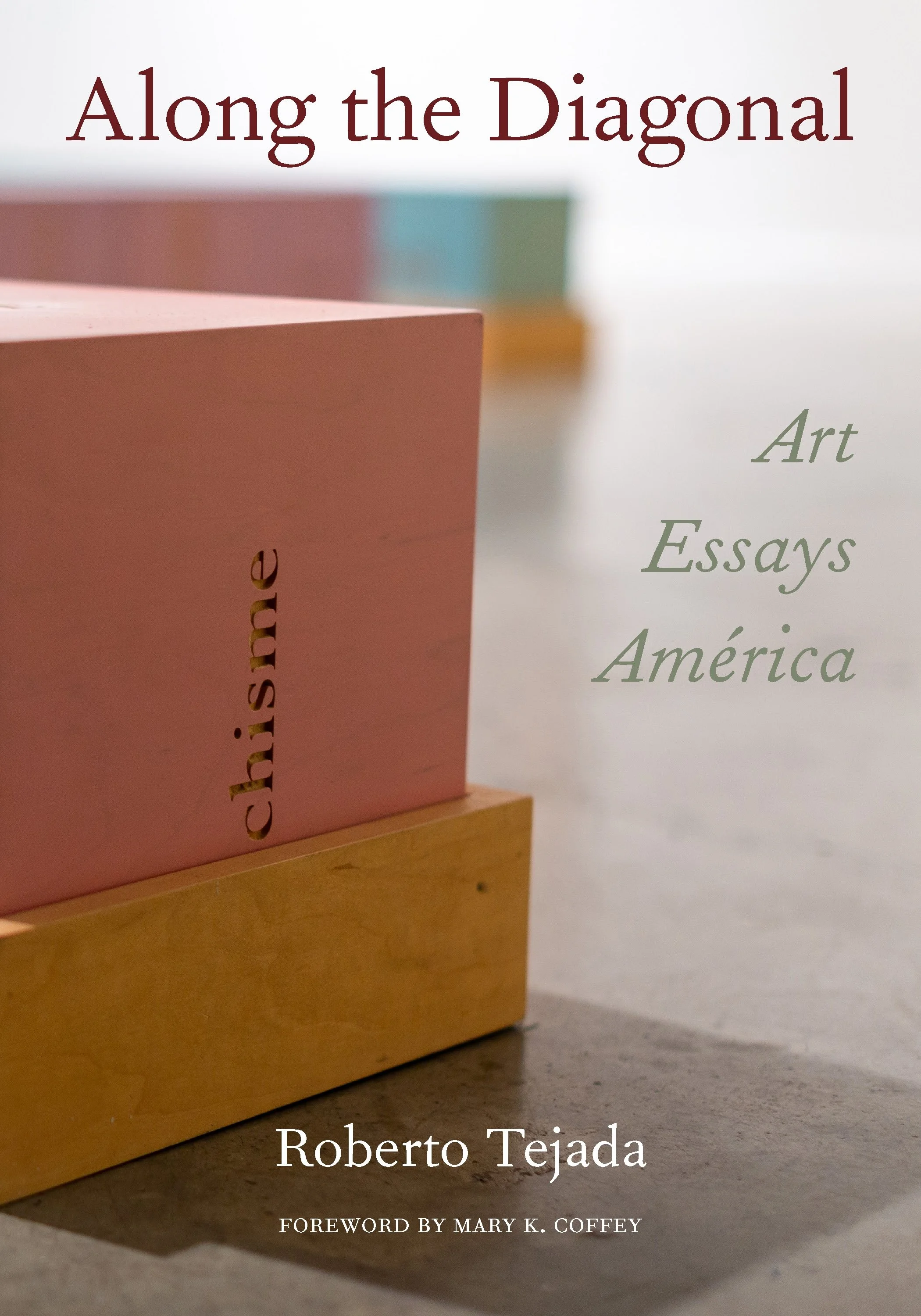
9. Along the Diagonal Art/Essays/América by Roberto Tejada
Publish date: August 2026
Publisher: Fordham University Press
Describe your book.
My book offers intersecting storylines with a focus on the connected histories of Latinx and Latin American art in urban centers that include Los Angeles, Mexico City, São Paulo, and Miami, as well as the Caribbean archipelago and the U.S–Mexico borderlands. I relate cultural encounters, sometimes from my own lived experience, unique to objects and actions along the diagonal of an inclusive, expansive understanding of a hemispheric América.
These 19 essays examine art historical moments, image environments, media archives, major figures, and emerging or lesser-known artists, informed by a poetics of history, political engagement, and the pleasures of interpretation and close looking.
Why is your book relevant today?
Latinx art in a hemispheric context can expand knowledge about the colonial past and diasporic present by looking to the endeavors and practices advanced within the U.S., but whose heritage, originating in Mexico, Central and South America, or the Caribbean, visually marks a corpus distinct from strictly U.S. American or Latin American frameworks, canons, and markets. Written in a variety of narrative techniques and writerly forms, these essays pursue questions of personhood, society, geography, and power through a highly individual critical journey through the interstices of form, medium, politics, and theory. My writings cut a diagonal line, so to speak, across the commonplaces of national art in the U.S. and the Americas while attending to the specific practices of artists often working in conceptualism, installation, performance, and photography.
Courtesy of NYU Press
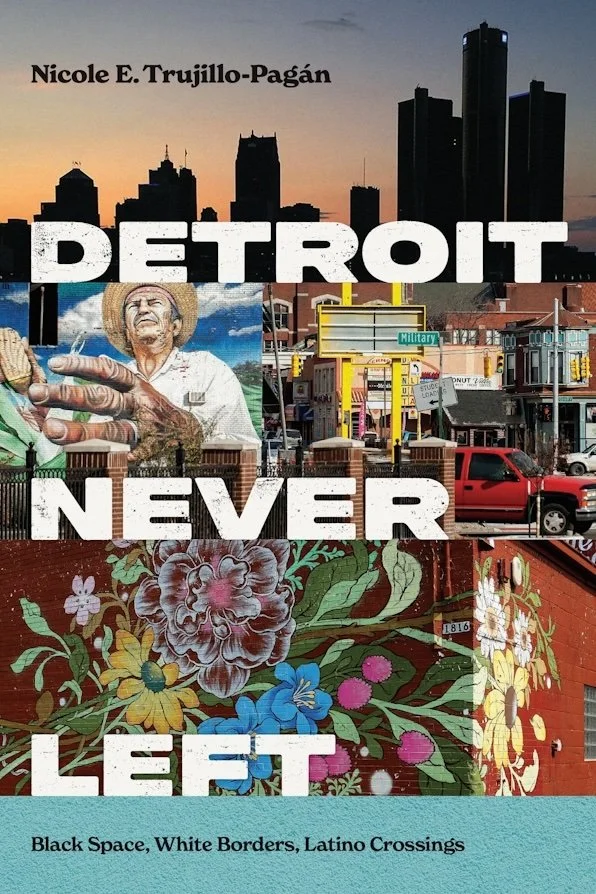
10. Detroit Never Left Black Space, White Borders, Latino Crossings by Nicole E. Trujillo-Pagán
Publish date: March 2026
Publisher: NYU Press
Describe your book.
Detroit Never Left: Black Space, White Borders, Latino Crossings investigates what legacy Detroit residents call "the overlay for the underplay," or the patterned tendency of powerful groups to use words that obscure their interests. They use words and expressions like "do well by doing good" to dominate the production of race and space.
Why is your book relevant today?
Understanding this strategy is the key to creating a different way of distributing resources, realizing a more robust democracy, and living together more peacefully.
Courtesy of Duke University Press
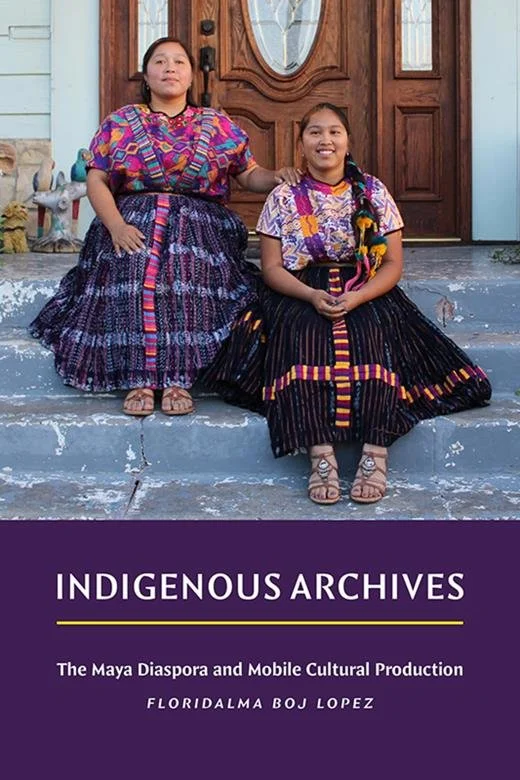
11. Indigenous Archives: The Maya Diaspora and Mobile Cultural Production by Floridalma Boj Lopez
Publish date: 2026
Publisher: Duke University Press
Describe your book.
Indigenous Archives pushes back on how mainstream archives are often understood as the most legitimate forms of Indigenous histories and instead argues that Indigenous diasporas have their own forms of documenting, maintaining, and transmitting histories. Through interviews with members of the Guatemala Maya community primarily in Los Angeles, I argue that Indigenous archives are a cross-generational, collective conversation rooted in memory, survival, and cultural expression where Indigenous cultural practices and artifacts move, adapt, and assert their presence in the contemporary. I also engage how these practices of Indigenous collectivity problematize Latinidad in productive and insightful ways.
Why is your book relevant today?
As the Latinx community continues to confront deep forms of anti-immigrant violence, it is important that in addition to pushing back on all xenophobic rhetoric and policies, we also remember that some of us are part of communities that are much older than these countries and their settler borders. We’ve confronted extreme forms of state violence before and we’ve persisted so my hope is that also speaks to this moment.