
La Treintena 2026: 30(+) Books(+) of Latinx Poetry
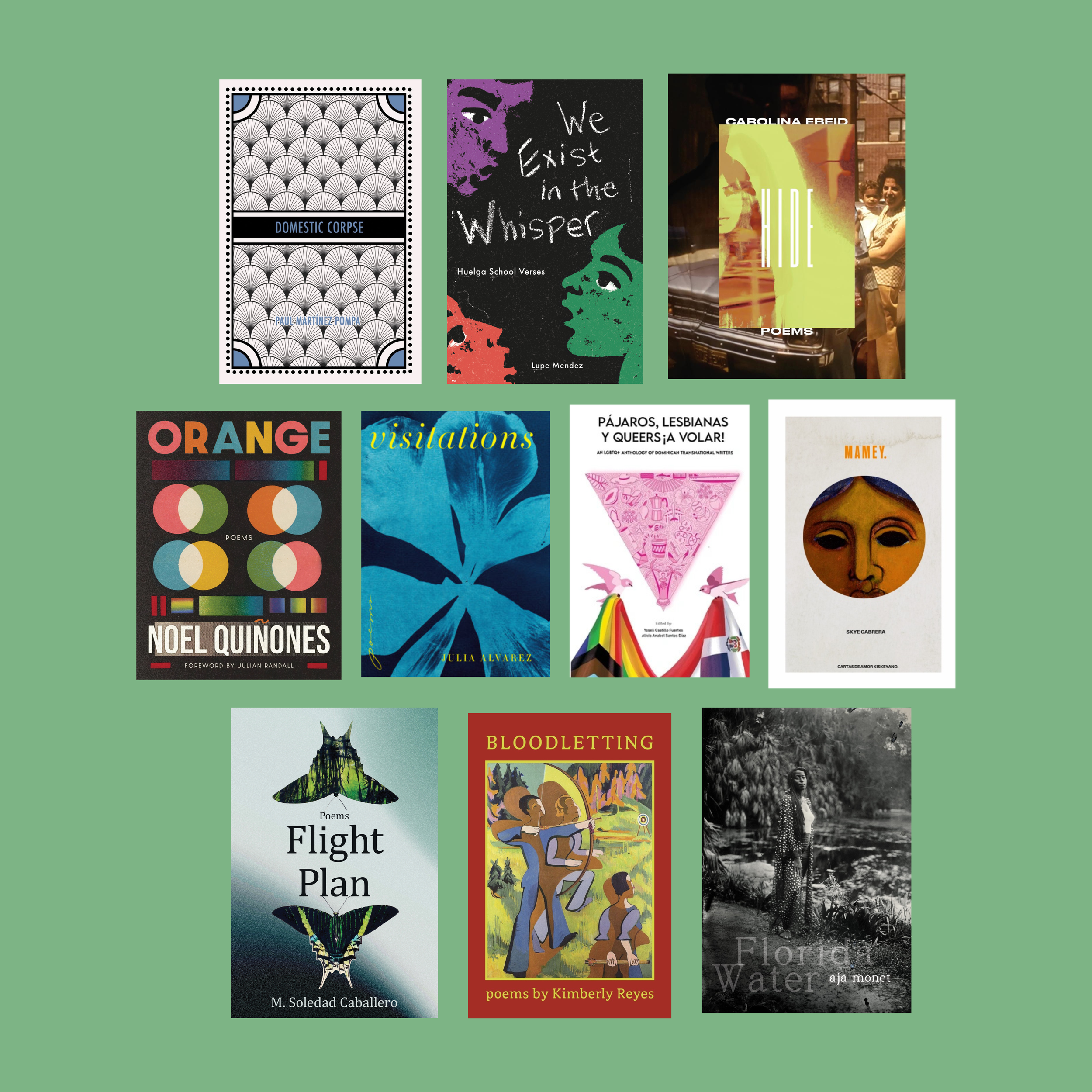
In the past year, I have needed poetry more than ever, for its music, its storytelling, its worldbuilding. As I was finalizing this list, I came across Peach Pit Corazón: A Judith Ortiz Cofer Reader, edited by Rafael Ocasio, and was reminded of the power of the poet as vernacular storyteller. Ortiz Cofer’s trailblazing Georgia-Rican voice seems more pertinent than ever as Latinx geographies are scrambled, and we seek to build bridges across our dispersed communities at a time when they are needed the most.
Also shaping my preoccupation with the space of poetry is my work as a translator and my experience reading a range of noteworthy translations by Latinx translators published in the past year. Daniel Borzutzky has just been shortlisted for the Griffin Poetry Prize for Bodies Found in Various Places; his translation of the wondrous Chilean poet Elvira Hernández (hers is the only translated book on the shortlist, which also includes Aracelis Girmay’s Green of All Heads, discussed below). Meanwhile, Francisco Aragón published Handbook of Foams, his excellent translation of the Spanish poet Gerardo Diego, one that tells me as much about Aragón’s own relationship to Spain and to his ancestral homeland of Nicaragua as it does about Spain’s Generation of ‘27. I am fascinated by these crossings. Closer to home, this past year witnessed the publication of Anthem of Evaporated Tears, Roque Raquel Salas Rivera’s translation of the queer Afro-Puerto Rican poet Xavier Valcárcel de Jesús. Salas Rivera’s translation was published by Cardboard House Press, which specializes in handmade and bilingual books and has long been building hemispheric bridges with an emphasis on work by and from minoritized communities. Such independent and community-oriented projects seem crucial to me now as institutions either bow down or buckle under the weight of our political moment.
Translation seems to be a particularly useful framework for much of the poetry discussed below, whether in terms of translingual writing, self-translation, or broader questions of cultural translations across genres and media. As I consider this year’s La Treintena, I am encouraged by how many of the titles directly engage poetry’s power to confront the challenges of the present and to imagine alternative futures. (There’s a lot of punk in this trunk!) I especially continue to be inspired by the range and variety of disability poetics as they give us new languages to work from and across our bodyminds and their differences. I also note the spiritual dimension of several of the titles included, as we seek to understand ourselves as something larger than our fractured selves. Here’s to new stories, new music, new worlds!
1. Roque Raquel Salas Rivera’s Algarabía
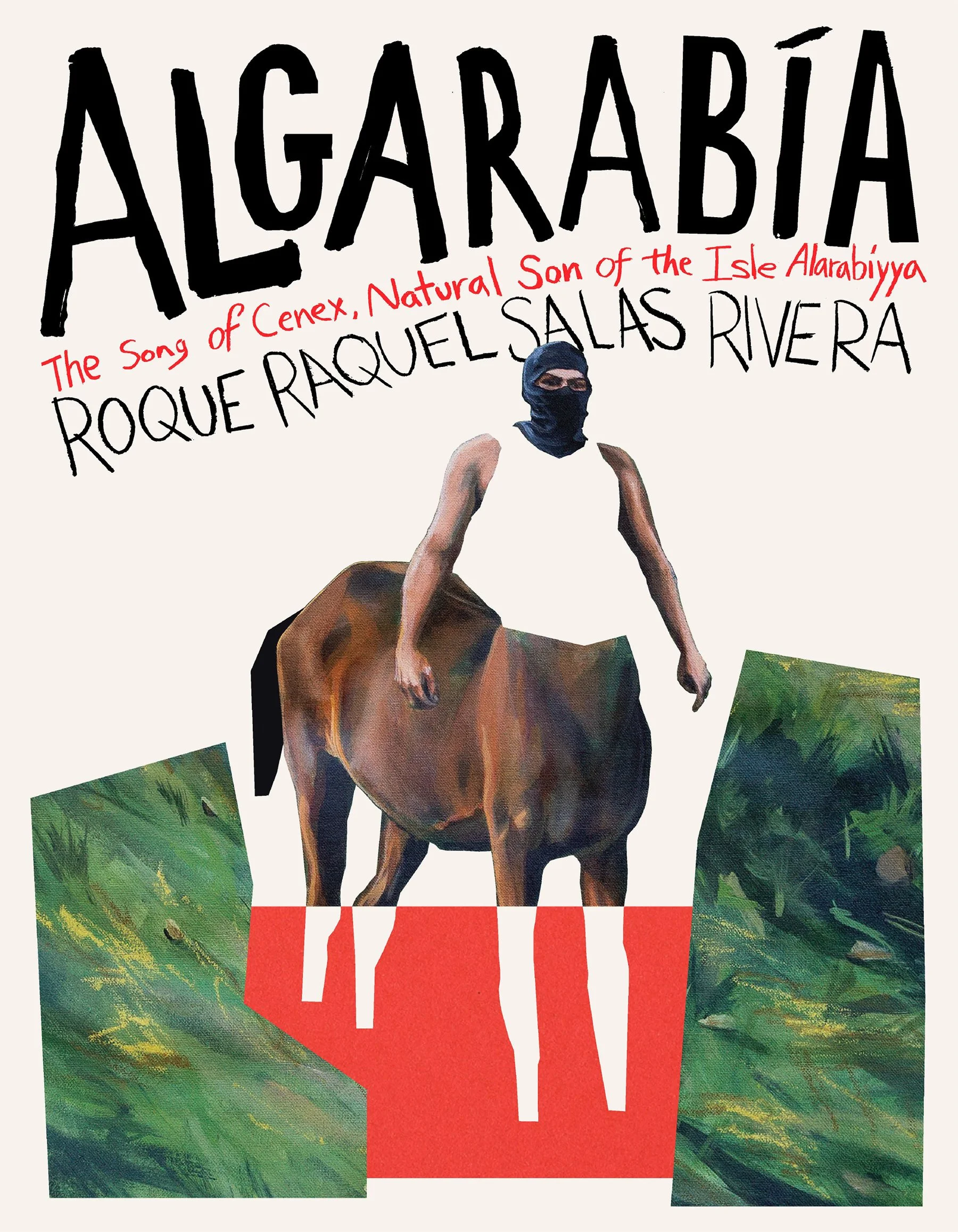
Courtesy of Graywolf Press
Publish date: September 2025
Publisher: Graywolf Press
Set in Algarabía, a colony of Earth in a parallel universe, Salas Rivera’s breathtaking speculative epic poem tells the story of the centaur-like Trans hero Cenex and how he finds his name, his home, and his community. A landmark work of Latinx poetics and speculative literature that is highly intertextual and dazzling in its translingual array of forms, Algarabía writes Transness into the Puerto Rican literary canon while subverting the very idea of canonicity, pointing instead to the future, a queer one where Trans people define their community and where colonial subjects get to write and unwrite their history, whether as, as song, and even as inside joke.
Like much of Salas Rivera’s work, the poem is presented in two versions, tête-bêche style, one in Puerto Rican Spanish and the other in a transcreative English that deliberately leaves plenty untranslated—a political aspect of Salas Rivera’s work that underscores the untranslatability of queer and Trans and Boricua life, how our differences resist absorption into the hegemony of a prescriptive English and Spanish. It is hard to quote specific passages or highlights, both because this book contains and imagines universes and because its experimental design (including layout and font variations) resists easy reproduction—yet another way in which it challenges canonical absorption even as it corrects a massive gap in our literary archive.
Although it is first and foremost a Trans epic, Algarabía is also a joyously crip book, and perhaps more than any other Salas Rivera book so far, it is written from the space of neurodivergence and welcomes other possible neurodivergent readings, meaning that it is hardly a book that wants to accommodate a generic reader. Instead, we are asked to read with difficulty and to linger with our difficulty in doing so, collaborating/co-laboring with the author from and across the many body/mind differences that shape Cenex’s journey to something like freedom. That collaborative practice extends to the work of the artists and illustrators that bring this book to life—Algarabía includes a range of images and illustrations, and at times, it reads like a graphic novel-in-verse, especially when Cenex is at the party supply stores looking at cards and the cards become visual poems on the page, full of playful prompts and yet insistent on the opacity of poetic language. (Materiality and opacity—formal and political—is a fascinating tension that animates the book.) There is even a map of WOLGRIN (Walgreens), the drugstore where Cenex navigates the contradictions of a medicalized Trans (and colonial) body.
Thinking of this book from a disability perspective as it reckons with the uneasy logic of medicalization and insists on anticolonial politics, I am struck by how it signals beyond simple independence for colonized people and toward something like the interdependence that is at the core of disability justice, something that Cenex ultimately arrives at in understanding that his journey (like that of all epic heroes) is much bigger than himself. Like Ángela María Dávila (whom Salas Rivera translated) or Pedro Pietri (whose punk utopianism is an obvious point of reference), Salas Rivera writes us toward a future that we don’t yet know how to read, creating his own language and showing us the way. Here’s to a future where Algarabía is the air that we breathe.
2. Carlos Sterling’s AUTISM BOROUGHISM
Publish date: February 2026
Sterling is a Bronx high school student and musician who identifies as autistic and who records electronic and experimental music under various names, most notably PROC. (I randomly came across their work on Reddit.) As evident from the recent Bandcamp release AUTISM BOROUGHISM, described as “an audiobook,” Sterling is also a talented writer. It combines short musical tracks or “ideas” (sample title: “Idea 1: Kawasaki R142A6 Express Train Arriving @ Hunts Point Avenue, 2015, Midday”) with tracks where Sterling recites original texts.
The tracks can be rambling and sonically jarring (especially when the vocals are processed), but they display a keen sense of place-based storytelling, a skill with surrealist imagery, and a way with imaginative world-building, all delivered with the musicality of a vernacular poet in true Bronx tradition.
Before I listened to AUTISM BOROUGHISM I thought I might be the only Bronx Latinx writer who got so deep into John Ashbery’s famously difficult The Mooring of Starting Out (in the epic Bronx [anti?] love story “The First Fire,” Sterling calls Ashbery’s book “the bible of poetry”). And as a fellow neurodivergent person and a Bronxite, what most moves me about Sterling’s work is how its restless energy conveys a sense of hard-won freedom both within and from oppressive structures and strictures (even the Bruckner Expressway), as it sets its own rules for the game, thus pushing us pa’lante, urging us to read and listen anew. My favorite track is the short yet evocative “Dean Street,” where the speculative conceit of the audiobook is at its most effectively distilled yet raw, and where the music survives even as the sea “started flooding out the tenements.”
3. Kimberly Reyes’s Bloodletting
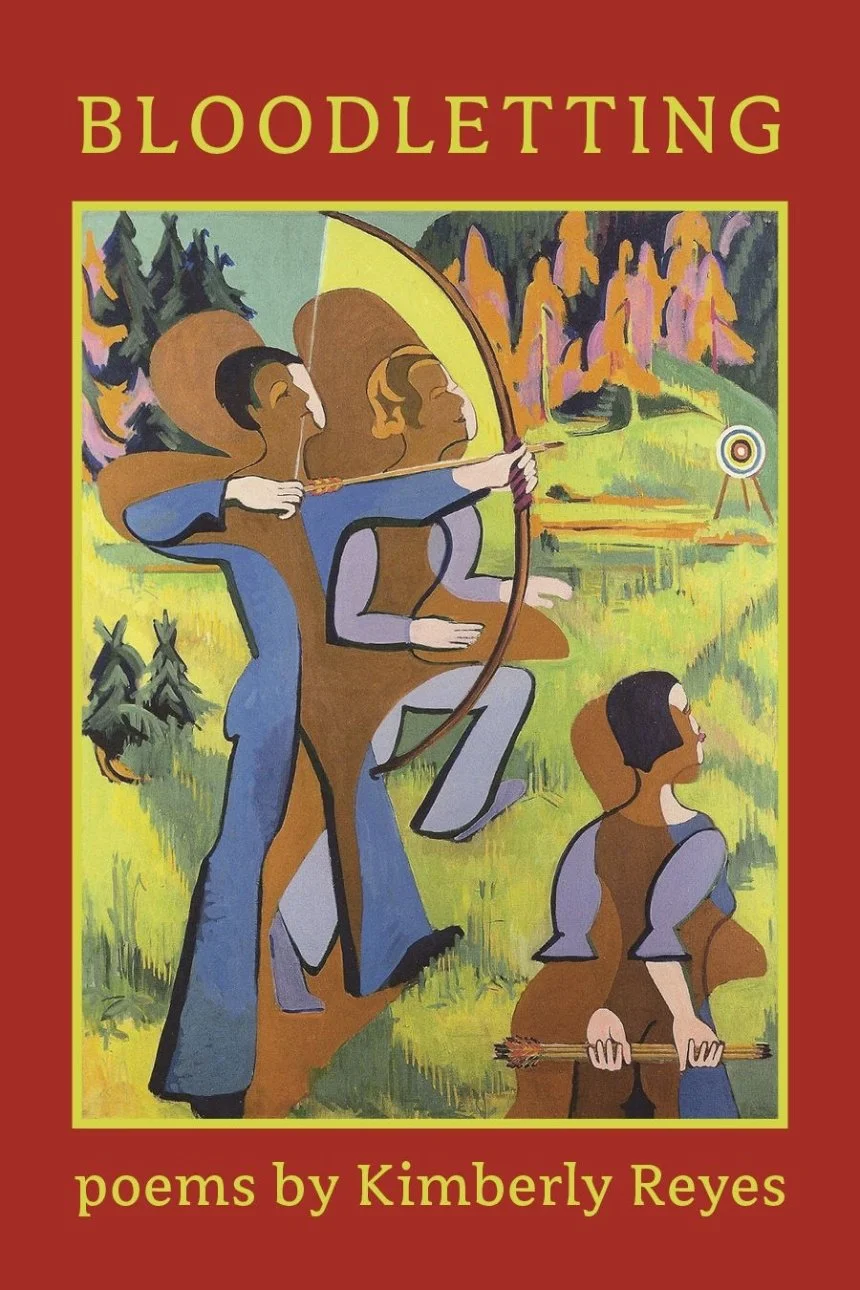
Publish date: May 2025
Publisher: The University of Chicago Press
What most moved me about Reyes’s second collection is the vulnerability of poems such as
“Misogynoir begins at home” and “The Male Gaze/Mating Game That is Compartmentalization,” the latter with its jarringly indented and spaced lines—for instance “(person I care about) Object Exotic object”—that amplify the uneasy embodiment the poems thematize. Bloodletting works as a meditation on the violence done to racialized and gendered bodies in an age of nonstop media spectacle, and in this sense the book connects to Reyes’s work as a scholar of pop and visual culture.
In this book, the marked body must find its way amid the violent spectacle of the MAGA age but also amid the ambivalent productions of pop music, whether Taylor Swift, U2, or the unraveling of “Kanye” (West). Reyes explores pop culture as a site of gendered violence, complicity, and fantasy, and even as the book waxes and wanes this somaticized and refracted violence animates poems such as the chilling “How to disassociate.”
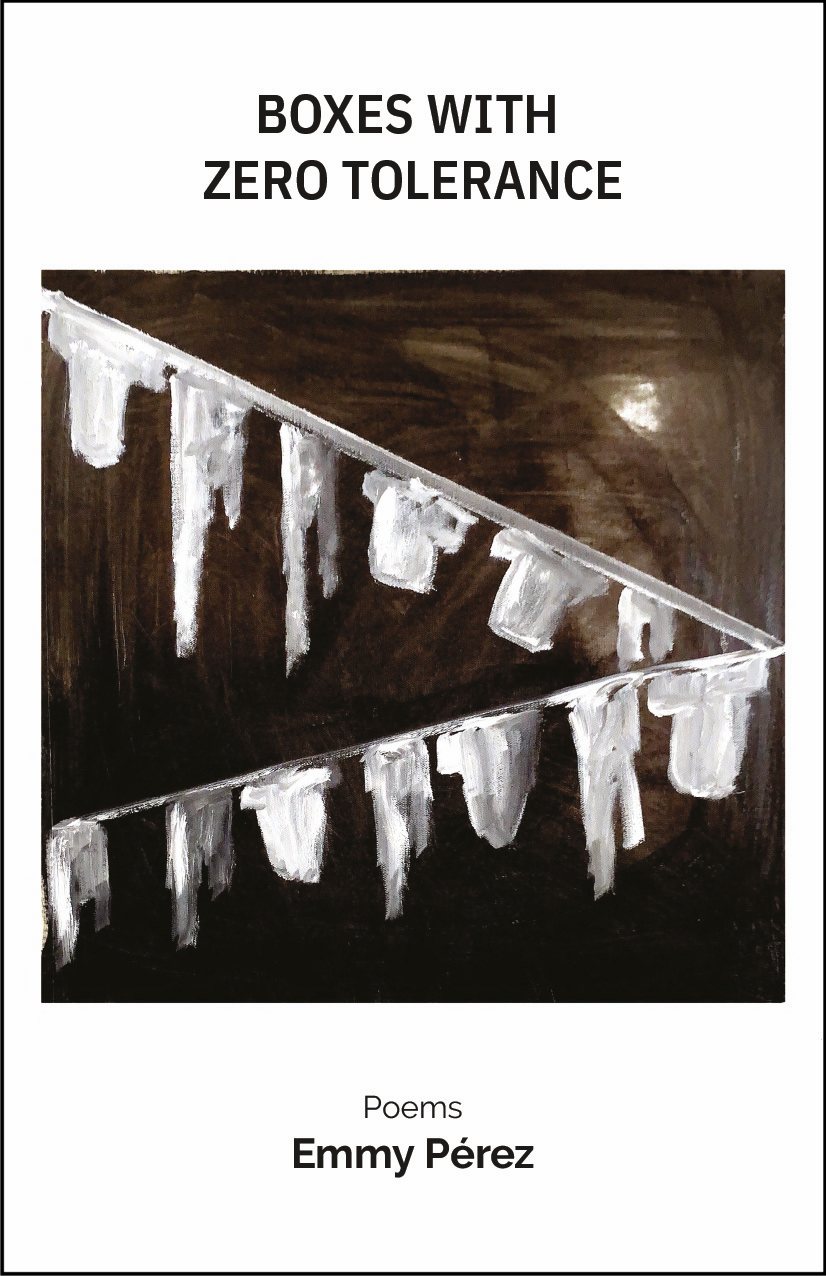
4. Emmy Pérez’s Boxes with Zero Tolerance
Courtesy of Mouthfeel Press
Publish date: September 2025
Publisher: Mouthfeel Press
Over the past two decades, Pérez, the 2020 Texas Poet Laureate and a professor of creative writing at the University of Texas Rio Grande Valley, has become a major (if underacknowledged) borderlands voice in U.S. poetry. The chapbook-length collection Boxes with Zero Tolerance is a crown of sonnets that grapples with the place and power of poetry in the age of ICE (“children to build more empire—cha-ching”). The interlocking lines of the sonnet crown form give the text a recursive force, as ancestral memories, trauma, and knowledges recur, both amplifying and resisting the daily violence. The ghosts here are many—the “tatarabuela” who “still spoke Rarámuri,” the activist dreams of writers on Twitter, and of course, the bodies in the shadow of detention centers—and Pérez reckons with the limits of even the most engaged political poetry: “But part of my truth is I delete. Eek. How naive / to think we’d reach the audience, much less / with what they most need.”
Beyond despair or self-pity, Pérez urges us, (beyond the nature poetry of her earlier books) to reflect on built environments (physical and rhetorical), gleaning that perhaps that self-reflexivity is part of poetry’s power in times like these. Her poetics of land here summons Indigenous histories and saberes and emphasizes our responsibility to the land and its beings. The border-crossing body here defies both a toothless pro-migrant liberalism and the essentialism of academic identity politics, and Pérez scores a shared affect that is not translatable into conventional language and certainly not into a binary (English/Spanish) Latinidad: “English is a lie. Spanish is / not enough. Silence is a lie. And asylum.”
Pérez has always been a meditative poet whose work challenges anthropocentric politics through an investigation of borderlandscapes, yet there is a philosophical depth in Boxes with Zero Tolerance that is all the more impressive given the lyric refinement of Pérez’s verse, which need not scream to convey the urgency of its politics. This expanded philosophical dimension in Pérez’s recent work is further elaborated in the poem “Perhaps the Truth,” included in “Paper America: New Poems (2019-2025),” the striking concluding section of her recently published Paper america: New and Selected Poems (TCU Press Texas Poet Laureate Series). Built around an epigraph from the famously meditative poet Wallace Stevens, “Perhaps the Truth” fuses first, second, and third person (singular and plural) into a poetic essay as powerful as anything I have read this year, fiercely anti-elistist even its irony (“Positionality is a fancy word for street cred or not”) but especially as it claims poetry’s power to perceive the imperceptible (“Perhaps my liberation also depends / On everything I can’t see or feel or name and hear”).
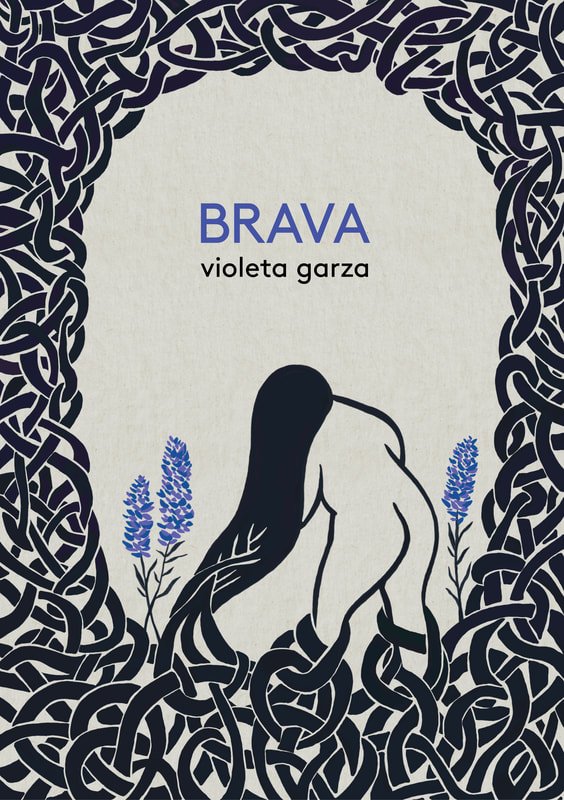
5. Violeta Garza’s Brava
Courtesy of First Matter Press
Publish date: September 2025
Publisher: First Matter Press
A self-described “Queer Tejana poet and performance doula,” Garza brings the badass in this debut collection that features lines such as “my chingona crown of nopales and prickly pear” and titles such as “A Veces Me Pongo Brava / Home” and “This Is the Year I Finally Give a Shit
about Bluebonnets.” There is music in this muse, especially as the poems summon everyone from Juan Gabriel and Prince to Flaco Jiménez in the spirit of queer love and rootedness:
I liquify my roots and
pour them like tequila
at the foot of a mesquite tree,
the accordion of
Flaco Jiménez
playing through the fluttering leaves.
The book finds some of its truest music amid loss and trauma, whether confronting the death of the father (“All Things Must Wait in Their Aliveness”) or how “mother and child / explore varying decibels of attachment and warmth” (“nexus”). And then, there are these lines from “Future Vigil for a Generational Wound”:
I wear the color of ectoplasm
to the vigil for what has been vanquished.
Finally, I linger with these lines from “UNO DOS TRES UVALDE”:
tragedy
flows and loops herself—
a twisted wire
that creates a new crib
of air and anguish
every day.
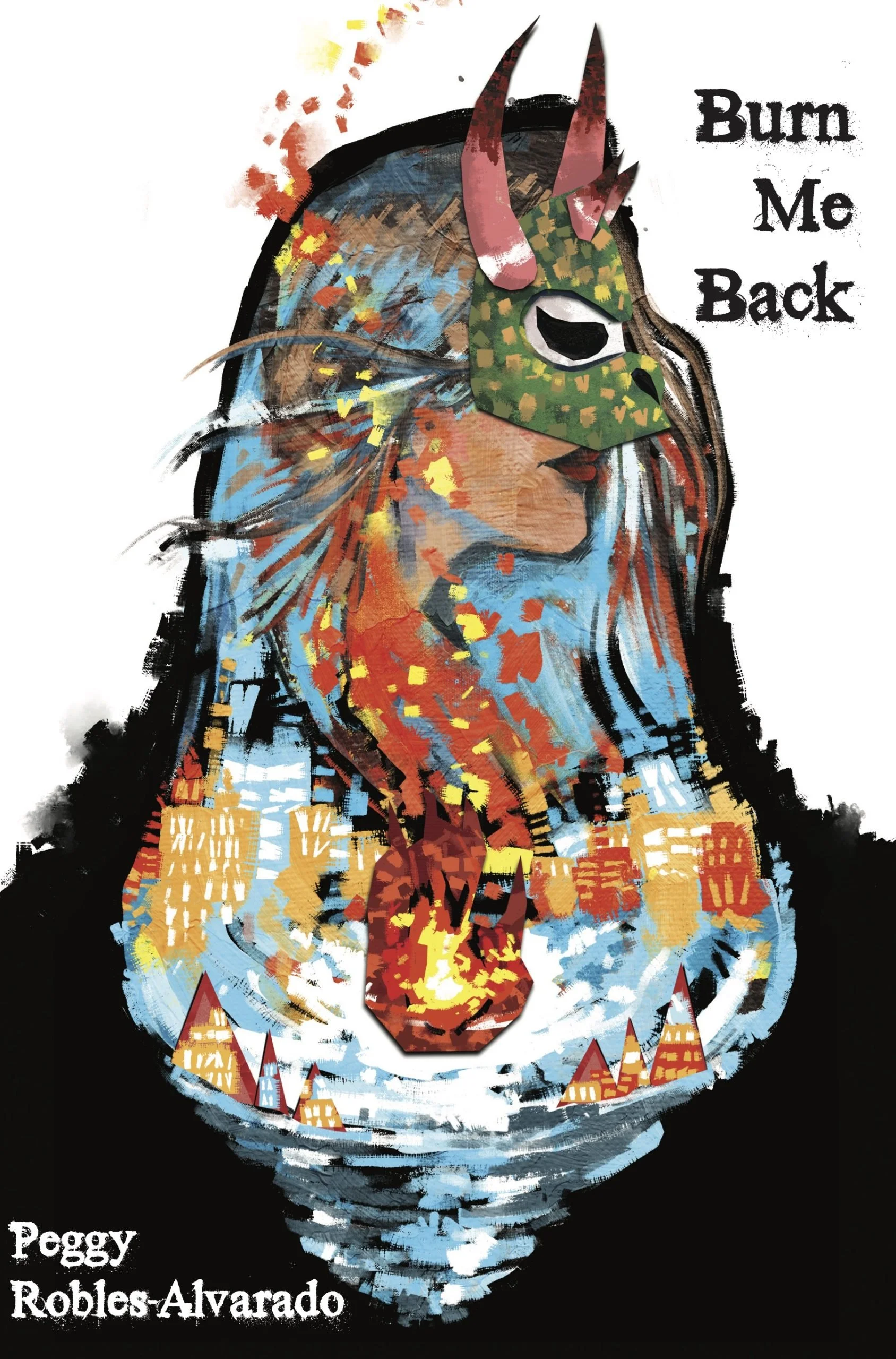
6. Peggy Robles-Alvarado’s Burn Me Back
Publish date: September 2025
Publisher: Four Way Books
I won’t say much about Robles-Alvarado’s revelatory latest book, as we recently published an excellent review and interview by Rojo Robles (no relation). I will, however, emphasize what I wrote in my blurb for the book: that it combines “fractured lyric narrative, performance score, experimental process writing, concrete poetry, and Afro-Latina testimonio” with “rhythmic dazzle, fierce wit, Spanglish glyphs, and mujerista erotics,” creating a poetics of “diasporic world-building, rooted in working class New York Puerto Rican and Dominican histories” that is “unflinching in its reckoning with cross-generational violence and trauma as they connect to patriarchy, colonialism, and displacement” while also claiming the “performalist power” to “forge a somatic language as untranslatable and expansive as our bodyminds.”
Although my reading highlighted Robles-Alvarado’s poetics of survival and/in community and her work as a performer, curator, and cultural worker, it is worth noting, as Robles-Alvarado did in her interview with Robles, that the book’s poetics extend into the art installation she did in her studio in October 2025, one that incorporated family archives and encouraged viewers to tell, write, and share their own stories about family and loss. Through this interactive art, the poetry on the page becomes a blueprint for counterarchival possibilities, another reason why Robles-Alvarado’s poetry matters, on and off the page.
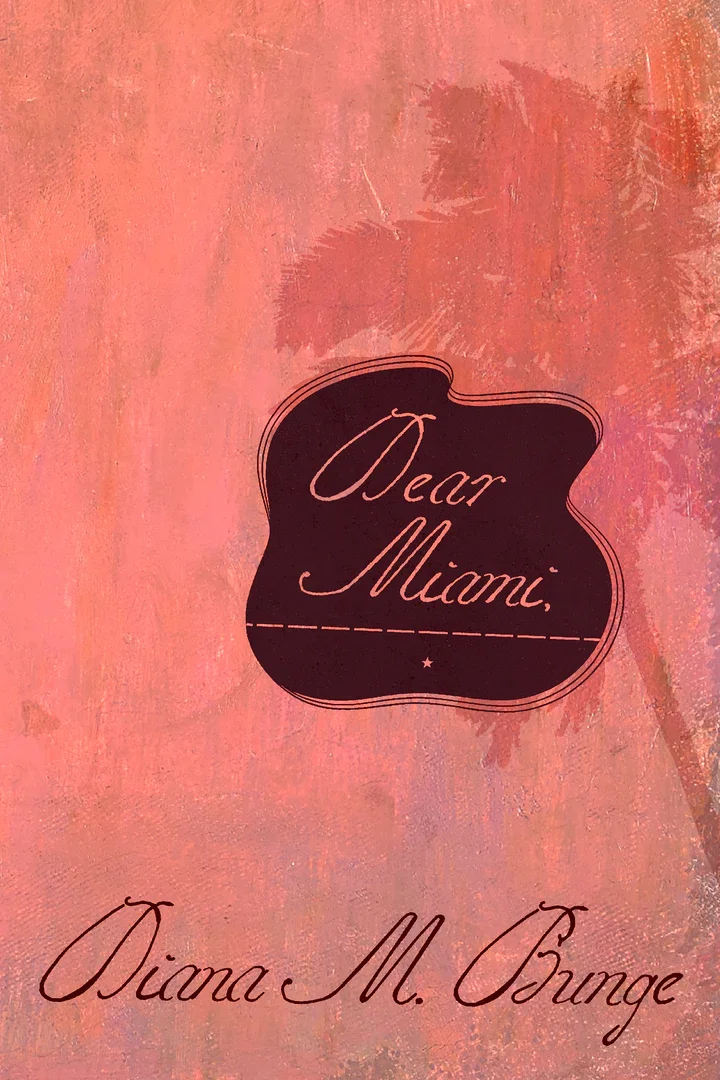
7. Diana M. Bunge’s Dear Miami
Courtesy of Bottlecap Press
Publisher: Bottlecap Press
I know nothing about this author or chapbook, which was submitted for inclusion, but I appreciated the contemporary take on the Cuban Miami experience in often humorous poems that incorporate everything from recipes to “a list of Miami-approved baby names.” The chapbook is structured as a series of letters to and from Miami, of which letter No. 4 comes closest to a reckoning beyond the punchlines:
Dear Miami,
You and your beautiful ocean and sand and sea and food and
people and fruits and palms and culture and vibrancy and music
and cigars and warmth and home,
But then your ugliness
And hypocrisy and gentrification and racism and homophobia and
fervent religiosity and sexism and Trumpism and monolithic way
of being….
Como me duele.
And maybe that’s what I missed, I am not unique in having
complicated feelings about “home.”
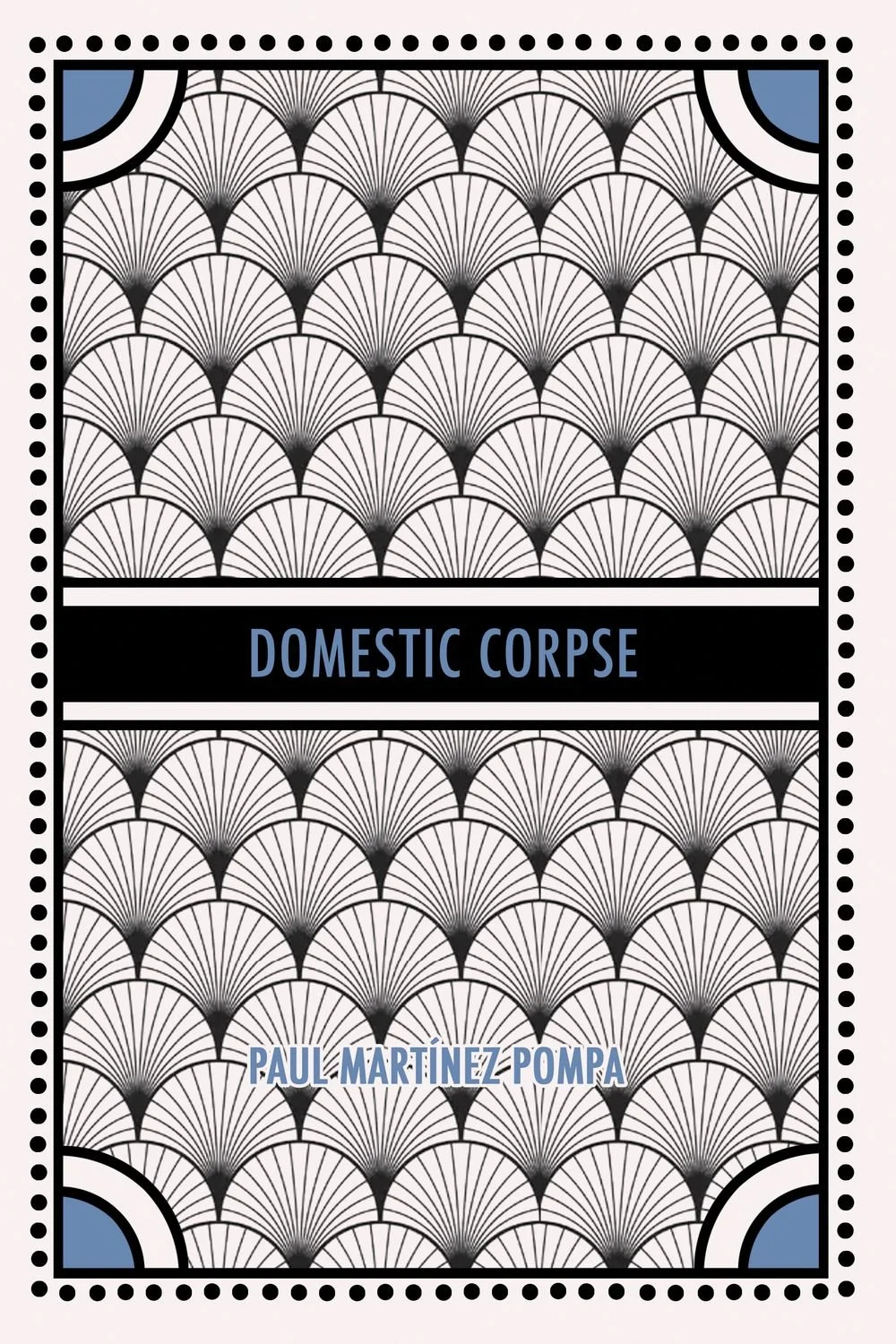
8. Paul Martínez Pompa’s Domestic Corpse
Courtesy of Match Factory Editions
Publish date: October 2025
Publisher: Match Factory Editions
Martínez Pompa’s long-awaited follow up to his Andrés Montoya Poetry Prize–winning first full-length collection My Kill Adore Him expands upon that book’s unsettling yet often luminous exploration of a fraught and sometimes abject masculinity, but now from the perspective of fatherhood. In typical Martínez Pompa fashion, the poems can be both eccentrically performative and disarming in their vulnerability, often flirting with the dissolution of self. As with the previous book, there is often a strong erotic charge to the writing even as it explores the violent racialization of the Latino body.
Of Mexican descent, Martínez Pompa is from the Chicago suburbs, where he still lives and teaches, and Domestic Corpse reads in part as an interrogation of a racialized, suburban Latinidad, which makes the book’s epigraph from Talking Heads’ irony-laced white-suburban anti-anthem “Once in a Lifetime” all the more ironic. This is a suburbia where gun violence is the norm even as the speaker strollers his daughter home from the park, as described in the short yet strikingly cinematic “Three Movements.” Domestic Corpse has perhaps the most subversive poems about Latino fatherhood that I have ever read, including “Trope Numero Uno, Uno as in Mexican, Mexican as in Please Don’t Get Yourself Killed, Mijo,” which echoes Martínez Pompa’s early poems about racial profiling and police violence only now addressing his son.
No other poet I know of so skillfully balances lyric power, erotic energy, political statement, and self-irony with an unflinching gaze sometimes verging on dissociation, as in “Language as a Foreign Language.” One of the achievements of the book is the dazzle of its images, as in the similes of “Dead End Mouth” (“I said, Amerika, like a carcass / unearthed from motel bed sheets” and “like mother who gifts a bagful of cancer, / her way of saying I love you, child”) and the enjambed correspondences of the gorgeous “The Missing Song,” dedicated to poet Roberto Harrison:
By children I mean walls once imagined
as shelter from the land and its abundance
of militaries. By love I mean rifles
zeroed into their own abandonment
fetish.
Given my queer punk leanings, how could I not conclude by shouting out the sweetly hilarious poem “The Misfits vs. The Clash,” with its troping of punk homosociality and unabashed depiction of hours of man-on-man “buttfucking,” where the speaker exclaims “He could conceive of beauty and he could conceive of my hole, but it shocked him that the two could pair together. I felt like a rag.” Move over, necropoetic bros! ¡Que viva el punk!
9. féli martinez’s doors, windows and other archaic means of escape
I know nothing about this chapbook or its author, but I chose it from the submissions due to its exploration of a “t o n g u a g e” attuned to “perception preceptions.” While a bit of anaphora and repetition would have gone a long way here, it does seem to fit the zine aesthetic of the chapbook, and the anticolonial Global South shoutouts and tongue glyphs remind me of late 1970s and early 1980s Alurista (whose work was pretty punk at the time). Props for the translingual opening piece “nonada/nonothing” (echoes of Yes Thing No Thing–era Edwin Torres) and its opening quatrain:
nonada
as in nonce
as in once
as in no
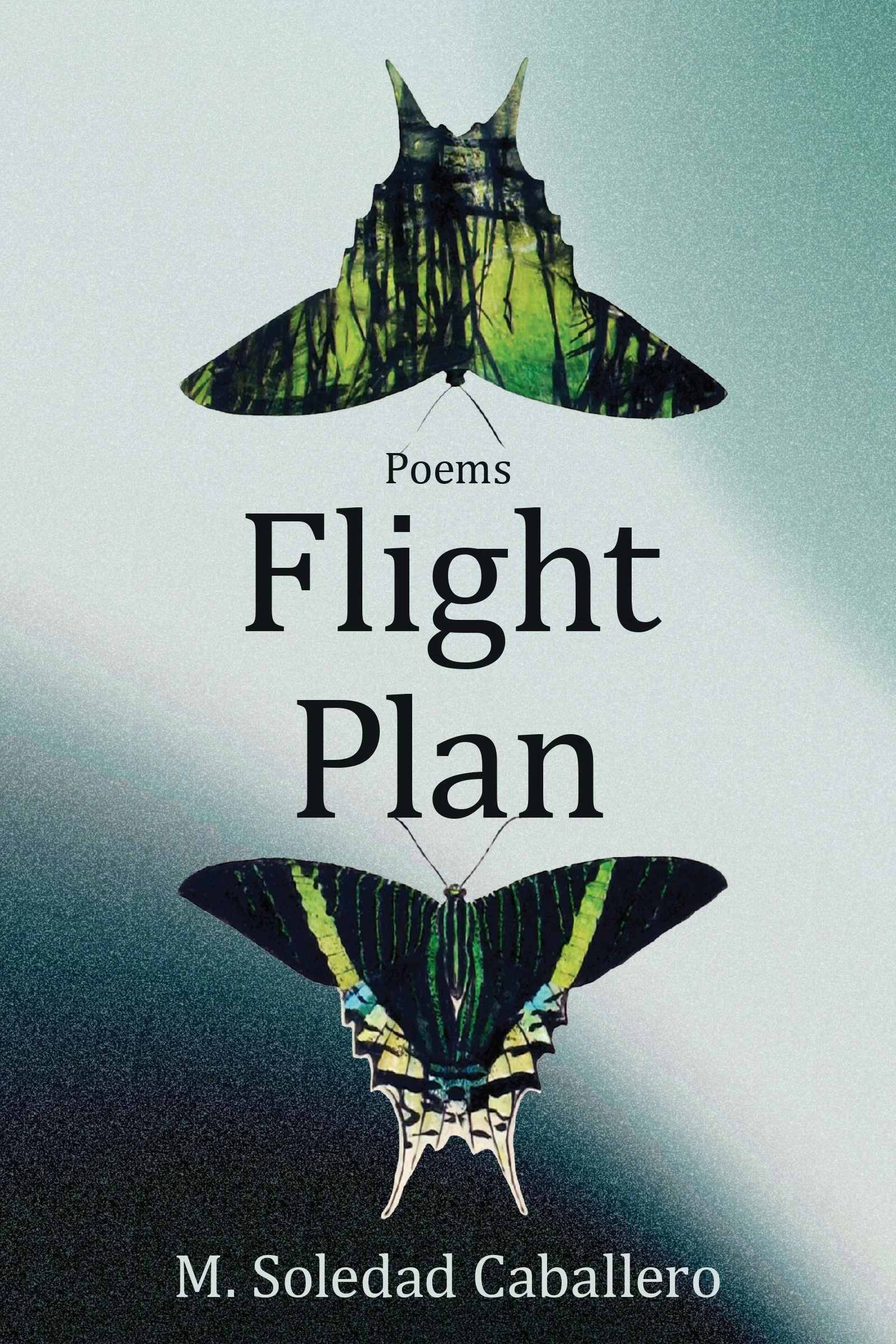
10. M. Soledad Caballero’s Flight Plan
Courtesy of Red Hen Press
Publish date: September 2025
Publisher: Red Hen Press
In this second book from the Chile-born, Pittsburgh-based Caballero, birds and airplanes blur into a supple migrant poetics. These images of flight are especially compelling juxtaposed with the pieces in the book that engage with cancer and chronic illness and with the ravages of the body more generally. As a disabled, middle-age academic with many privileges (including tenure) but also burnout, the poem “CV of Failures” hits very close to home (sample lines: “You know the thick gristle of this mid-life angst” and “I could tell you about so many half-lived projects and poems”).
The book also reflects on diasporic memory and the afterlives of state violence in ways that connect to the work of other South American Latinx poets (e.g. Florencia Milito in Ituzaingó, featured in 2021’s La Treintena). Erudite and formally wide-ranging yet accessible in its lyricism, Flight Plan is a book with many textures yet grounded in what blurber Carmen Giménez calls “a cellular lyric.”
Don’t miss the dreamscape écriture of the poem in five sections “1978,” where Caballero invokes the 1973 Isla de Maipo detainees whose remains were found at Hornos de Lonquén in 1978. While working through diasporic childhood and its spacetimes, the poem ultimately forces us to confront that “There is no magic. Death always ends up being real.”
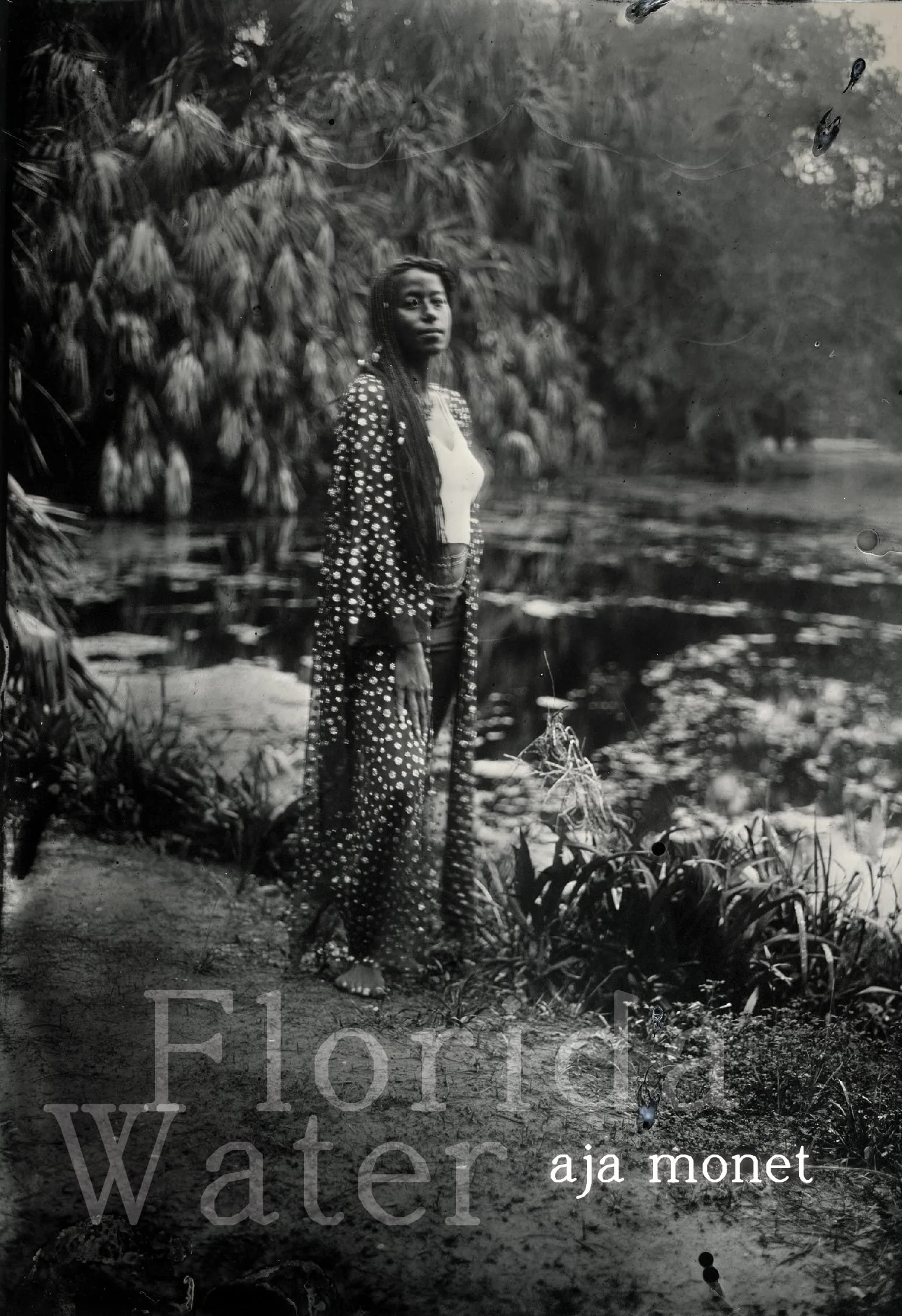
11. aja monet’s Florida Water
Courtesy of Haymarket Books
Publish date: June 2025
Publisher: Haymarket Books
The latest book by the Brooklyn-born, Cuban and Jamaican monet cleverly braids her migration from New York City to Florida and the cleansing, spiritual power of the agua florida used in Afro-Caribbean communities and traditions. Unsurprisingly, given that monet is a former Nuyorican Poets Café slam champion, the book is limber in its scoring of performance poetics on the page, often in conversation with Black elders and ancestors such as Sonia Sanchez, Audre Lorde, and Ntozake Shange. What is most remarkable about the book is how it folds Florida into this diasporic poetics of resistance and spiritual renewal in poems that tackle everything from the 2018 Parkland high school shooting to the displacement caused by hurricanes. The spirit of Yemayá courses through the book and animates poems that bridge Black Brazil, the Caribbean, and Florida, as in the title poem, where monet writes:
i want to be a poem that never works,
that does not resonate with anyone.
to be a poem you cannot share
so alive it is so
Perhaps most surprising is the paragraphless prose piece “the foreshadowing furlough,” where monet weaves together many memories and associations in ways that tell a story yet resist narrative closure, with pleasure and violence interwined: “florida reminds me of open caskets and dress shoes and prisons and beach water where you can see your feet but also that time my mom packed my brother and me in the car in the middle of the night and my stepfather ran after us.” Don’t miss “the perfect storm,” whose sinuous lines evoke storm-battered seas and where monet brings together the Caribbean and its many diasporas into one oceanic chant at “the border between refugee and nomad.” To be honest, these lines from the poem made me tear up:
migration is the art of fleeing
sad songs for blooming in suitcases
la gente fuerte and worn wondrous
we belong, we belong to each other
before any notion of a nation
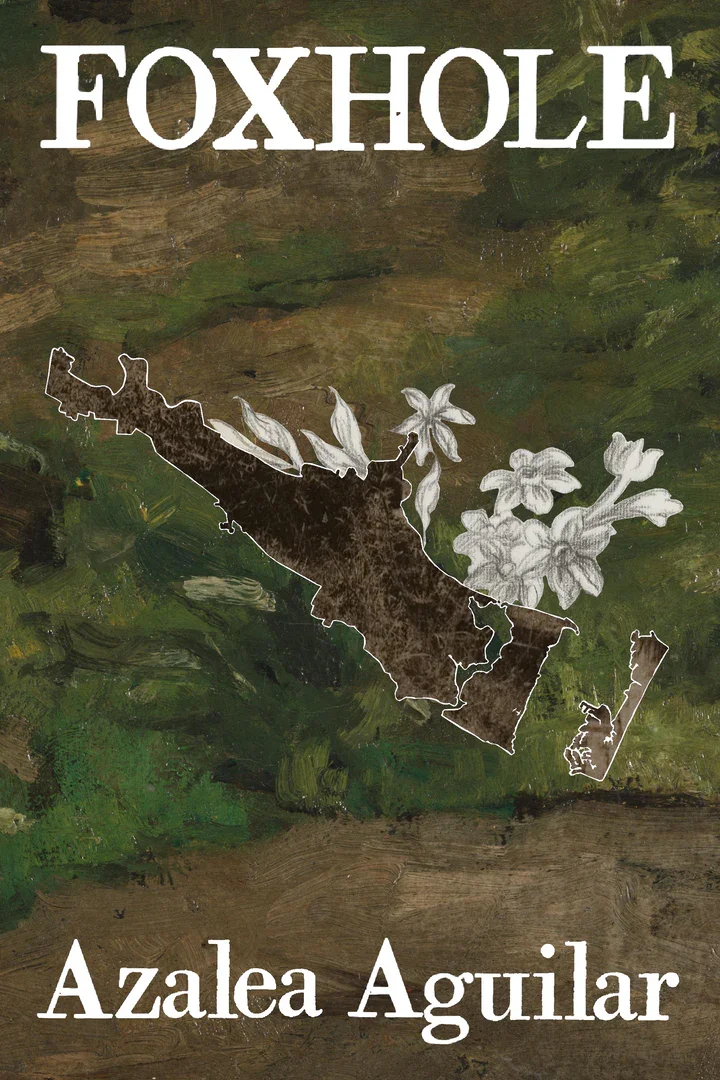
12. Azalea Aguilar’s Foxhole
Courtesy of Bottlecap Press
Publisher: Bottlecap Press
This chapbook by a self-described “emerging Chicana poet from South Texas” is another submission I know nothing about, but I chose to include it for the lovely closing poem “Wildflowers,” which ends thusly:
I remember a field of wildflowers
along a Texas highway
Maybe it was just a picture
but I remember / my father’s hands
his hands in a field of flowers
Pointing me toward beauty
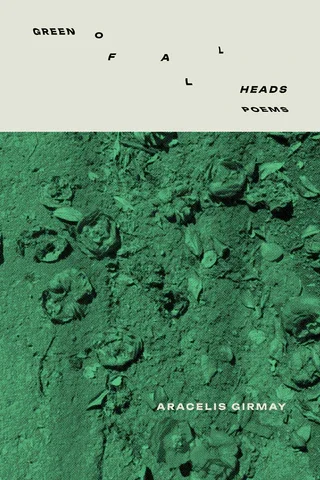
13. Aracelis Girmay’s Green of All Heads
Courtesy of Boa Editions
Publish date: September 2025
Publisher: Boa Editions
In her latest book, the California-born Girmay, one of her generation’s major poets, offers an elegy for her father that is also a song for and from her many ancestries (Eritrean, Puerto Rican, African American, Mexican), and a counterarchival project in conversation with poets such as m. nourbeSe philip and Mayra Santos-Febres, both of whom provide back-cover blurbs for the collection.
There is a bit of everything here, from the autopoietic prose of “I Go to the Dentist” to Black surrealist process writing in the spirit of Suzanne Césaire. Throughout, Girmay’s characteristic lyric power and synaesthetic vision disembody and reembody language, as in “Awaken Your Will” (“Calling to me / Like a so cket / Of sight”). Be sure to check out “After Sin título (Sikán con chivo), Belkis Ayón,” where the late Afro-Cuban printmaker’s work becomes a summoning of diasporic afterlives (“Death does not kill relation”).
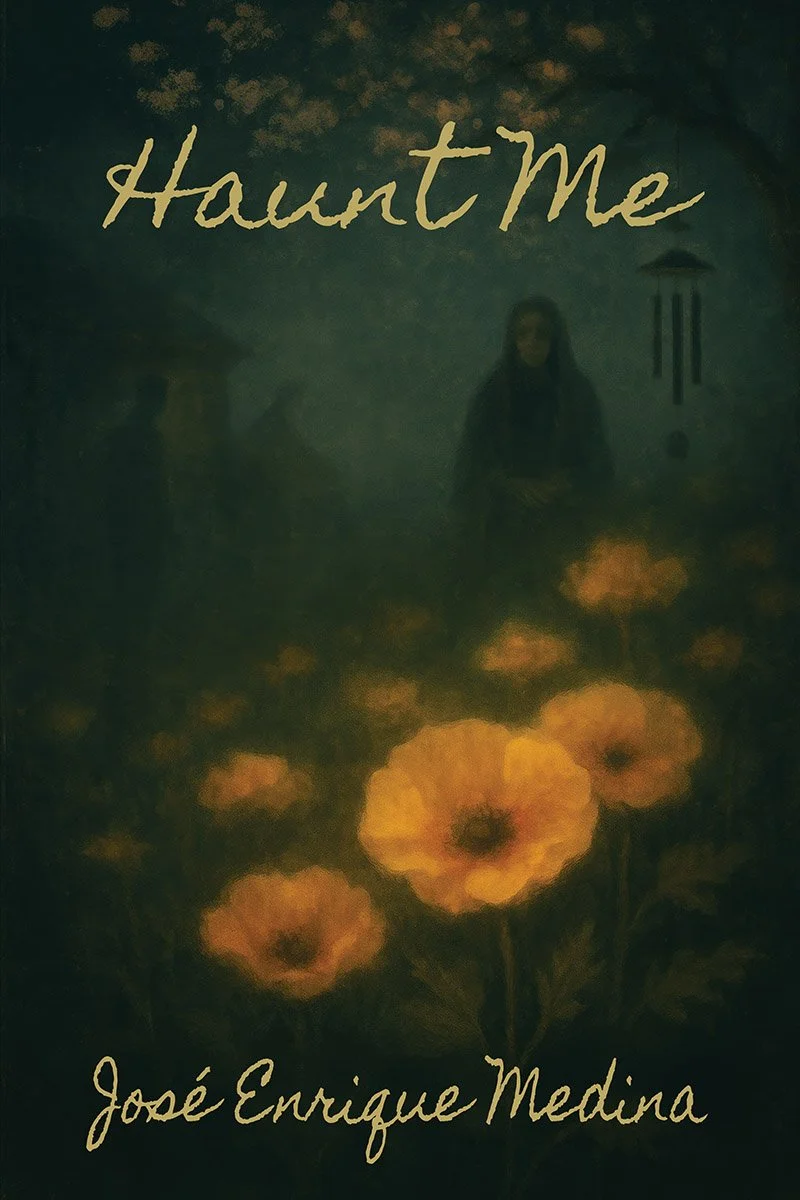
14. José Enrique Medina’s Haunt Me
Courtesy of Rattle Poetry
Publish date: September 2025
Publisher: Rattle Poetry
This debut collection fits into a certain Chicanx tradition, with its lyric narrative explorations of family life and cultural belonging, yet I appreciated the careful irony that animates poems such as “My Mother’s Buried in the Largest Cemetery in North America,” “Daily Practices,” and “A Fistful of Cursed Desert” (standout line: “The dirt remembers. Bruises grow roots.”). And then sometimes the humor needs to be less subtle, as in these lines from “Last Call”:
When I’m fucked up, really fucked up,
three corpses appear, drinking beer.
Not you cabrones again, I say.
Find another fucking bar. Leave me alone.
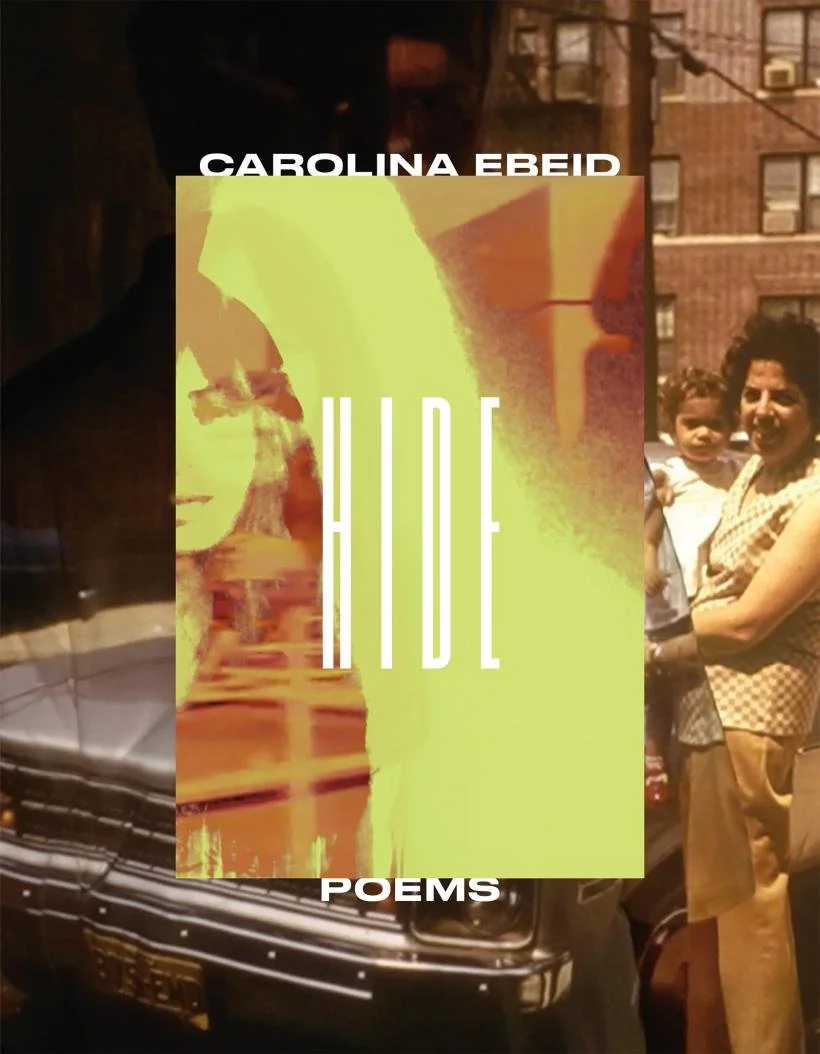
15. Carolina Ebeid’s Hide
Courtesy of Graywolf Press
Publish date: Graywolf Press
Publisher: March 2026
The second book by this New Jersey–raised Palestinian and Cuban poet is framed by epigraphs from Etel Adnan, Ana Mendieta, and Palestinian American poet Fady Joudah, and it proposes an investigative poetics attuned to those and many other influences and references, among them electronic musicians such as Joanna Brouk and Brian Eno.
Ebeid’s is a poetics that balances emotional force and ambient textures, as in the sinuous circular form of the concrete poem “She Got Love: A Circle of Spells for Ana Mendieta,” which finds unhomely music amid the ruins (“ruido nido ruino”). The book’s poetics of materiality engages the conceptual, as in the striking “Dauerwunder” (subtitled “a brief record of facts”), an uncategorizable piece near the end of the book framed around the question of the transcription and translation of Arabic.
Toward the end, tercets are juxtaposed with visual poetry snaking across the page in a way that feels virtuosic but always rigorous, like a controlled explosion. Like Mendieta, Ebeid embraces materiality as part of an investigation of embodied landscapes shaped by diasporic memory, as in how the poem “Cloth Study” evokes the play between “envolver” (to wrap) and “volver” (to return).
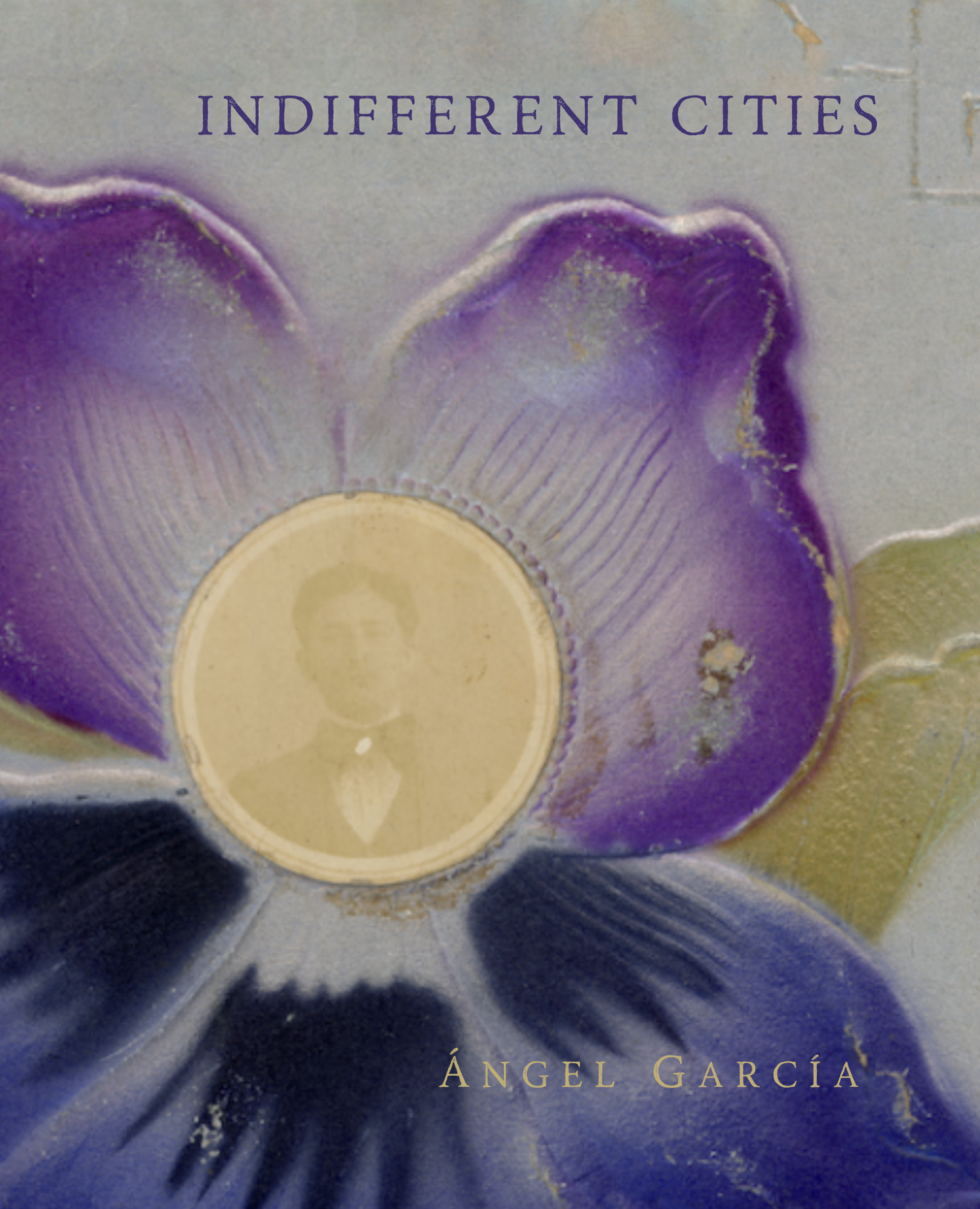
16. Ángel García’s Indifferent Cities
Courtesy of Tupelo Press
Publish date: Tupelo Press
Publisher: December 2025
García’s sophomore collection builds on the breakthrough of his heralded 2018 debut Teeth Never Sleep, with a translingual, cross-border aesthetic and the use of the epistolary form in evoking a hundred years of family and community histories. The code-switching and repetitions in poems like “Secuestro” potently convey generations of gendered struggle and trauma, and expand on the critical explorations of masculinity in García’s earlier work. There is formal ambition and energy throughout, as in the poem in couplets “Dear Fake Father and Fake Mother,” which decenters the typical family epistolary by having the lines bend and sag from left to right, a technique that amplifies the power of phrases such as “You’ve given me only your names.”
In my mind, the book’s title suggests a contemporary reckoning with all the ways cross-border collective histories are and always have been foreclosed, against the more facile frontera politics of the 1980s and 1990s. Yet, there is power in the naming of what has been broken, and this book reminds me that poetry is one way forward. I come back to the long and disarming poetic montage “Those Graves,” a standout piece from the book, where García writes: “I’ve come emptyhanded, with so few words. Ancestry is a language I’ve not learned to speak.”
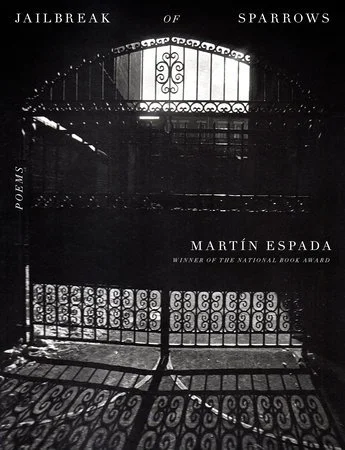
17. Martín Espada’s Jailbreak of Sparrows
Courtesy of Knopf
Publish date: April 2025
Publisher: Knopf
Espada’s latest book continues his ongoing (intimately communal) exploration of Diasporican history yet with a powerful narrative torrent that at times reads as a nonlinear memoir. There is a matter-of-factness to prose poems such as “The Fireflies of Belmont Avenue” that evokes multiethnic community histories without sacrificing Espada’s trademark music. Other highlights include “Insult,” dedicated to William Carlos Williams, which invokes the stroke the elder Boricua poet suffered and reflects on the embodied labor of poetry, and “The Faces We Envision in the Scrapbook of the Dead, a searing interrogation of anti-Latinx violence. Don’t miss “Love Song of the Plátanos Maduros” (sample line: “the alchemy of the tough skin green, then yellow, then black”) and the opening title poem, a memorable fusion of family and political history.
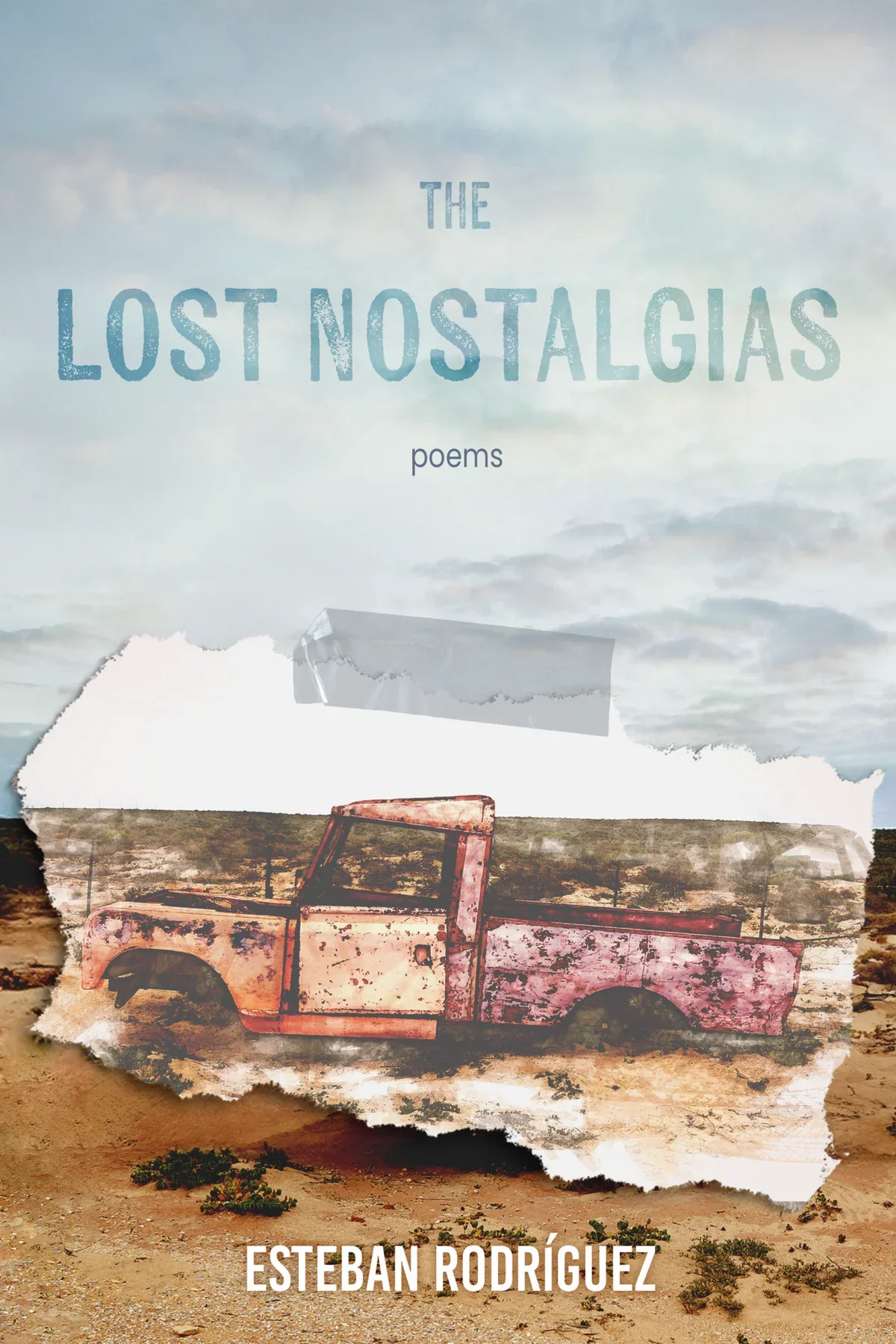
18. Esteban Rodríguez’s The Lost Nostalgias
Courtesy of CavanKerry Pres
Publish date: May 2025
Publisher: CavanKerry Press
I’m not sure this latest collection from Rio Grande Valley native Rodríguez significantly expands upon his many previous books with its lyric narratives in tercets, couplets, and quatrains. Still, consistency is a virtue, and here, among the poetics of everyday, there are some moments of almost visionary beauty, as in these lines from “Rain”:
Inside, I wander the hypothetical heart of a city,
the alleyways and districts, the cross-hatched
street corners where the underground labyrinths
of steam rise like incense toward the fading
rows of streetlamps, and brush against my legs
like a stray dog no longer afraid of sidewalk
traffic. Evening’s extended prologue, jaundiced
with uncertainty, tosses its showers along
the pavement, then veils the skyline with
an insomnia of fog and anonymity, with
a sense that I can keep everything at its periphery
and still sustain a narrative long enough to suspend
my daily exodus of sweat, to erase the generational
layers of salt glazed across my limbs
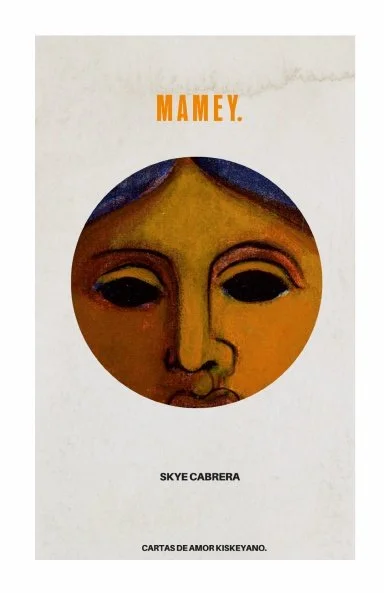
19. Skye Cabrera’s Mamey
Publish date: July 2025
This short, self-published, and mainly Spanish-language love poetry book is yet another surprising twist in the trajectory of the queer, Dominican, and Turkish Cabrera, a self-described “multihyphen artist from the Bronx.” While it has the feeling of a first draft, Cabrera is a talented storyteller whose writing sings and swings with the same energy she brings to her memorable performances, here channeling everyone from the great bachatero and merenguero Teodoro Reyes to the artist Cándido Bidó, while reflecting on lost love and her years spent in California. Love here is political in ways only poetry can name, or as Cabrera puts it:
Es marchar por las calles
De los Trujillistas con una bandera
De arcoíris. Es mucho más que
Revolución.
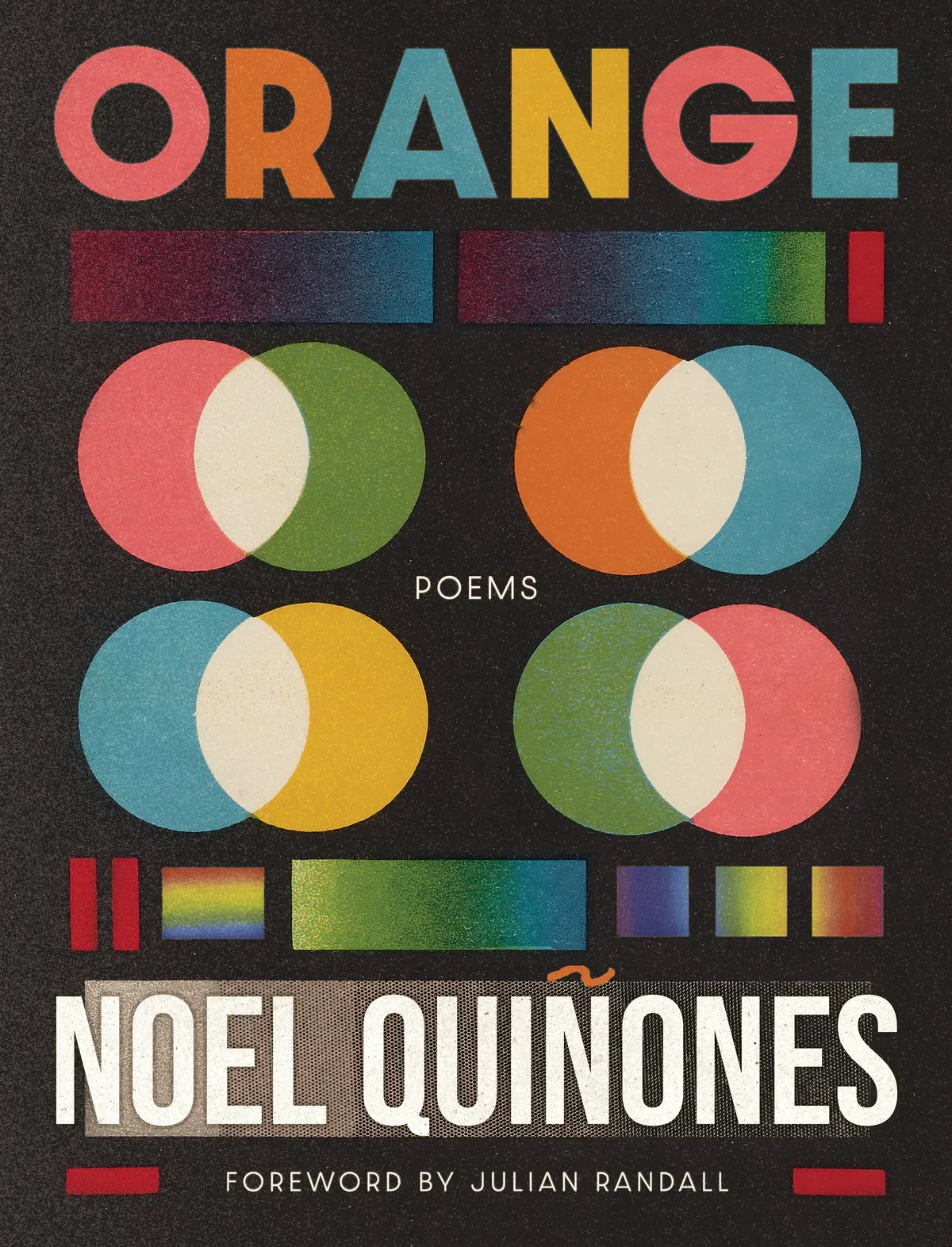
20. Noel Quiñones’s Orange
Courtesy of CavanKerry Press
Publish date: May 2026
Publisher: CavanKerry Press
I’ve been eagerly waiting for this debut collection from one of the most promising Nuyorican voices, and I was impressed by the gaming aesthetic that runs through Orange. Not only is the book full of textual and visual references to video games (from Galaga to Psychonauts), but Quiñones also creates poems where the reader is asked to interact with the text, whether by coloring in it, holding it up to a mirror, or arranging the poem like a board game.
In its verbivocovisual vernacular, Quiñones’s work reminds me at times of Edwin Torres (a fellow Bronx Nuyorican), yet with a queer attention to the body and its desires and with a distinct mix of sensitivity, geek smarts, and barrio heart that will appeal to younger readers. In fact, I kind of wish the book would have been conceived as YA, as I think that is where so much innovative queer/of color poetics is happening right now and since there is such a need for voices like Quiñones’s that can reach, challenge, and identify with younger readers.
At times, I found the barrage of experimental forms (pie charts, chromatic wheels, QR codes, blanks to be filled in, even calligraphy and a poem about Marc Anthony with shoeprints superimposed!) a bit disorienting as I was trying to focus on Quiñones, the gifted storyteller. Still, the talent and ambition here is remarkable and Quiñones is one of those writers whose work feels like essential reading, both for where it’s coming from and for the boldness of the art and the evident study behind it. As a former and sometimes chess nerd, I had to smile at “How to Learn the Scholar’s Mate,” where the (anti)love poem is arranged on black and white squares like a chessboard. Ultimately, Orange is most compelling when it embraces its storytelling powers in poems that tackle everything from the speaker’s relationship with their gay father to their own sexual and gender exploration and their memories of growing up in the Bronx. The short poem “Annulment” is emblematic of Orange at its best. The poem begins:
Perhaps, this man never existed.
My father called him his new roommate.
I called him my father’s new best friend.
At the edge of my mother, we played pretend.
Another favorite is “The Time Capsule,” where the Bronx of the poet’s youth is touchingly and humorously remembered, and where self-discovery and friendship are also about messing around and finding a way, about the difficult music of survival, in the truest Nuyorican tradition, which Quiñones both recovers and subverts:
[...] We all dreamt of wings,
but most of us only ever got an edge to wonder at.
Trust, we never thought we’d make it out, so we hid
something, a real queseyonomejoda, a jabberwocky, dark
matter Spear of Destiny-type shit. I can’t explain it,
but if you ever find yourself hype off a early dismissal,
one dollar short of a bus to the movie theaters,
I need you to follow the map and dig, and dig,
and dig, and when you hit metal, open it.
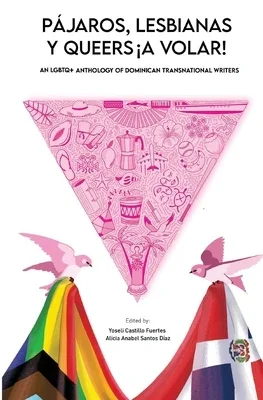
21. Yoseli Castillo Fuertes and Alicia Anabel Santos Díaz’s Pájaros, Lesbianas y Queers ¡A Volar! An LGBTQ+ Anthology of Dominican Transnational Writers
Courtesy of Dwa Press
Publish date: April 2025
Publisher: Dwa Press
This pathbreaking anthology is divided into three sections, “Dios,” “Patria,” and “Libertad,” echoing the national motto of the Dominican Republic, yet as the great Ana-Maurine Lara notes in her introduction, “Dominican LGBTQ+ writers reimagine ‘Dios’, ‘Patria’, and ‘Libertad’ both in terms of the nationalist ideals we grew up with, but also through practices of disidentification and re-appropriation.” The anthology is remarkable for its transnational and vernacular sensibility, building bridges across queer communities marginalized in both U.S. and Dominican national imaginaries. I love that there is a strong component of performance-oriented work, including that of the playwright Tomás Hubier and the cross-genre writer Lemny Perez, and the influence of already canonical writer-performers such as Josefina Báez and Rita Indiana is evident in a number of the pieces. Even the more traditional fiction often has a speculative or eccentrically embodied perspective, as in Alejandro Heredia’s short yet memorable “flat people in virtual space.”
I was excited to come across diverse and engaging work by folks not primarily known as creative writers, including filmmaker Andrew Rodriguez, scholar Carlos Ulises Decena, and multidisciplinary artist Gina Goico. While I was disappointed that several noteworthy U.S. Dominican poets were not included (e.g. Diannely Antigua, Julian David Randall, Octavio R. “Tavi” Gonzalez) and I missed the presence of writer and performer Johan Mijail (one of the key queer Caribe voices of the past two decades), I was impressed by the breadth and diversity of the work in Spanish and/or Dominicanish and by the political power of so much of this queerly embodied language. Don’t miss Goico’s “Marimachito” and Ju Puello’s “Santo Domingo es un pájaro herido,” both abuzz with a manifesto-like urgency. And speaking of manifestos, the Transfemme Afro-dissidence of Mikaelah Drullard’s “La heterosexualidad es Colón: una escritura fugada de una exiliada política afrodescendiente” is a significant contribution for those of us seeking to queer the essay in and as performance.
Other memorable moments include Lausitely Peña Solano’s “El efecto de unas tetas contra otras” and these lines from “Untitled” by Crysbel “Mariposa” Tejada: “Mi espalda con alas abiertas de colibrí / No quepo en tu caja de género ni / soy juguete en tu reunión social.” Against the (anti-Black/femme/Trans/migrant) state violence so pervasive in both countries, editors Castillo Fuertes, Santos Díaz and their collaborators should be congratulated for an anthology that so deliberately and joyfully subverts the norms and tastes of ethnonational Dominicanidad and USness.
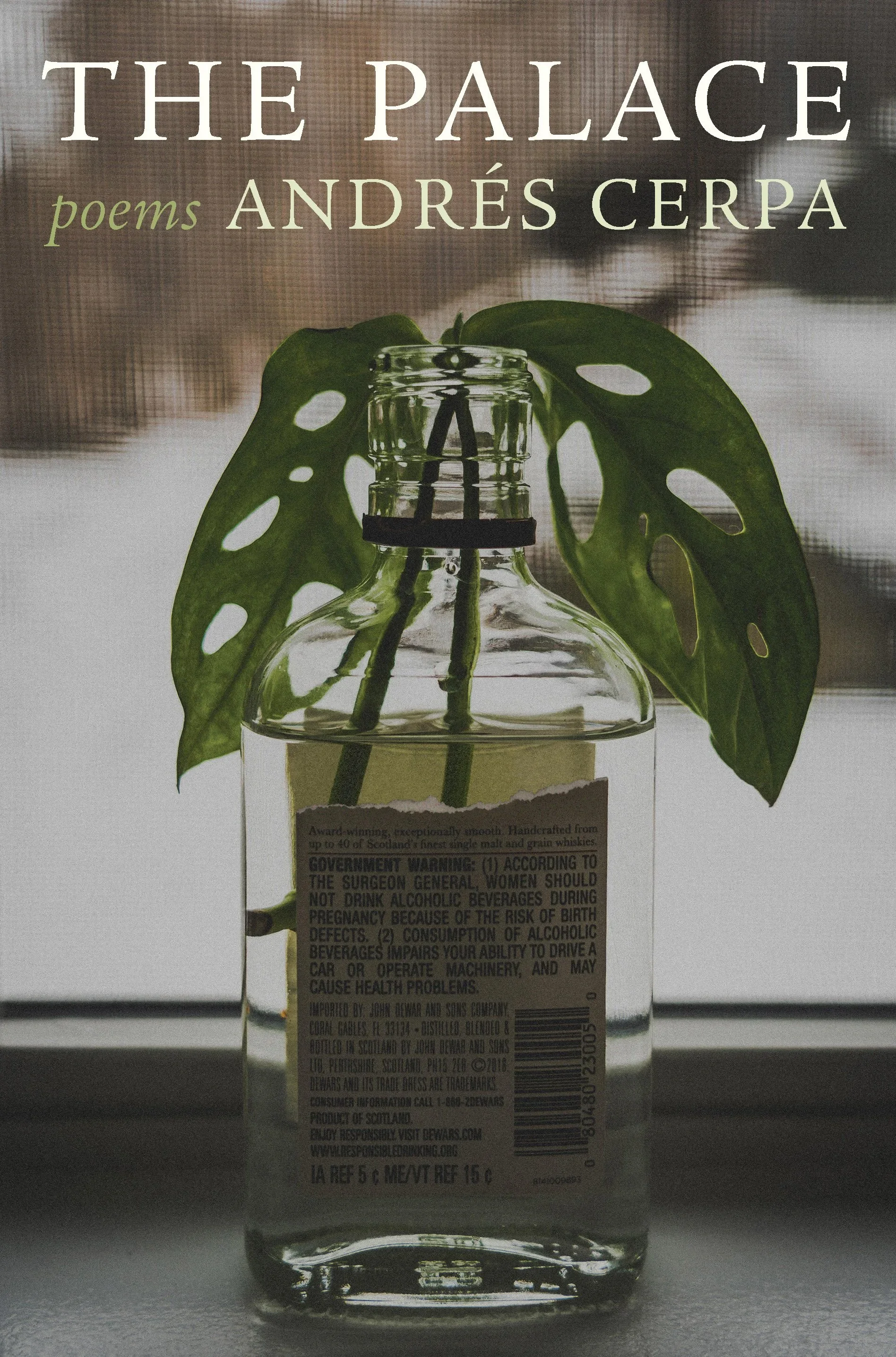
22. Andrés Cerpa’s The Palace
Courtesy of Alice James Books
Publish date: January 2026
Publisher: Alice James Books
Of Puerto Rican descent and raised on Staten Island, Cerpa broke through with his second book, 2021’s The Vault, which I included in that year’s La Treintena and which was named as one of the best poetry books of that year by the New York Times and also longlisted for the National Book Award. The Palace impressed me with a spare, luminous lyricism that delves into the spiritual but always returns to the diasporic body and its unboundness. The formal minimalism and affective maximalism in Cerpa’s work almost remind me of Li-Young Lee (whose work inspired one of the poems in the book) yet there is a distinct (if ambient) politics to Cerpa’s book in how the speaker seeks refuge in drugs or in nature but always returns to the diasporic condition. Central to this dimension of the book are three poems all called “Diaspora Poem” that either eschew or defamiliarize the typical Diasporican cultural references in the name of a poetics that says the unsayable: “I am/was a thief & addict. In this country, / heaven is a memory I can’t touch.” When the abuela does appear, it is as a spirit that unsettles as much as it grounds:
The dead rise in me–
their three gold teeth like distant armies
in the dusk.
Abuela is among them.
She hauls a cart that drips the first horse’s blood.
Other highlights include the surrealist visions of “Machete” (“I traded yucca for ether”) and the dystopian, anti-capitalist “Elegy with Atlantic City in all its Glory,” where the speaker can forcefully proclaim “Fuck the American flag” and call out how “American wealth is screaming its silence” while reckoning with what it means to speak out while “in the belly of the market” and witnessing so much human and ecological devastation.
23. Judith Santopietro’s piedralumbre
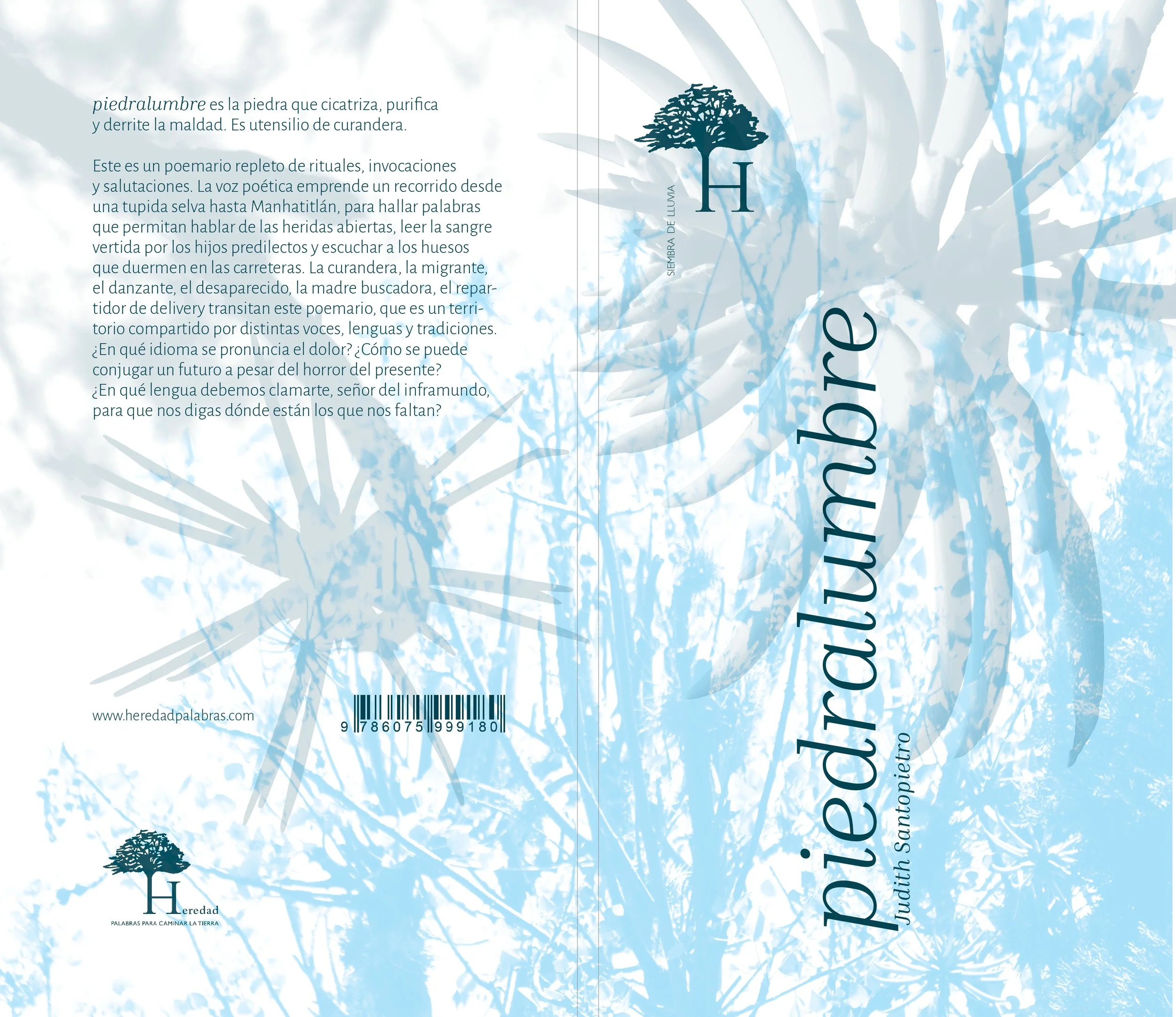
Over many years, the Mexico-born Santopietro has developed a sui generis poetics at the crossroads of her two languages, Spanish and Nahuatl. The new piedralumbre might be her strongest work yet, with its back-to-back Nahuatl and Spanish poems that work as self-translations and its beautifully minimalist visual presentation (most poems are under 20 lines long and the dark blue font pops against the page while evoking the sea and sky the poems span). Especially exciting to me is the middle section, “YANCUIC YORK,” where an indigenous NYC comes to life spanning Mexico, Guatemala, and beyond, from “Manhattitlan” to “nebaj jork.” While it is impossible to reproduce the full visual impact of this section as it dances across the page to unsettle Spanish and make room for Nahuatl, Mixtec, K’iche’, and more, it is important to highlight how this poetry connects to Santopietro’s work with indigenous migrant communities settled in New York and her work preserving and promoting indigenous languages and their oral and cultural traditions, including through the blog/magazine Iguanazul. Here’s an example of Santopietro’s translingual/self-translating poetics, piedralumbre in all its slow fire:
Tlatlahco ni tlahtlayohua
tlahuilli patlanih
tlaahuetziliztli quiixhualtia xopanxihuitl
nitemiqui huanya nonanan: ya nechtlahtlania ma nicpopochhui itlacayo,
totohuicaliztli tlen zanoc quichichilihuiltia elhuicatl.
En medio de esta oscuridad
vuelan diminutas luces,
la lluvia empuja los brotes del verano;
sueño con mi madre: me pide sahumar su cuerpo,
el canto de los pájaros apenas enrojece el cielo.
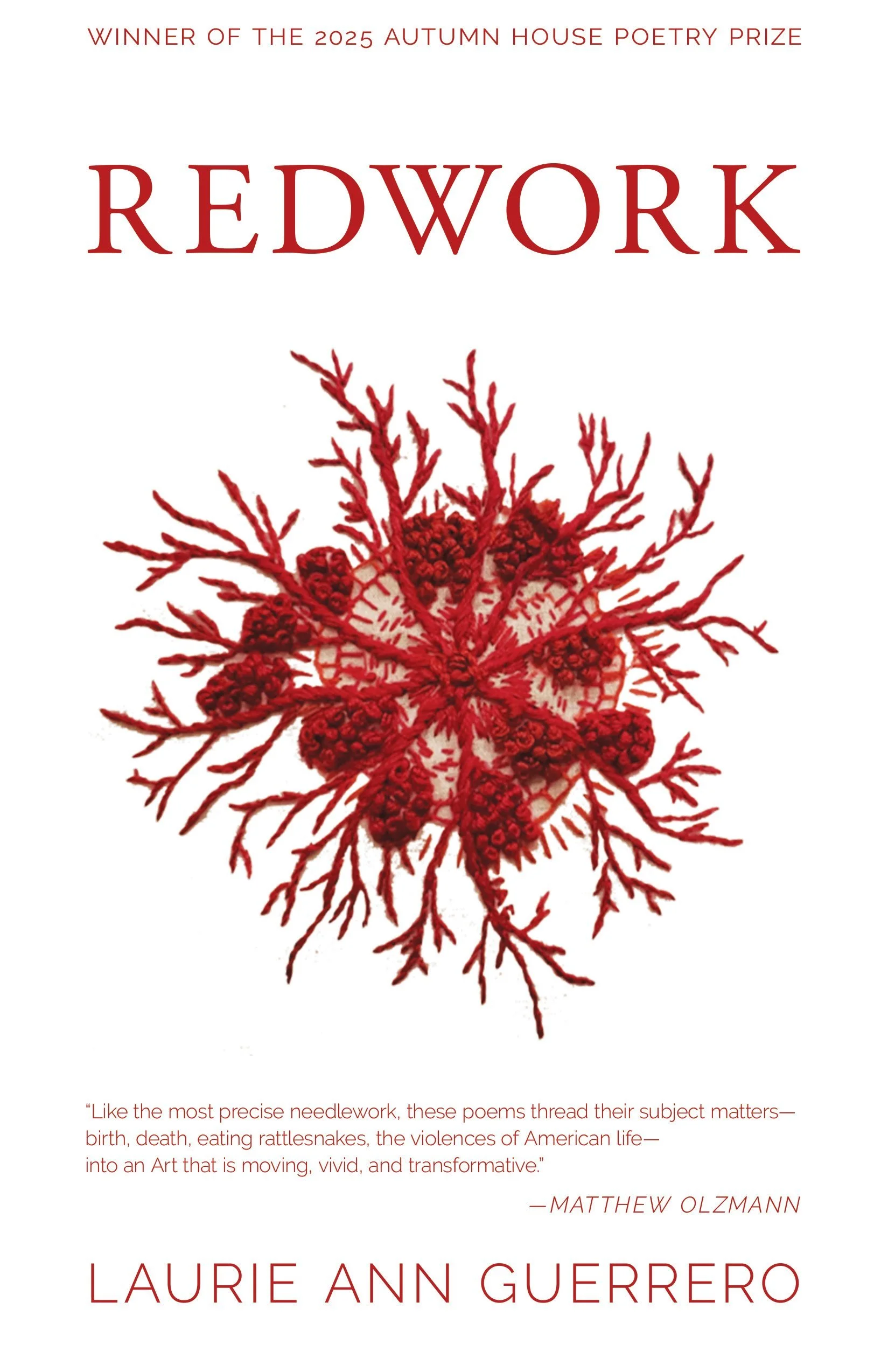
24. Laurie Ann Guerrero’s REDWORK
Courtesy of Autumn House Press
Publish date: October 2026
Publisher: Autumn House Press
Born and raised in the Southside of San Antonio and the former Poet Laureate of San Antonio and Texas, Guerrero has a long and distinguished record as both a poet and a cultural worker. The embroidered forms of REDWORK summon the knowledges of ancestras at the intersection of the textile and the tactile, paper and blood. With its “Glossary of Stitches,” the book finds in the redwork style of embroidery a mode of personal and collective survival, or as Guerrero puts it in the book’s “Note to the Reader”: “Every stitch was a breath I could not have taken otherwise.” (In the authors’ note, Guerrero explains that she learned to embroider from her mother as a child and returned to the practice at a time of personal and political crisis.) The concept of redwork here works like the Anzaldúan “interface,” forging unforeseen connections, and there is a formal aspect to this poetics of redwork, as evidenced by the striking red embroideries included in the text and titled to work both as visual poems and as documentation of the different knots and stitches used.
Guerrero has long been one of the best pure lyric poets of her generation, but here the prose poems, list poems, and hybrid pieces reveal another side of Guerrero as a processual poet, in conversation with a tradition of women poets and artists who restlessly re-embodied form, such as Gwendolyn Brooks, Emily Dickinson, and Louise Bourgeois. The influence of Bourgeois is evident in the vividness of the embroidered pieces (somewhat reminiscent of Bourgeois’s colorful late textile/fabric works) and more generally in how Guerrero both represents and defamiliarizes the woman’s body in embroideries of women’s skeletons or arms or eyes with titles such as “Self Portrait as Entangled Particle: Solidified in the Moment of Observation.” The skeletons of “Atlas for a Dead Star” are especially impressive for how Guerrero incorporates numbered body parts which give way to a numbered list poem delving into each of those body parts: “4.) Clavicle: I carry my father here: borderline between / what he claims and what he can’t: my brain, my body.”
Guerrero updates redwork embroidery, which harks back to the 19th-century U.S., in keeping with a Chicana sensibility, as evidenced by the density of the embroideries that incorporate snakes, flowers, and animals into the depiction of the woman’s body, yet there is an abstract, almost surrealist quality to the redwork pieces that resists a facile poetics of Chicana feminist embodiment and that leads back to Bourgeois, especially in the pieces where the women seem to be holding a gun or even to have a revolver pointed at the viewer. At the same time, there is always an accessibility to Guerrero’s work that connects to her working class background and that resists academic pretension or artistic obscurity, instead locating the politics of redwork (in the closing title poem) in an everyday politics of “piercing, mapmaking, naming.” Perhaps most remarkable in this regard is “Quantum Entanglement: An Anatomical Essay” where two redwork embroideries of tree- and plant-like women give way to a numbered artist statement in conversation with Bourgeois whose third point reads:
I didn’t know what else to do: seeds on a scrap of fabric that would limn a bigger picture—a face, a body, a hand—to represent a life, mine. Born to a family: a man and a woman who loved each other once, who came from a city, a state, where they, their parents and their parents, worked the land, were a people, loved and hated, in a country now decomposing, hiding its face in shame—a shadowed cartography on the earth’s surface. I return to the first craft I learned.
I was a little thing. Again, I was a little thing. Working. Working with. Working through. Working around.
The stitching techniques that close out the book are thus also techniques for storytelling as survival, as resistance, as personal and collective memory work. REDWORK is remarkable as a hybrid of art and poetry and it reminds me of why Guerrero’s work is so essential. And if you were wondering how the poems stand alone on the page, check out the ending of “Ars Politica,” a poem “in praise of the working artists of San Antonio, Tejas” that is just what my heart needed, insisting on the power of the work we do:
The weaving of experience one hundred, five hundred,
ten thousand years to here: lovemaking in the cotton and nopal,
battle lines and color lines, birthing in the huts, in the casitas
under a grove of mesquite and huizache,
and, too, lynchings and genocide in the feathery strands
of our DNA that move our hands to do the work.
Trust your hands know the workeven if you do not know the work.
You do not speak for the dead.
The dead speak for you.
25. Chloe Rodriguez’s Ruin Me Before the Party Ends
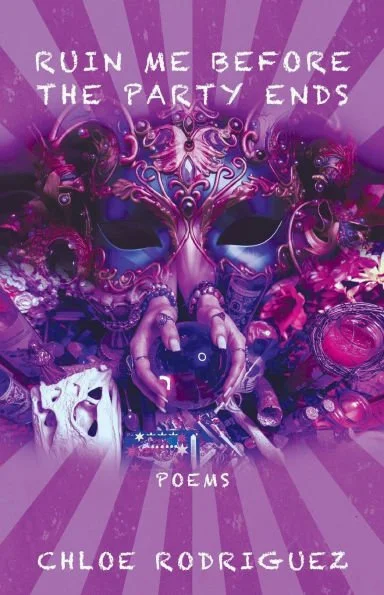
Courtesy of Finishing Line Press
Publish date: November 2025
Publisher: Finishing Line Press
This debut chapbook by a self-described “poet, translator, and instructor from South Florida” was most intriguing to me for how it moved across urban and natural landscapes, equally at home in the Everglades, suburban Florida, and Miami’s multiethnic barrios. (It is not every chapbook that could find room for poems titled “Ode to the Bad Bar Hook-Up,” “Ode to the Chicken Quesadilla at Taco Bell,” and “Ode for the Alligator.”) At its best, the chapbook conveys these landscapes while hinting at (racial, class, gender, etc.) tensions that your typical poetic Americana would not fathom, as in how the phrase “thinking of my father’s Jesus, white and prestigious” haunts depiction of nature in the poem “My Porch Eaves Sing at Night.”
“Definitions, a Pantoum” uses the repeated lines of the pantoum form effectively to convey the speaker’s relationship with their mother and to score a drama of dependency: "Dependency meant two different things for her and me. / She refused to define addiction / I believe this is how she chose to define dependency” and later “She refused to define mother and her addictions.” Perhaps because I’m a scholar and aficionado of punk-adjacent subcultures, I’m a sucker for the poem “Churchill’s is Gone. There Are No More Punk Bars in Miami Anymore,” with its vividly heartfelt and noisy evocation of the iconic (and recently reopened?) Little Haiti dive bar and music venue. Not even Campbell McGrath, one of Rodriguez’s teachers and a poet/critic of capitalism’s darkest punchlines, could better convey how underground spaces are “washed down the storm / drains by the bookoo bucks of capitalism” and how cities like Miami can be gentrified into “a mirage, / shriveled, picked up by luxury cars, then spit out as gravel on the drive down to Tobacco Road.”
26. Víctor Fragoso’s ser islas / being islands
Courtesy of CENTRO Press
Publish date: April 2026
Publisher: CENTRO Press
The late Víctor Fragoso (1944–1982) is a major (if underappreciated) figure in queer Puerto Rican poetry and theatre who settled in New York in 1965. As part of its Diasporican Library, CENTRO Press has published Fragoso’s landmark second poetry collection in a fiftieth anniversary edition that includes Paul Orbuch’s original translation along with a bevy of manuscripts and photos from the Fragoso archives at CENTRO and various framing materials, most memorably a beautiful essay by CENTRO archivist Herbert Durán entitled “Archiving the Intangible.” (In the spirit of full disclosure, I am on the board of CENTRO Press but was not involved with the acquisition or production of the book.)
Fragoso’s queer archipelagic poetics feels as fresh and urgent as ever, with its images of sea water and becoming and its imagining of a boundless and fluid Boricua identity across a field of differences: “explosión del universo en todos” Fragoso writes, which Orbuch translates as “the universe exploding in us.” While Orbuch’s translation is at times messy, I’m glad it was included here unchanged for its archival value, and it at least tries to find a vernacular flow appropriate to Fragoso’s tricky punctuationless torrent, with its echoes of Walt Whitman’s oracular land/seascapes and Federico García Lorca’s lyric dérive. I especially appreciated the inclusion of unpublished early poems from the Fragoso archives, including wonderful mid-1960s sonnets that reveal a new dimension of Fragoso’s work.
As Gustavo Quintero Vera notes in his introduction, ser islas / being islands was largely overlooked upon its initial publication despite positive attention from critics such as Efraín Barradas. Edited by Cristina Pérez Díaz and CENTRO’s Publication Team, this loving project of archival recovery builds on the essential work of CENTRO Associate Director of Arts and Culture and fellow poet Ángel Antonio Ruiz Laboy, whose Erizo Editorial published Fragoso’s collected poems in 2012. This new edition complements the groundbreaking Not the Time to Stay: The Unpublished Plays of Víctor Fragoso, published by CENTRO in 2018 and edited by Consuelo Martínez-Reyes, which rescued Fragoso’s work as a gifted and brilliantly polemical playwright. On a personal note, Fragoso’s work, along with that of Manuel Ramos Otero, paved a way for younger generations of us queer writers in our New York sexilio, reminding us that in the unhomeliness of our poetry there is room for all of us.
27. Emanuel Xavier’s Still, We Are Sacred
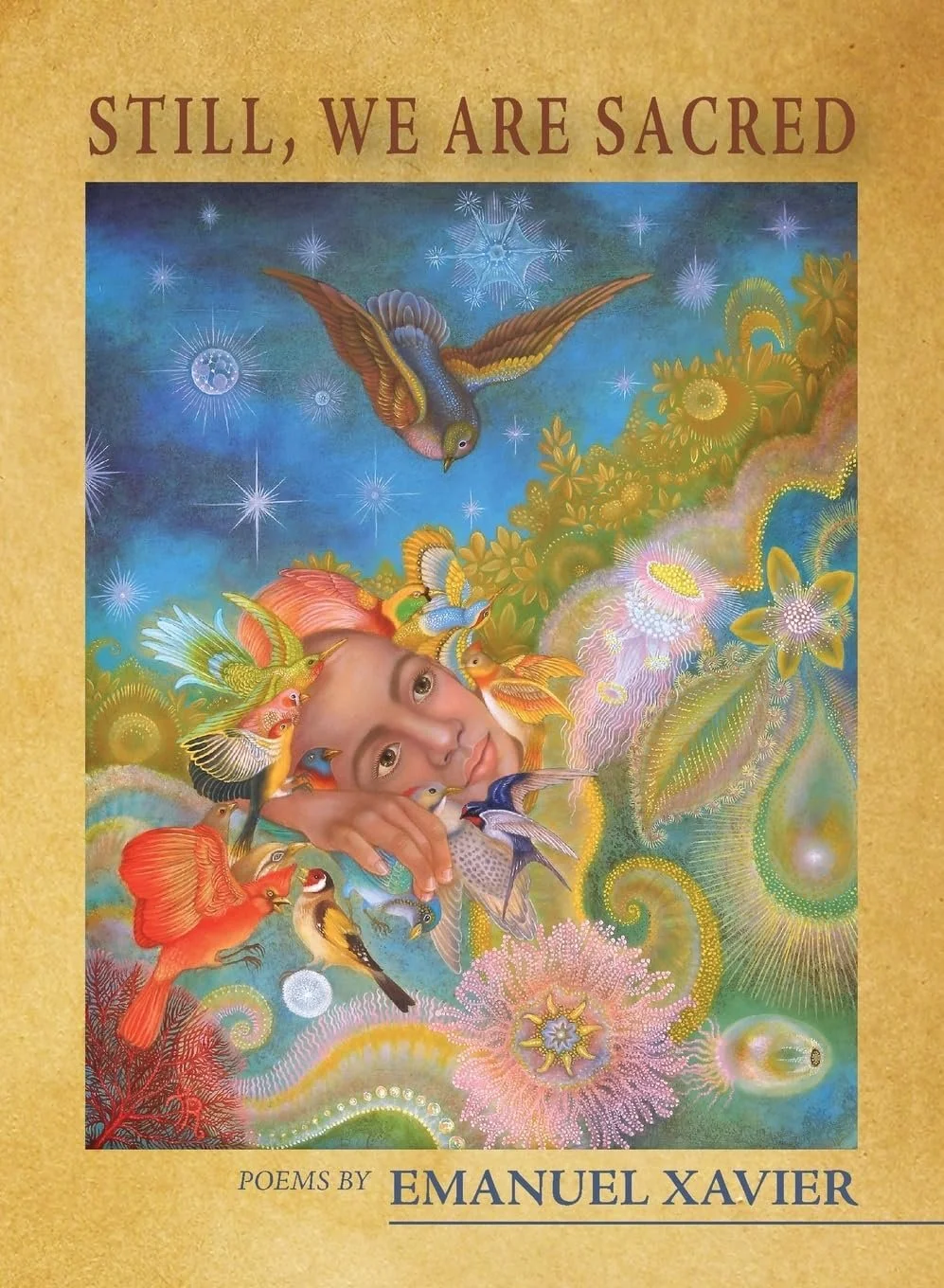
Courtesy of Queer Mojo
Publish date: April 2026
Publisher: Queer Mojo
In Still, We Are Sacred, the Brooklyn-born, Ecuadorian-American Xavier writes with the hard-earned wisdom of a queer elder who had to find his way on the street, outside academia and the literary mainstream—as he puts it in “I Collect Submission Rejection Letters Like Reasons to Survive”:
so I learned how to haunt rooms
without ever entering
There are moving poems about gentrification’s impact on queer and migrant communities, including “Decades After the Ball,” where Xavier writes:
The piers don’t talk back anymore
just condos with “river views”
and kids from Wisconsin
doing TikToks where Marsha threw bricks
In “Bendiciones y Bumps,” the poet remembers himself as a teenage hustler and drug dealer—a past that has informed much of Xavier’s writing—and reflects:
I was just their ticket to heaven,
their santo with a sin-stained halo,
didn’t matter if my soul was dark,
as long as I had the polvo.
With the wisdom of the years, Xavier is able to understand his place within an alternative queer Latinx literary tradition he has helped keep alive, and in the moving “Sacred Are the Maricones,” dedicated to “the gay Latinx writers who walked before me,” he invokes and celebrates a range of gay Latino elders and ancestors, including the Chicanos Gil Cuadros, John Rechy, and Michael Nava, the Cuban exile Reinaldo Arenas, the Colombian American Jaime Manrique, and Xavier’s late mentor Miguel Algarín, the Nuyorican Poets Café founder whose work is so often overlooked in a queer Latinx context. Interestingly, Xavier also includes the writer and artist Roy Gonsalves (a fascinating underground figure who died young of AIDS and whose work is usually considered in an African American context.) This poem reminds me of the importance of Xavier’s work as a community-oriented anthologist and curator whose work documents and bridges marginalized queer/of color communities, thus challenging institutional genealogies and histories.
Don’t miss “When I Was Puerto Rican,” where (with a clever nod to the classic book by Esmeralda Santiago), Xavier reckons with the discovery that his father was not Puerto Rican, as he had grown up believing, and where he writes:
I grieve what was never mine—
a plagiarized dialect,
a history worn like a borrowed guayabera,
still warm from someone else’s skin.
28. Juania Sueños’s topography of a border / line bird
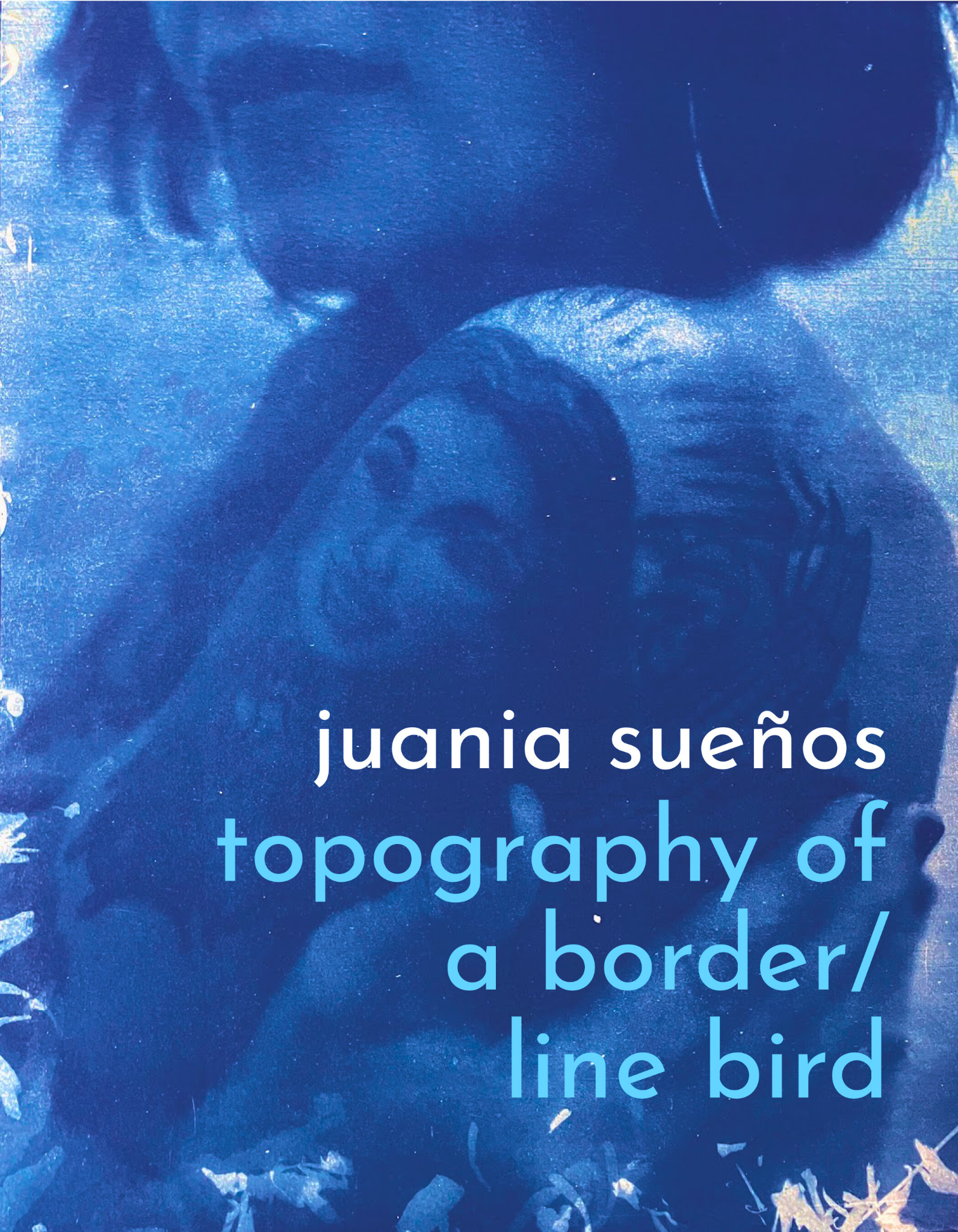
Courtesy of Mouthfeel Press
Publisher: Mouthfeel Press
The biographical note in this debut collection informs that the author “migrated to North Tejas from Zacatecas as she neared adolescence,” that “she spent most of her life without legal status” and “has witnessed the deportations of her most beloved family members,” and that she is “a co-founder and editor at Infrarrealista Review, where she connects with other marginalized Tejanx poets and creatives.” What immediately stood out to me was the collection’s radical verbal and political energy and imagination, evident in queerly fragmentary poems with titles such as “Please Stop Behaving Like a Desperate Dysmorphic Sex Beast,” “Abuelisa Has Been Watching Orange is the New Black,” and “I’m Suckered Into Paying JSTOR Forty Bucks for Faggots & Sodomites Lesbians & Hermaphrodites,” where Sueños writes:
abuelito often reprimanded my mother don’t hug him too much he might turn jotolingo
when she embraced her son joto fag lingo a dialect form of expression display
of the feminine what he meant to say was don’t turn him into a woman weak a target
This same energy courses through quieter poems such as the lovely queer lyric “Two Women Capable of Sex,” the gorgeous concrete poem “Spiraling,” and the image-rich “At the House of the First Mexican Woman Muralist, Aurora Reyes,” where motherhood and colonial histories overlap:
my son’s first encounter
with unfair exchanges:
jade & watermelons
for gunpowder & extinction.
There is an eccentrically queer punk sensibility that cuts through the collection, which references everyone from The Clash to“Conway Twitty & DEVO,” and the irreverent spirit extends to the erasure of state documents, echoing Alan Pelaez Lopez’s Intergalactic Travels, featured in the inaugural La Treintena. More interesting to me was how a playful undocuqueer sensibility inflects poems such as “The Female Protagonist Deports Herself for Love.” And amid all the verbal and visual fireworks there are moments as lyrical as this one from, “Cellular Memory,” a sign of the poet’s range and promise:
Each year monarchs remember
to fly from Canada to Michoacán. Most of them die
on the way & their children take the lead
though they’ve never made the trek.
They know where to turn. It’s always
the grandchildren on the way back
every September that pass through Texas.
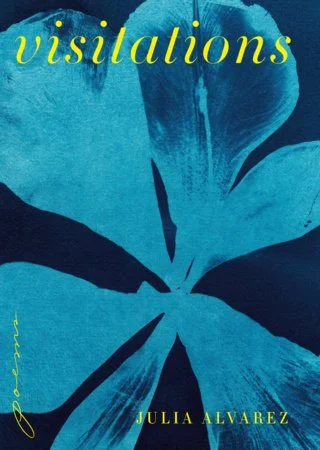
29. Julia Álvarez’s Visitations
Courtesy of Knopf
Publish date: April 2026
Publisher: Knopf
The internationally renowned novelist Álvarez returns to her first love, poetry, and I am reminded of why her 1984 book The Homecoming was considered so groundbreaking for its time. Visitations reads like classic Álvarez, with its formal elegance, its evocations of domestic and family life, and its ability to capture the revelatory moments in the everyday, often with a gender-critical perspective. In summoning the small joys, tensions, and uneasy silences of a childhood spent in the Dominican Republic under dictatorship, Álvarez rejects the trappings of nostalgia, whether reflecting on the patriarchal aspects of her family and culture or on the racism and colonialism of the school system, as in the poem “Erasing the Blackboards” (where the teacher “seldom called on us natives”).
The book’s loose chronology takes us from the Dominican Republic of the 1950s to New York in the 1960s and toward the present day. In “American Dreams,” set in Queens in 1963, Álvarez writes:
Outside, my new America was waking up
to nightmare: freedom fighters
marching; storefronts, some with candy
stores like this one, burning; girls like me
in bombed-out churches; dreams deferred,
exploding; dreams I didn’t know
still needed fighting for; all I knew
was hunger
Growing up here means developing a political consciousness and in a sense rejecting patriarchal family values while still holding on to family and collective histories. Writing about this involves a tricky balancing of the narrative and the meditative, which come together in longer poems such as “Visitation.” Still, my favorite poems are often the shorter ones where Álvarez exquisitely chisels away at language to say the unsayable, especially about and from the body. For example, the poem “Amenorrhea” begins “The page is blank. / The ark caulked shut.” and it brilliantly uses the act of writing as a way to reembody the poem beyond all prohibition:
Month after month
I neither bleed nor bear.
This woman’s barrenness
revives the poet’s fear—
the line stops here.
Given Álvarez’s stature, I was especially moved by “At the Mental Health Clinic Waiting Room” and its willingness to grapple with mental health, cross-generational trauma, and the silence that sustains it:
overworked father over-
looked me, mother locked
her love up for a rainy day,
in sunny misery I starved myself.
I am also grateful for the concluding “Sobremesa,” where Álvarez discusses how poetry thrived against the backdrop of dictatorship and how she found her way forward in poetry and in life.
30. heidi andrea restrepo rhodes’s Wayward Creatures
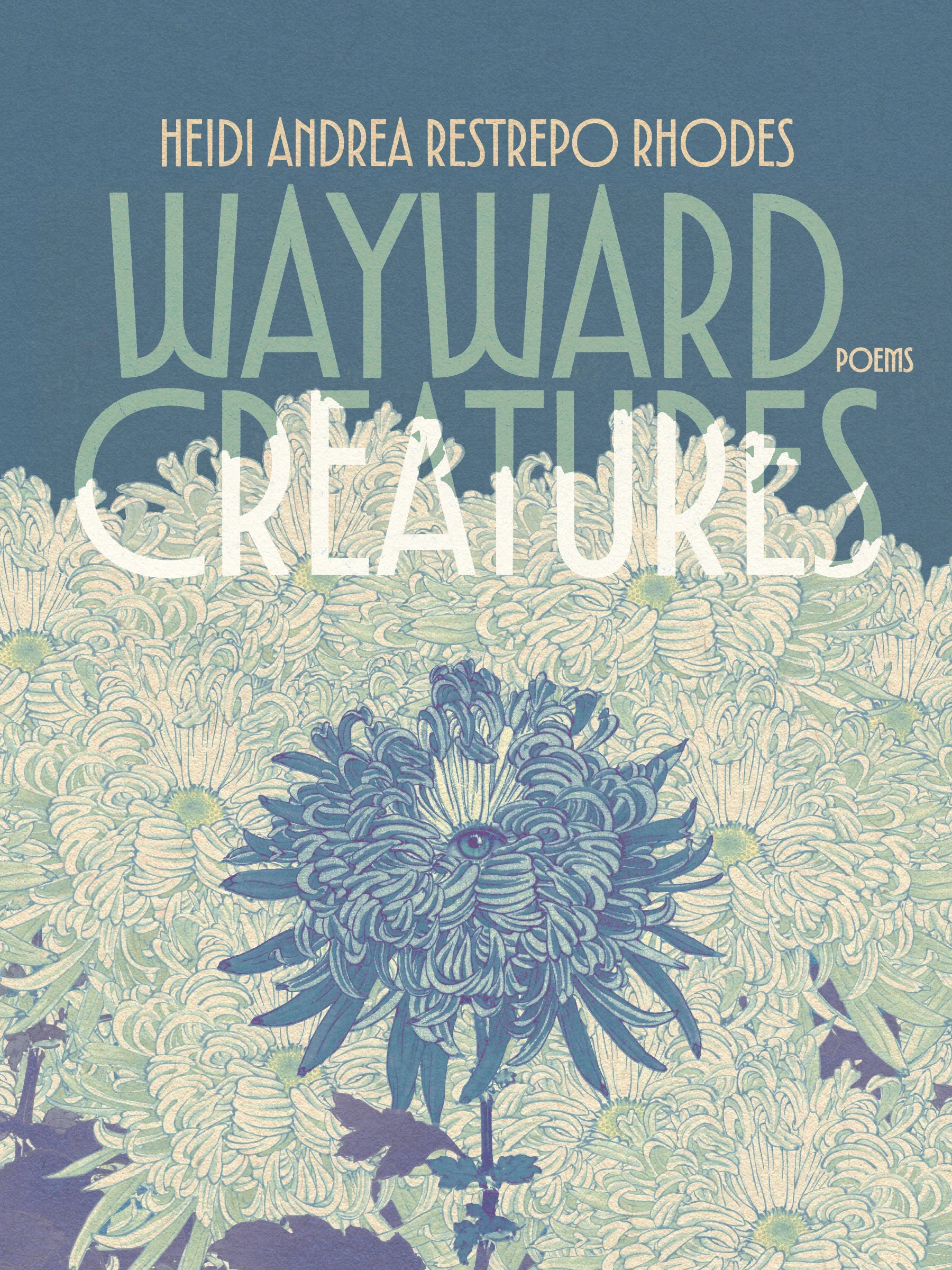
A queer, nonbinary, disabled, writer of the Colombian diaspora, rhodes finds in chronic illness and aphasia their own surrealism, one rooted in bodymind difference, before and against André Breton, who provides an epigraph. The crip neurosurrealism here summons “Dreams by neurotransmit, prophetic & habitual” and involves a reckoning of the lyric I with the monstrous and the nonhuman, as in the poem “I STOW AWAY, UNHUMAN” or as the strikingly-titled poem “ENCOUNTER CALLS (OR, MY PRONOUNS ARE: CICADA/CICADAM)” puts it: “First I am a convulse surreal, then I evaporate.” The abuela here is less a sentimentalized link to the homeland than a figure enmeshed with histories of war and conquest (“If God is a virus, she is my Catholic grandmother swaying to boleros, stilling the forcible kitchen hours pretending to be crucial for a biblical kind of war.” and “My Catío grandmother is more than a brown & stolen thing. She befores the conquistador’s thing-making.”) The book encompasses a range of forms from the abecedarian poem (“ALPHA-BÊTE (ABECEDARIAN AS DECOLONIAL PORTAL”) to the pantoum (the gorgeous “CRIP TIME-LOOP PANTOUM”) to the erasure (“FOUND PRAYER II,” which deliciously appropriates and erases a document from the pro-conversion therapy group NARTH into a pro-fisting poem). There’s even a “TRANSGENDER OPERA FOR PERPETUAL METAMORPHOSIS,” which reads like a manifesto:
I take inventory in the holy hours & find: we are a transgression
everywhere, beautiful & alive.
Amid all the bodymind fireworks, there is room for quieter moments with lovers, as in these lines from “TO HOLD HER HAND BY THE LIGHT OF DAY”:
The heart is a hunger. Through seasons. I learn this best from a lover
& her tree, their mutual declaration of vows to have & to hold
through even the most brutal winter. I kept the best parts of me away
From “BEFORE WE DIED, WE MADE A WILDERNESS”:
I kissed a boy raised
a girl
whose eyes
arouse the town.
This is a difficult book and not all its experiments are equally successful, but at its most compellingly speculative, it pulses toward an alternative somatic and sensory syntax, as in “IF I AM A KEEPER OF MEMORY, MY BODY A VESSEL OF LINGERINGS,” where rhodes writes:
I feel it but I have no word. Only a gesture of bird lifted by wind.
Is all desire a circumlocution?
I am left with these lines from “TINY APOCALYPSES EVERYWHERE” that hit hard:
There never was a we beholden to the imperative to survive
in the Age of Humans. There were only the treasured few, drowning
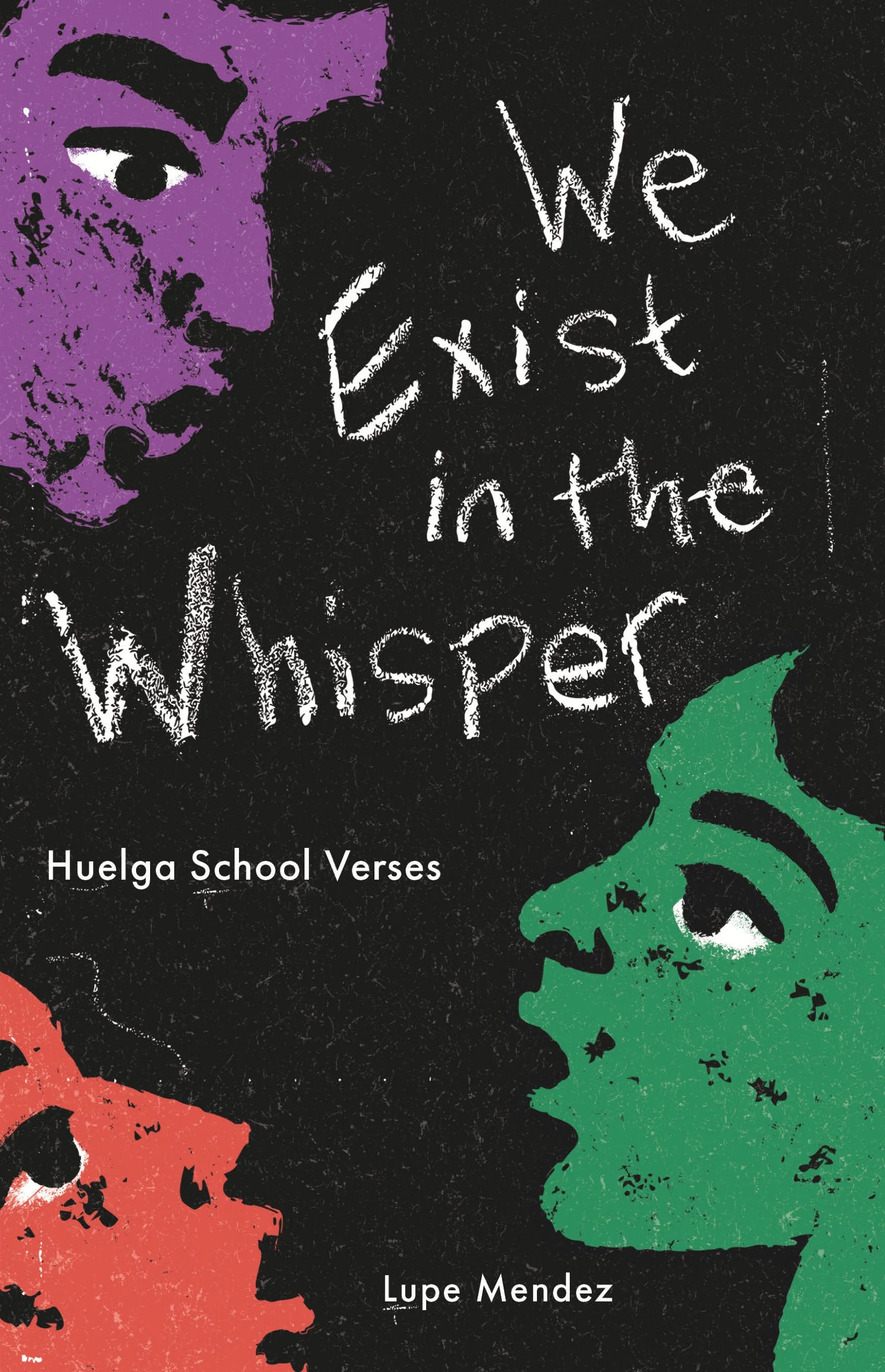
31. Lupe Mendez’s We Exist in the Whisper: Huelga School Verses
Publisher: March 2026
In this long-awaited book, the Galveston native and former Texas Poet Laureate unearths the overlooked history of the Mexican community’s school boycott in 1970s Houston, building on his own archival research and interviews with students, teachers, and administrators. Complex racial politics are central to the book, as the Houston school district labeled Mexican American students as “white” and sent them to primarily African American students to comply with federal desegregation laws.
As Mendez explains in his introduction to the book, the first section of the book builds on the archives of local and community newspapers while the second section is built from the diary of a school principal, which Mendez transcribed himself. All this was supplemented with oral histories the author gathered over many years and with visits to the addresses where the Huelga schools were located. The result is a work of investigative and documentary poetics quite unlike anything in Latinx literature that is also a work of public history in its own right, despite Mendez’s lack of formal historical or ethnographic training. (As Mendez notes, there is only one other book about the Houston Huelga School Movement.) Mendez calls the book a work of “anthropoesía: a merging of document and lyric, archive and breath.”
One thing the book does powerfully is to document the disconnect between the local Chicano community’s wishes and the media, even the alternative media, as there is never “a map small enough / to put in the paper.” This is a book about how social movement politics struggle to confront impersonal and dehumanizing systems, where rights are subordinated to zoning policies (“The law is zone now,” Mendez writes). There are blackout poems, so-called “docupoems,” archival photos, oral histories, and riffs on the site visit log, the map, and the school registration form.
With his years of experience as a schoolteacher and as a performer of his own poetry, Mendez brings elements of interactive pedagogy into the book, including pieces in the form of alternative lesson plans or checklists to uplift students and not simply gauge their reading progress. This performative pedagogy extends to the hilarious poem “La razón por hacer boicot de HISD,” which is set to the tune of the classic children’s song “Un elefante se balanceaba” (sample lines: “Dos estudiantes fueron al aula, y los mandaron a otra escuela / cuando veían que resistían, fueron a mandar a otro estudiante”). These performances counter the performative violence of the system and its bureaucratic games:
along sixteen blocks: on the bus
route game: the look-you-aren’t
-the-only [enter race/ethnicity here]
While the second section is a bit rougher formally as it tries to make poetry out of the principal’s diary, it is nonetheless fascinating as part of a community history that even involves the Brown Berets. Towards the end of the book, Mendez retraces his efforts and movingly reflects on what he learned, for example in “I Spent a Year Walking the Halls at Wheatley High School,” where he writes lovingly of a neighborhood that “is full of graffiti and graves, full of churches, / full of grace, full of chisme y sonrisa / in the streets.” Finally, I am left with a moment in “A Classroom in the Middle of the Day” that gives voice to the students’ dreams for an education where they are agents in their own learning process: “We draw the world we want to be in.”
32. Rodrigo Toscano’s WHITMAN. CANNONBALL. PUEBLA.
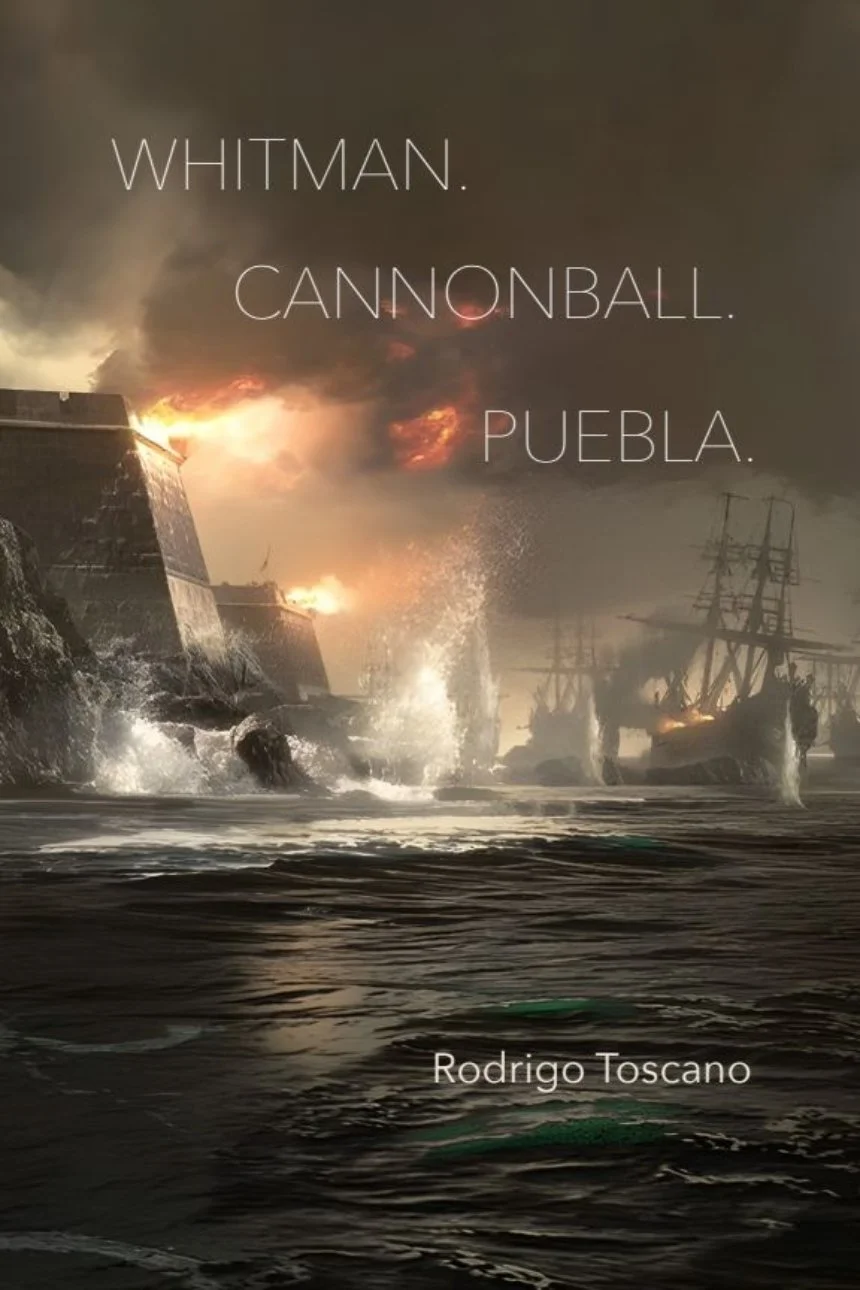
The geopolitical satires of Toscano’s latest volume are at times unsettlingly funny and this work is as smart and rhetorically sophisticated as ever, although not as formally and emotionally compelling as 2021’s The Charm & the Dread, which I wrote about in that year’s La Treintena. Still, I felt I had to include this book if only for its anti-Whitmanic cyber vistas. Here, the breakdown of (neo)liberalism is also the broken links of global connectivity, as in the poem “Poets of Shenzhen" (“Still, these broken links, these intents / are the stuff of our poetics.”) or the faux-visionary “O Monterrey” (“powering up bardic bots”). At its best, the book’s geopoetic riffs not only lay bare the cracks of empire and its dominant ideologies but they reflect on the tensions between collectivity and connection, as in how “Humanity (a loose brick)” teases out “a brick / from the cathedral / of Salamanca Humanism” into an ironic commentary on the [(“ballsy”)] “governing concept”of “c o n v i v e n c i a.” Bonus points for the Taylor Swift shoutouts–I guess I’m waiting for Toscano’s Bad Bunny book to drop.